17 days from Hanoi through the mountain north to the coast
17 DAYS · Vietnam Loop GUIDED MOTORCYCLE TOUR HONDA FLEET ALL-TERRAIN

17 days from Hanoi through the mountain north to the coast

Route
16 Waypoints Circuit View Itinerary
Hanoi Pu Luong Son La Dien Bien Phu Lai CHau Sapa Mu Cang Chai Ta Xua Thac Ba Lake Ha Giang Dong Van Bao Lac Ban Gioc Waterfall Lang Son Lan Ha bay Hanoi
Reserve a place Contact Tailored custom quote
Duration 17 Days 16 Nights Riding
Fleet Honda Fleet 150cc – 300cc
Group 2 - 10 Riders (Max 12) Small Group Tour
Support Mechanic from 7+ riders Guide & Support
Deposit 30% deposit upon confirmation Secure Booking

Tour Overview & Highlights

17 DAYS EXPEDITION

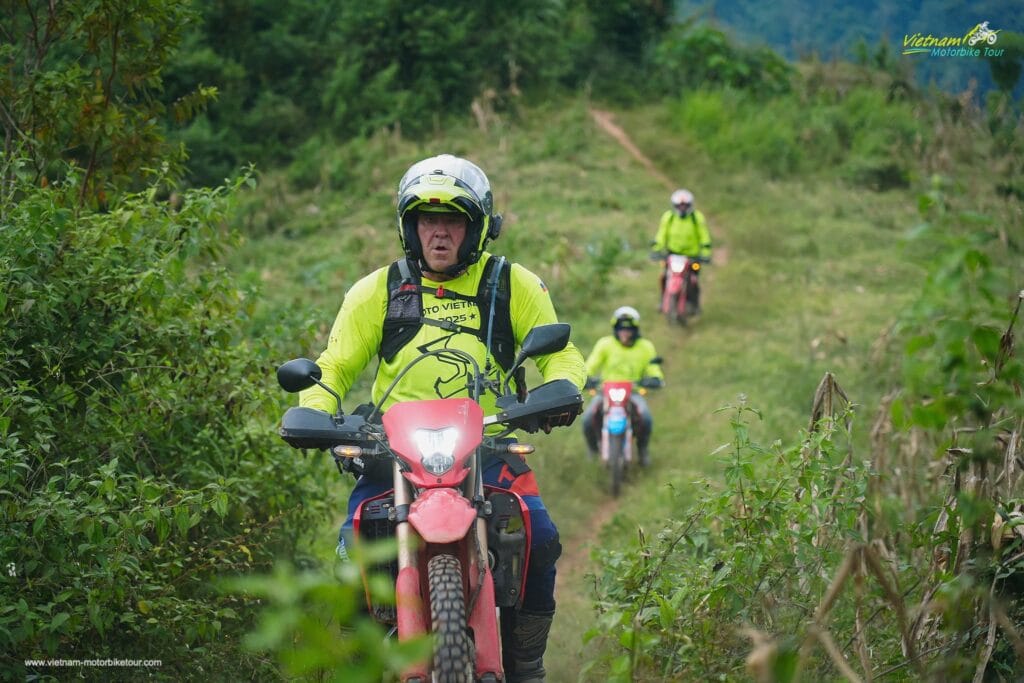
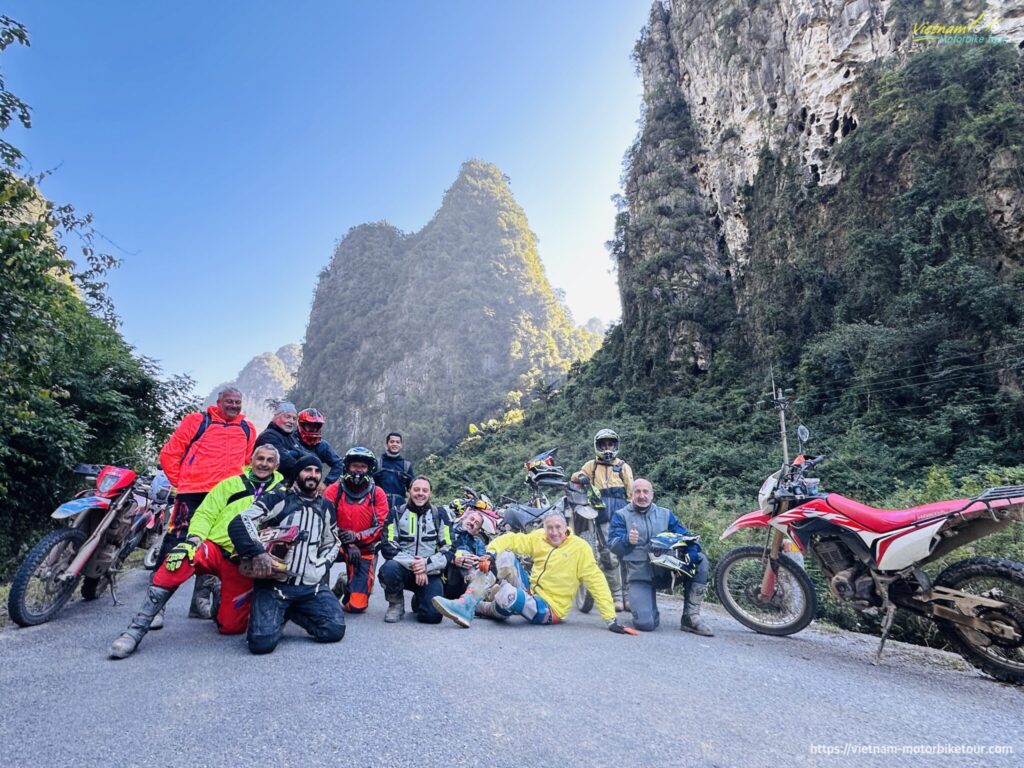
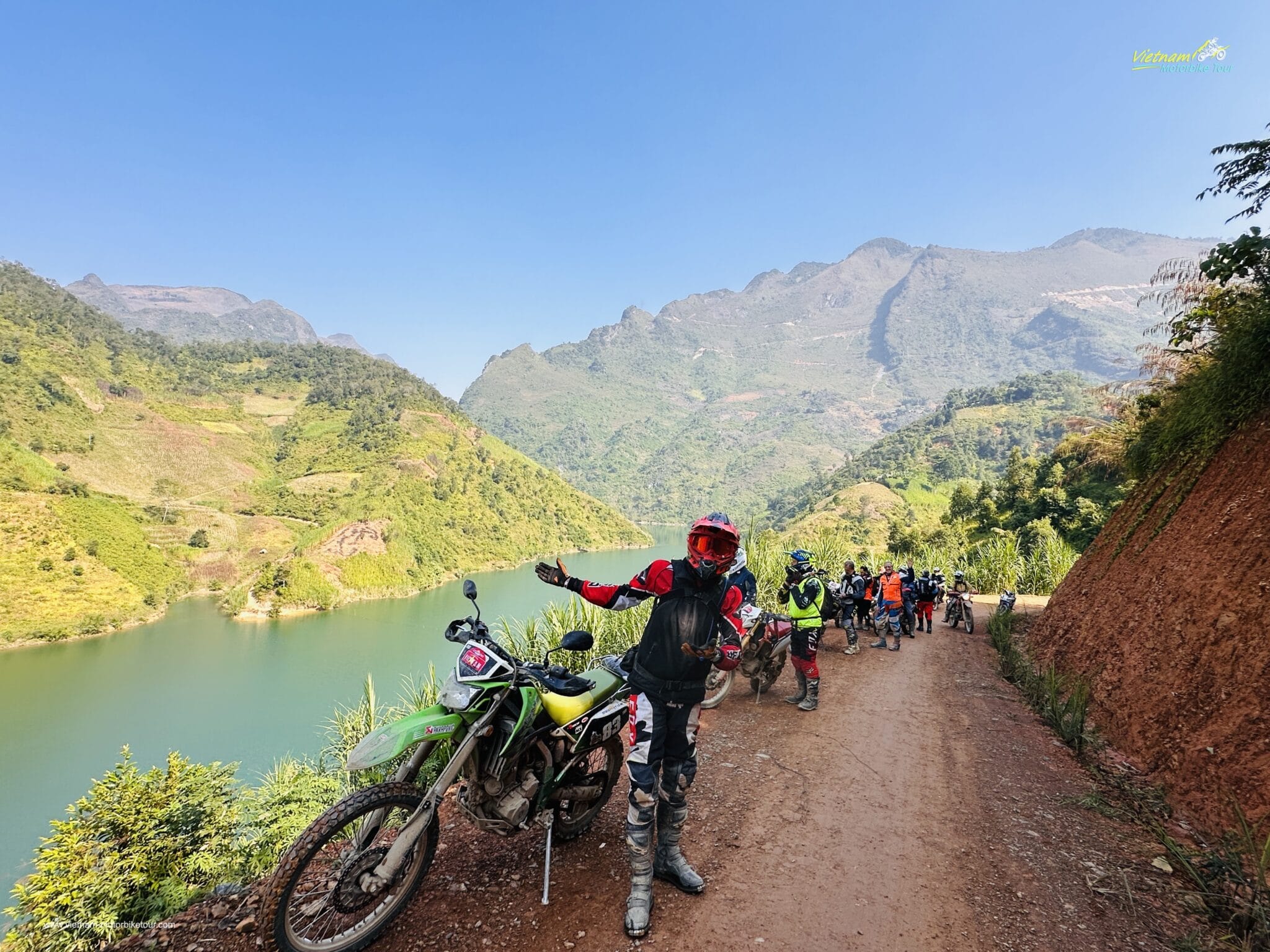
This 17-day Northern Vietnam motorcycle tour follows the country’s mountain arc from Hanoi to the waters of Lan Ha Bay. Ride through Pu Luong’s rice valleys and Moc Chau’s tea country, discover Dien Bien Phu’s wartime history, and climb via Sin Ho to Sapa. After a rest day, continue through Mu Cang Chai, Ta Xua and Thac Ba Lake before reaching Ha Giang’s limestone plateau. Dong Van, Lung Cu and Ma Pi Leng bring dramatic riding and a closer understanding of the northern borderland. The journey then turns towards Ban Gioc Waterfall and Lang Son, before a coordinated private transfer connects you with an overnight Lan Ha Bay cruise. Designed for experienced, appropriately licensed riders, this guided Vietnam motorbike adventure combines demanding roads, thoughtful cultural encounters and a restorative coastal finale, allowing the journey’s many landscapes to unfold as one connected story.

Expedition Route Map

GPS TRACKS · 17 DAYS

Detailed Tour Itinerary

17 DAYS · DAY-BY-DAY ROUTE
01

Day 1 Hanoi to Pu Luong Nature Reserve

Hanoi outskirts • Xuan Mai • Cam Thuy corridor • Pu Luong

Distance  Approximately 180–220 km

Time  5–6 hours riding • 7–8 hours overall

Road character  Urban traffic, paved regional roads and narrower mountain approaches; moderate first-day challenge.

Key highlights  Pu Luong rice terraces; limestone scenery; Don village area; Thai stilt-house architecture.

Overnight  Pu Luong • proposed lodge or locally hosted accommodation

vietnam motorbike tour to pu luong 8 - 17 days from Hanoi through the mountain north to the coast

Hanoi wakes early, and so does your journey. Before the first kilometres, meet your guide for a motorcycle fitting, luggage check and practical briefing on riding together in Vietnam. Braking distances, overtaking, hand signals and the rhythm of local traffic all deserve attention. The departure is deliberately steady: time to settle into the bike, find your spacing and leave the city with confidence. Beyond the outer suburbs, shopfronts begin to give way to cultivated fields and a wider horizon.

Following the Cam Thuy corridor towards Pu Luong, the scenery gradually gathers height. Limestone hills rise behind villages, roadside gardens crowd the verges and the road becomes more intimate as it enters the countryside. Lunch is a simple local stop chosen around the day’s progress. At a safe stopping place, take a moment to watch water moving between fields or a farmer heading home along a narrow path. These small observations begin to give the journey its texture, and your guide helps place them within the life of the valley.

The afternoon brings you into Pu Luong Nature Reserve, a landscape where forested slopes and rice-growing valleys sit closely together. In the Don village area, terraces follow the contours of the hills, with their colours changing through the agricultural year. Some fields may be green, others harvested or resting; this is a working landscape rather than a permanent golden backdrop. A gentle walk near your accommodation offers a closer look at irrigation channels, village paths and the relationship between hillside and harvest.

Thai communities are an important part of Pu Luong’s cultural landscape. Their raised wooden homes and long experience of wet-rice cultivation give the valley much of its character. When an invitation allows, your guide can explain household customs and introduce you to your hosts. Ask before photographing people or entering a home, and let conversation set the pace. Waterwheels are another distinctive feature of the wider area, although a separate visit depends on the location of your stay and the available daylight.

As the bikes are parked for the evening, the sounds become smaller: water moving through a channel, cooking from a nearby kitchen, voices carrying across the valley. Settle into your proposed lodge or homestay and enjoy a relaxed dinner, with local produce where available. The first day of this northern Vietnam motorbike tour ends with a change of tempo, giving you space to arrive properly before the longer mountain stages ahead.
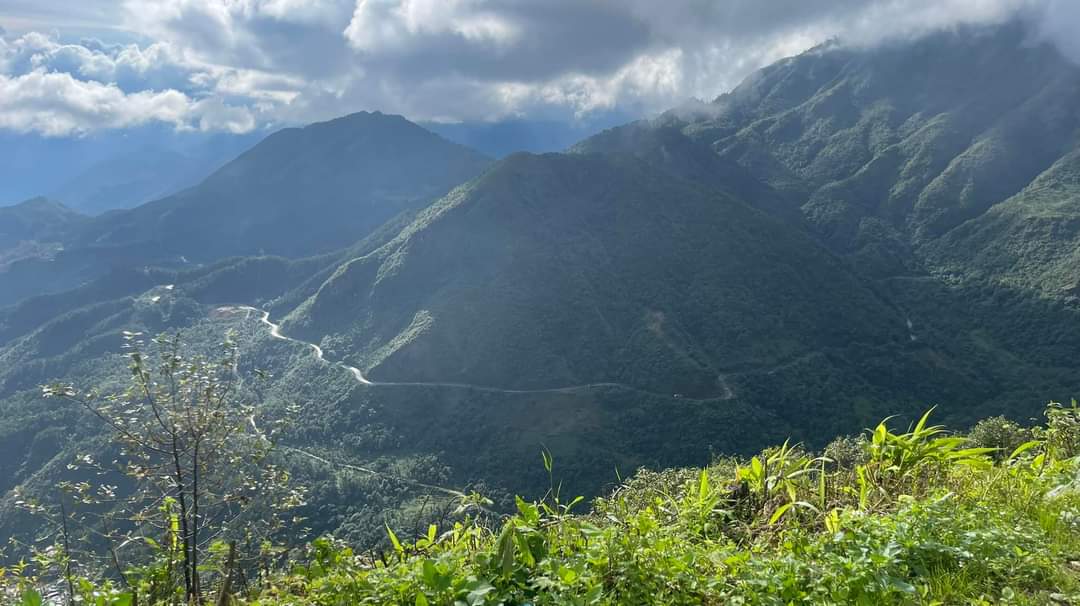


02

Day 2 Pu Luong to Son La via Moc Chau

Pu Luong • Mai Chau corridor • Moc Chau • Yen Chau • Son La

Distance  Approximately 270–310 km

Time  7–8 hours riding • 9–10 hours overall

Road character  Narrow paved valley roads followed by National Highway 6; long riding day with bends, trucks and town traffic.

Key highlights  Mai Chau valley scenery; Moc Chau tea country; Yen Chau agricultural landscapes.

Overnight  Son La • proposed town hotel

Leave Pu Luong early, while the valley is still easing into the day. This is one of the longest stages of the itinerary, so breakfast, packing and departure are organised around reaching Son La before dark. The opening roads wind away from the terraces towards the Mai Chau corridor. Where safe stopping places allow, look back across the folds of the valley: villages, rice plots and wooded ridges gradually become part of a much larger mountain landscape.

Mai Chau offers a brief introduction to another well-known Thai cultural area, with stilt-house settlements set around cultivated valley floors. Today’s schedule allows a scenic pause rather than a full village excursion. The road then joins the westward journey towards Moc Chau, climbing into cooler plateau country. On a motorcycle, the transition is easy to feel: the air changes against your jacket, the hills broaden and the roadside begins to reflect a different agricultural economy.

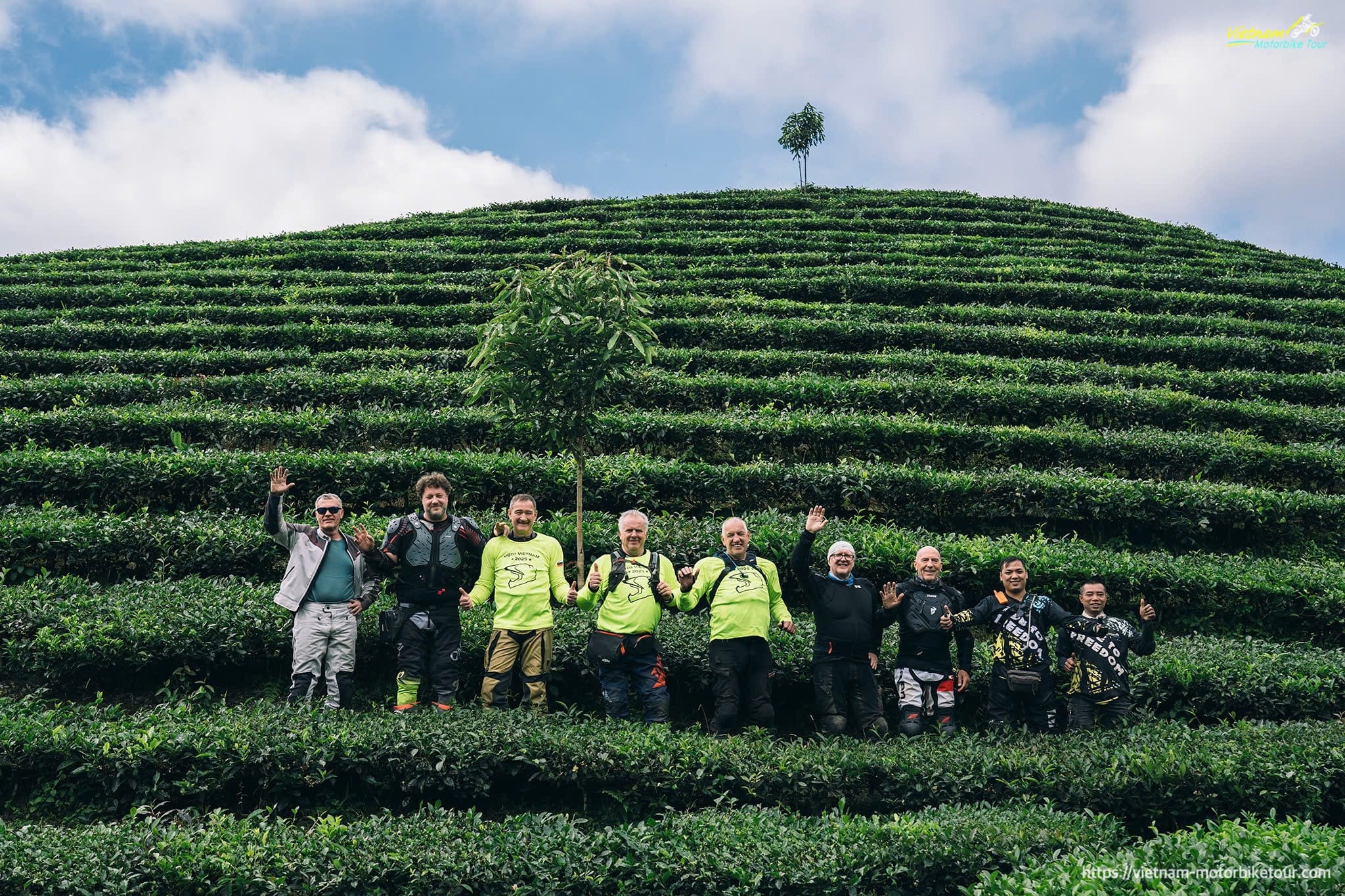
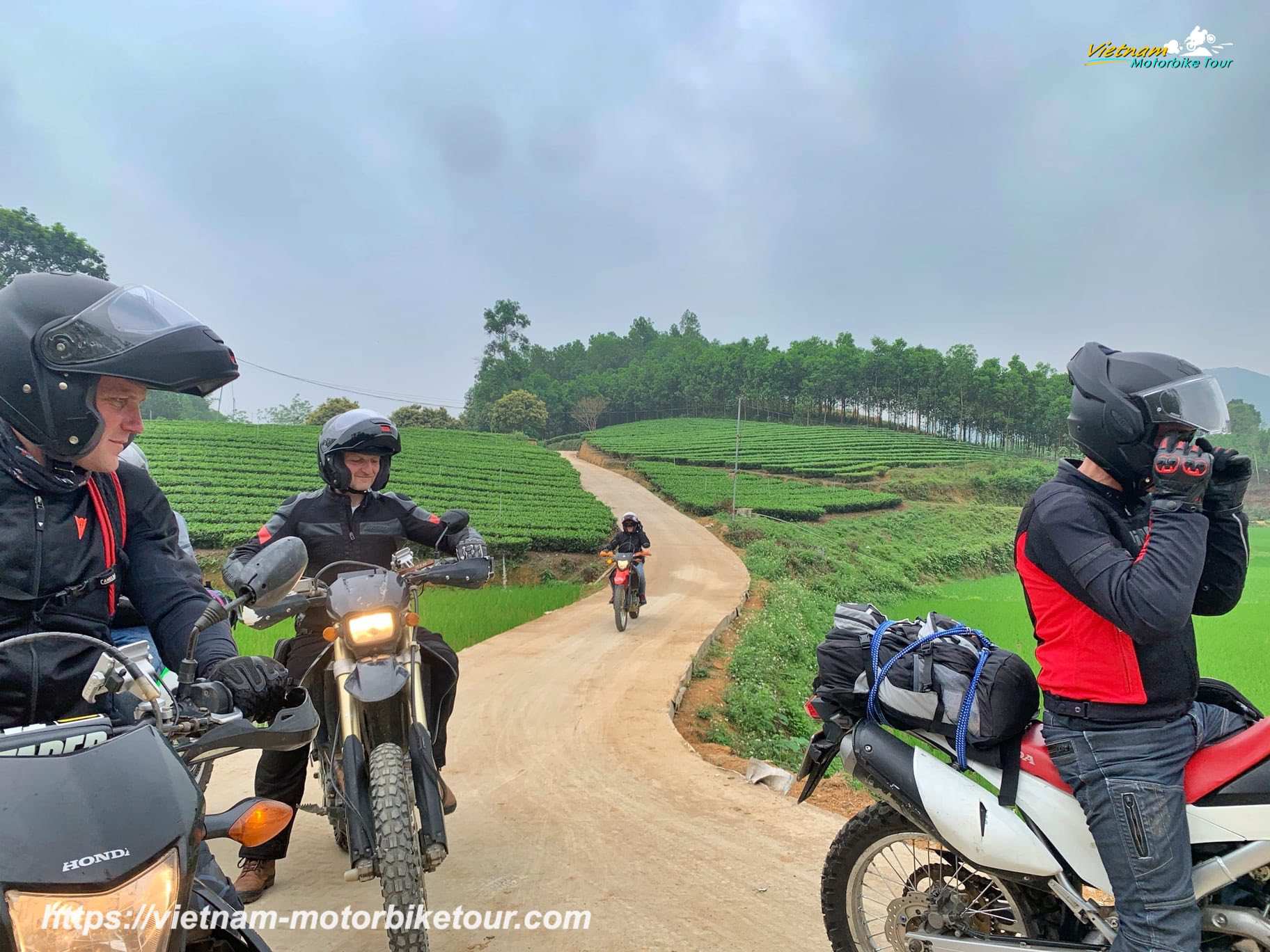
Moc Chau is celebrated for its tea-growing landscapes, dairy farming and seasonal plum orchards. A conveniently located tea plantation is the priority stop, allowing time to see how closely clipped bushes follow the slopes in repeated green curves. Your guide can explain the broad journey from fresh leaf to the tea served in a small roadside cup. Access to working fields depends on the landholder; remain on permitted paths and avoid walking between planted rows without permission. Blossom and fruit seasons are brief, so orchard visits are considered only when timing and routing genuinely suit.

After lunch, continue along National Highway 6 through Yen Chau towards Son La. This is a road journey through a living region, with fruit stalls, farm traffic, market settlements and changing views around each bend. Maintain an unhurried riding rhythm even when the surface looks inviting: trucks, buses and vehicles turning into roadside properties are part of the route. Regular short breaks help keep concentration fresh and give the day a comfortable structure without stretching it into the evening.

Arrive in Son La and settle into your hotel. The historic Son La Prison site offers an important introduction to French colonial imprisonment and Vietnamese resistance, but today’s distance makes an afternoon visit uncertain. If opening hours or arrival time do not allow it, a concise visit can be considered before departure tomorrow. Over dinner, the plateau’s tea fields and the valleys you have crossed begin to form a connected picture of the northwest. This is the first long chapter of the ride, with Dien Bien Phu’s history waiting beyond the next range.


03

Day 3 Son La to Dien Bien Phu

Son La • Thuan Chau • Pha Din corridor • Tuan Giao • Dien Bien Phu

Distance  Approximately 160–190 km

Time  4.5–5.5 hours riding • 7–8 hours overall with visits

Road character  Predominantly paved highways and mountain bends; optional older pass section only if conditions permit.

Key highlights  Pha Din mountain scenery; Muong Thanh valley; Dien Bien Phu Victory Museum; A1 Hill.

Overnight  Dien Bien Phu • proposed town hotel

North east vietnam motorbike tour to son la cao bang 4 - 17 days from Hanoi through the mountain north to the coast

Today’s ride carries the journey into one of Vietnam’s most significant historical landscapes. If Son La Prison could not be visited yesterday, a short morning stop may be arranged within opening hours, with the rest of the day adjusted accordingly. The prison remains offer a sober introduction to colonial rule and political resistance. Leaving Son La, the road continues through Thuan Chau towards the Pha Din corridor, with cultivated slopes and roadside settlements accompanying the climb.

Pha Din is remembered both as a mountain pass and as a crucial supply corridor during the 1954 Dien Bien Phu campaign. Its wartime story brings a different meaning to the road beneath the tyres: moving supplies through this terrain required extraordinary labour and endurance. The main through-road and the older pass alignment are different riding experiences. Your guide chooses the appropriate route according to weather, surface conditions and time; the older section is considered only when it can be ridden comfortably and safely.

Pause at a suitable viewpoint, then continue through Tuan Giao towards Dien Bien Phu. The mountains eventually open onto the Muong Thanh valley, where broad rice fields help explain the scale and geography of the former battlefield. It can be difficult to reconcile an ordinary afternoon here with the intensity of the fighting. That contrast is part of the value of visiting: the valley belongs to people carrying on with daily life, as well as to the history remembered in its monuments and museums.

After lunch, prioritise the Dien Bien Phu Victory Museum and A1 Hill, subject to admission hours. The museum introduces the campaign and its Vietnamese perspective, helping connect the surrounding sites into a coherent story. At A1 Hill, defensive positions and the scarred terrain bring the close fighting into sharper focus. The French defeat on 7 May 1954 became a turning point in the First Indochina War. Your guide should also acknowledge the human cost on all sides, giving these places the care they deserve rather than treating them as simple photo stops.

De Castries’ bunker is an additional visit if the day’s timing permits; it should not displace an attentive museum visit or turn the afternoon into a rush. Afterwards, return to your hotel and take an easy evening in town. A meal and a walk provide a gentler close to a day with considerable emotional weight. This Dien Bien Phu motorcycle tour stage offers rewarding riding, but its lasting impression may be the understanding that a mountain road can also be a thread through modern Vietnamese history.


04

Day 4 Dien Bien Phu to Lai Chau via Muong Lay and Sin Ho

Dien Bien Phu • Muong Cha • Muong Lay • Sin Ho • Lai Chau

Distance  Approximately 220–260 km

Time  6–7.5 hours riding • 8–10 hours overall

Road character  Paved mountain roads, reservoir-side stretches and steep, narrower bends around Sin Ho; demanding in rain or fog.

Key highlights  Muong Lay reservoir scenery; Da River landscape; Sin Ho plateau; highland village life.

Overnight  Lai Chau • proposed town hotel

North Vietnam Motorbike Tour 9 - 17 days from Hanoi through the mountain north to the coast

An early departure takes you north from Dien Bien Phu through Muong Cha, leaving the broad valley behind for a more folded landscape. The road climbs, turns and drops between mountain communities, rewarding a patient approach. This is a substantial riding day, and the route briefing matters: surfaces can change, visibility can close in and a short distance on the map may take longer than expected. Keep comfortable gaps and use the planned stops to rest as well as admire the scenery.

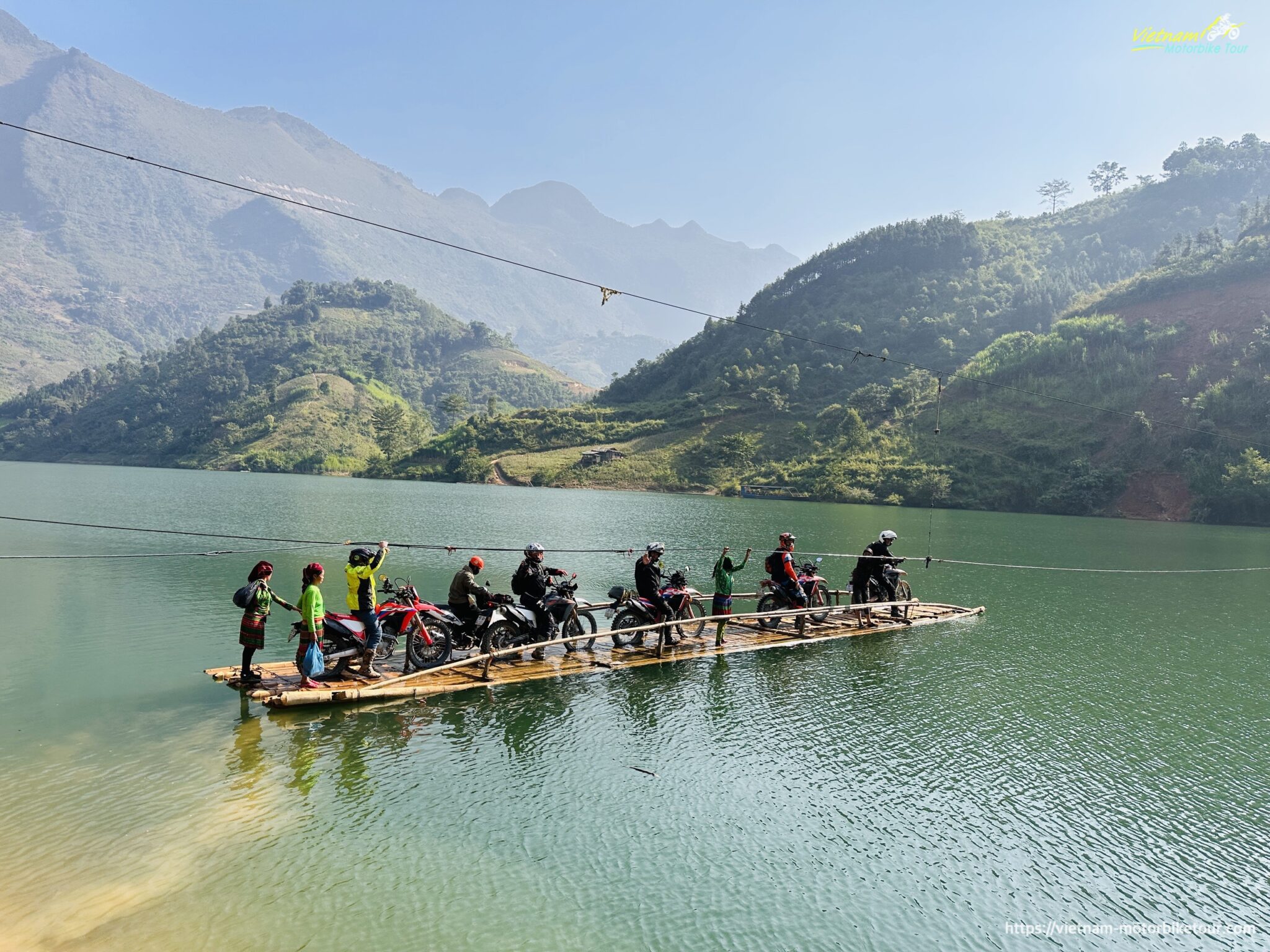
Around Muong Lay, water becomes the defining feature. The town sits in the wider Da River reservoir landscape, where long reaches of water meet steep slopes and newer settlements. The reservoir and resettlement associated with hydropower development have changed lives here as well as the appearance of the valley. Your guide can help explain that recent history without reducing it to a picturesque waterside view. A suitable roadside stop offers time to absorb the scale of the landscape and, when conditions are clear, the reflections along the shore.

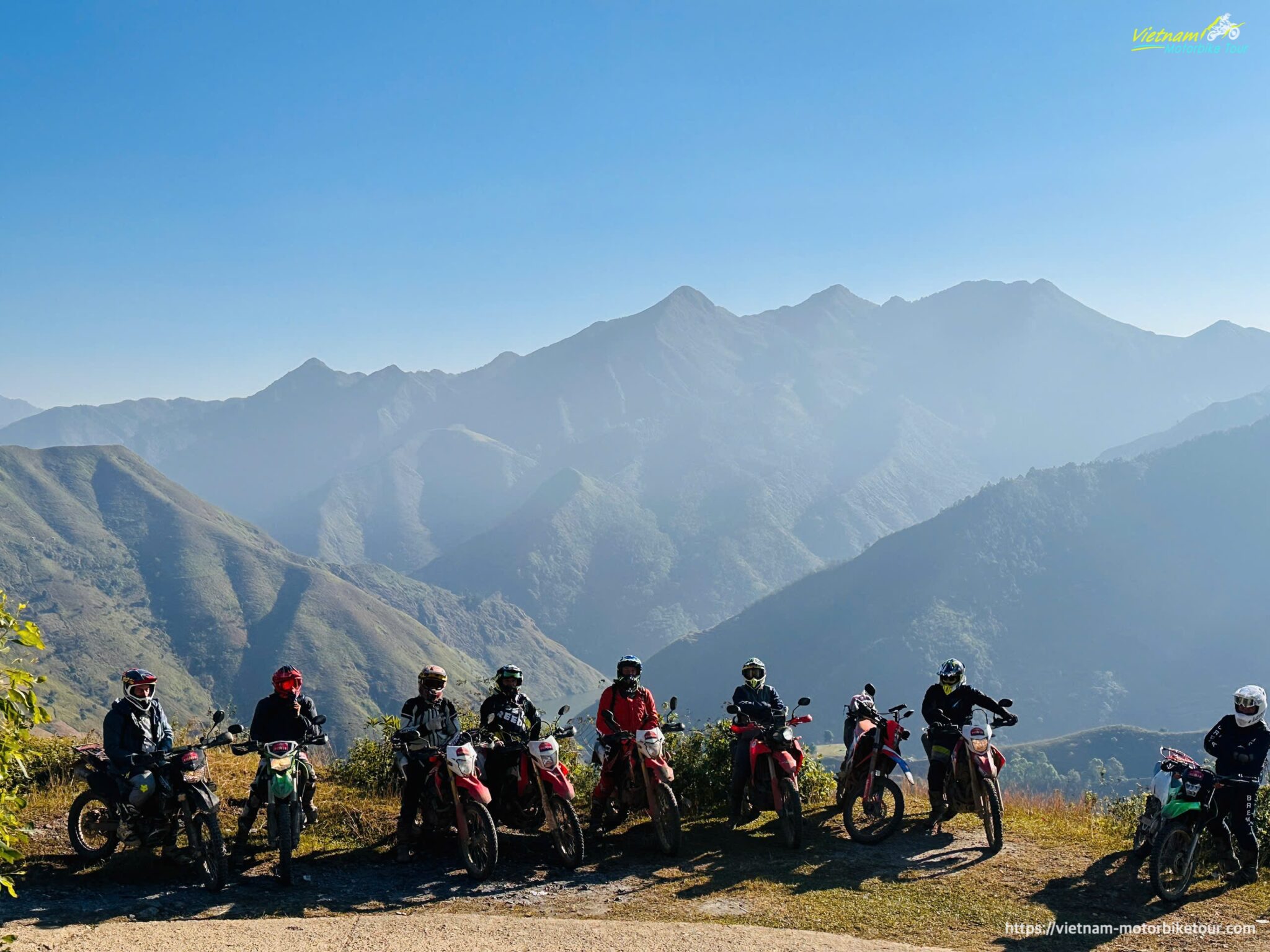
The route then climbs towards Sin Ho, exchanging the lower valleys for cooler highland air. Hairpins, open hillsides and glimpses into deep valleys make this one of the tour’s most absorbing motorcycle stages. Choose a steady gear, let the guide set the pace and leave photography for proper stopping places. The pleasure comes from reading the road and noticing the landscape unfold, rather than trying to cover the climb quickly. Lunch is planned at a practical point along the route, with flexibility for the group’s progress.

Sin Ho is known for its highland communities and market life. Hmong and Dao residents are among the people who gather here, bringing produce and everyday goods from surrounding villages. The main weekly market is associated with Sunday morning, so it is a possibility only when departure dates and arrival time genuinely align. On other days, a short stop in the settlement offers a quieter impression of local life. Clothing, languages and customs vary between communities; introductions through your guide are more meaningful than assumptions based on dress.

Descend towards Lai Chau with daylight in reserve, stopping only where the road offers a safe place to pull over. By evening, you will have travelled through river country and across a markedly different plateau, gaining a sense of the region’s diversity within a single day. Settle into your hotel and rest. If heavy rain, poor visibility or a damaged section makes the Sin Ho detour unsuitable, the guide should use an appropriate lower route, with revised mileage and stops explained to the group.


05

Day 5 Lai Chau to Sapa via O Quy Ho Pass

Lai Chau • Tam Duong • Binh Lu • O Quy Ho Pass • Sapa

Distance  Approximately 80–110 km

Time  2.5–3.5 hours riding • 5–6 hours overall with stops

Road character  Mostly paved mountain roads; sustained climb, tight bends, tourist traffic and possible dense mist.

Key highlights  Tam Duong valley; O Quy Ho Pass; Hoang Lien Son mountains; Silver Waterfall if conditions allow.

Overnight  Sapa • proposed hotel for two nights

After several substantial stages, today leaves more room to enjoy the road. Ride out of Lai Chau towards Tam Duong and Binh Lu, where cultivated valleys sit beneath the rising Hoang Lien Son mountains. The shorter distance allows a more relaxed departure and proper pauses, although the mountain weather still deserves respect. Early in the day, the wider valley views help you appreciate the climb ahead: the journey to Sapa is as memorable as the destination itself.

The approach to O Quy Ho Pass gradually draws you into a different world of altitude, forest and changing light. Long bends lead towards tighter turns, and the mountain walls seem to shift around the road. This is one of the signature experiences of a Sapa motorcycle tour. Ride within your sightline, expect oncoming buses and give yourself time to respond when mist reduces visibility. A beautifully surfaced bend is still part of a public road, shared with people travelling for work, school and home.

Near the crest, stop at an appropriate viewpoint if the weather allows. O Quy Ho crosses the Hoang Lien Son range at around 2,000 metres, linking the Lai Chau side with the Sapa area. On a clear day, layered ridges give a powerful sense of the mountains’ scale; at other times, clouds conceal almost everything beyond the roadside. Both are characteristic of the pass. Any visit to a managed viewing attraction is separate from simply crossing the road and depends on the agreed programme and admission arrangements.

Descending towards Sapa, consider a stop at Silver Waterfall, known locally as Thac Bac, if opening conditions, visibility and time suit. Water falls down the wooded mountainside beside this well-known approach to town, with its strength changing through the seasons. A visit involves walking and steps rather than riding directly to the cascade. Alternatively, continue to a leisurely lunch and arrive earlier at your hotel. Today’s advantage is flexibility, allowing the mountain crossing to remain comfortable rather than filling every spare hour.

Sapa brings a noticeable change of atmosphere, with busy streets, cafés and a long-established visitor economy. After checking in, take an easy walk around the town centre and stone church area. Beyond the resort streets lies a wider region of Hmong, Dao, Giay and other communities whose villages and agricultural knowledge shape the valleys. Tomorrow offers time to explore that setting more slowly, or simply rest. For now, park the motorcycle, find somewhere warm for dinner and enjoy the pleasure of knowing that your room is waiting for another night.


06

Day 6 Sapa at Leisure with Optional Fansipan Visit

Sapa • optional Fansipan excursion or Muong Hoa valley walk • Sapa

Distance  0 km scheduled riding • optional local transfers vary

Time  No scheduled riding • allow 4–6 hours for Fansipan including transfers and queues

Road character  Rest day; optional walking on slopes and steps, with local road transfers where required.

Key highlights  Sapa town; optional Fansipan summit area; alternative Lao Chai and Ta Van village walk.

Overnight  Sapa • same proposed hotel

fansipan peak 1 - 17 days from Hanoi through the mountain north to the coast
fansipan-mountain-sapa

For the first time since leaving Hanoi, there is no luggage to pack and no mountain stage waiting after breakfast. Take the morning at your own pace. A rest day is a valuable part of a multi-day Vietnam motorcycle tour: hands, shoulders and attention all benefit from a break. Stay in town for coffee and a gentle wander, or choose one carefully paced excursion. Today is designed to restore your energy as well as broaden your experience of Sapa.

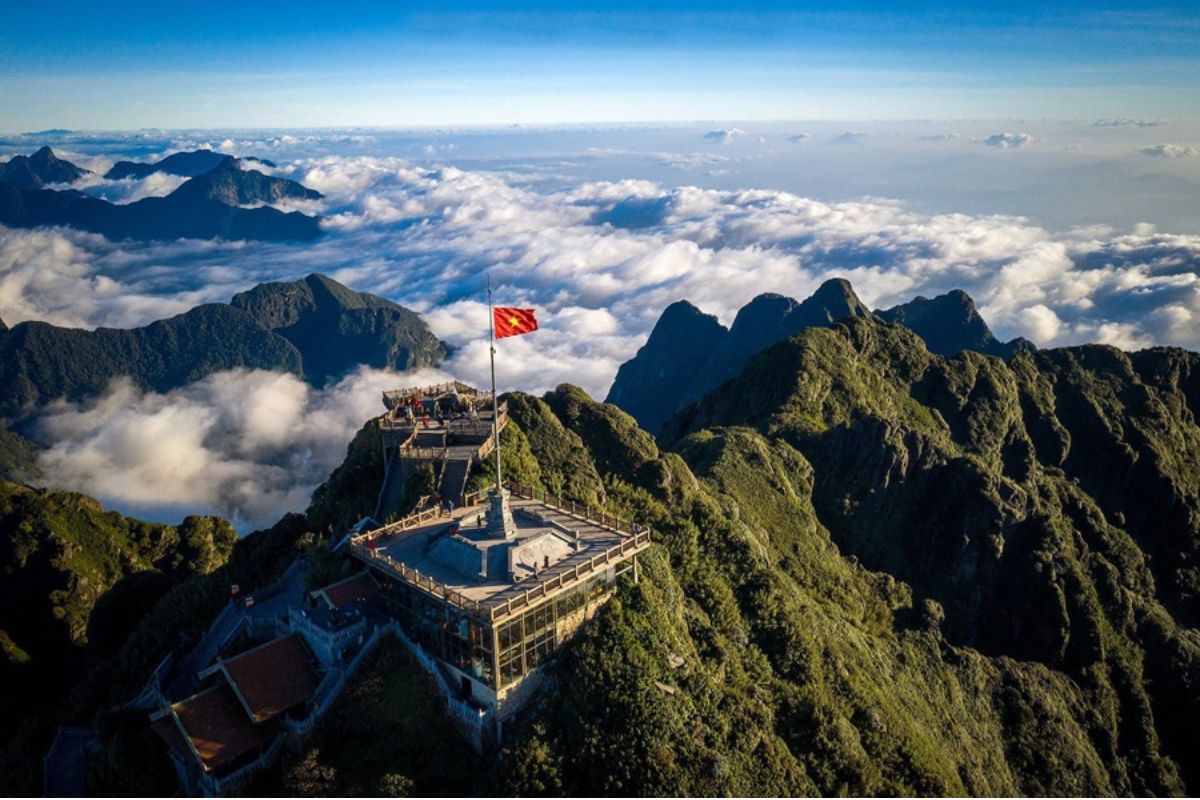
The best-known option is Fansipan, the highest mountain in Vietnam and the wider Indochinese peninsula. The summit marker displays 3,143 metres, a familiar symbol of the region. A visit usually combines a transfer or the Muong Hoa mountain railway to the lower station with the Fansipan cable car. The cabin rises above forest and steep valleys towards the summit complex, where the scenery changes with every passing bank of cloud. Views are weather-dependent, and strong winds or maintenance can affect operations.

The cable car does not remove all the walking. Stone steps connect parts of the summit complex, while the upper mountain funicular can reduce the climb when operating; some steps remain. Buddhist monuments, pagodas and the large Amitabha Buddha give the upper area its distinctive character. These form a developed visitor complex, so expect other travellers and allow time for queues. Carry a warm layer and rain protection, move slowly at altitude and discuss any relevant health concerns with a qualified clinician before choosing the excursion.

If you prefer to stay closer to village life, arrange a locally guided walk in the Muong Hoa valley around Lao Chai and Ta Van. Rice terraces climb above the watercourse, with paths connecting homes, fields and small businesses. Hmong and Giay communities are among those associated with this valley. A guide can introduce local farming practices and help make encounters respectful and conversational. Walking conditions range from village lanes to muddy, uneven paths; the route and transfer arrangements should match both the weather and your energy.

Choose Fansipan or a substantial valley walk as the main outing rather than trying to fit both into a restorative day. You can also keep the entire day free, browse textiles thoughtfully and enjoy Sapa’s cafés without a timetable. Optional activities, admissions, cable cars, funiculars and transfers require separate confirmation and are not assumed to be included in the tour price. Return to the hotel with time to prepare for tomorrow’s ride. A quiet evening now leaves you ready for the open valleys and terrace country still ahead.


07

Day 7 Sapa to Mu Cang Chai

Sapa • O Quy Ho Pass • Binh Lu • Than Uyen • Mu Cang Chai

Distance  Approximately 160–190 km

Time  4.5–5.5 hours riding • 7–8 hours overall

Road character  Paved mountain highways and valley roads; optional terrace access lanes may be steep, narrow or slippery.

Key highlights  O Quy Ho crossing; Than Uyen valley; Mu Cang Chai terraces; optional Che Cu Nha area.

Overnight  Mu Cang Chai area • proposed lodge or homestay

ta xua motorbike tour to mu cang chai 14 - 17 days from Hanoi through the mountain north to the coast

Leaving Sapa, cross O Quy Ho once more, this time with the journey turning south towards the rice-growing valleys. Retracing a mountain pass rarely feels like repeating it. The light falls differently, the slopes reveal another angle and the weather may have changed completely overnight. The descent towards Binh Lu calls for measured braking and a calm pace, with a viewpoint stop only when visibility and a safe pull-off allow. Below, the high ridges give way to a broader agricultural landscape.

Continue through Than Uyen, where fields spread across the valley floor and settlements cluster beside the road. This section gives the day a gentler rhythm after the pass, with room to notice irrigation, roadside gardens and the everyday movement of people between village and field. Lunch is arranged along the route. The contrast with Sapa’s busy centre is striking, but these valleys are well-connected places of work and trade, with their own changing priorities rather than a world set apart from modern life.

Approaching Mu Cang Chai, the hills become the day’s main attraction. Rice terraces climb and curve around the slopes, shaped over generations by farming communities, especially Hmong households. From a distance, their repeated contours seem to echo the mountain itself. Up close, the beauty becomes practical: earth banks hold water, channels carry it between plots, and carefully levelled fields create room for cultivation on steep ground. Looking closely brings a deeper appreciation of the knowledge and continuing labour that sustain this celebrated landscape.

After checking progress and conditions, your guide may select a short visit in the Che Cu Nha area or another accessible terrace viewpoint near the overnight stop. Some famous photography locations involve steep local lanes or a walk beyond the main road. These are optional additions, with access chosen for the group rather than for a particular photograph. La Pan Tan lies farther along the eastward route and can be considered tomorrow. Khau Pha Pass is also planned for Day 8, avoiding an unnecessary detour today.

The appearance of the terraces depends on planting dates, elevation and rainfall. Late spring and early summer may bring flooded fields; summer often brings green growth; autumn can bring ripening rice before harvest. No departure can promise a particular colour across every valley. Settle into your proposed lodge or homestay and, if there is time, take a gentle walk nearby before dinner. On this Mu Cang Chai motorbike tour stage, the road delivers the grand views, while the quieter moments invite you to look beyond them.


08

Day 8 Mu Cang Chai to Ta Xua via Nghia Lo

Mu Cang Chai • Khau Pha • Tu Le • Nghia Lo • Thu Cuc • Phu Yen • Bac Yen • Ta Xua

Distance  Approximately 280–330 km on the main-road option

Time  8–9 hours riding • 10–12 hours overall

Road character  Predominantly paved main roads with a steep final climb; longest stage, requiring an early start and experienced riders.

Key highlights  Khau Pha Pass; Tu Le valley; Muong Lo basin near Nghia Lo; Ta Xua mountain scenery.

Overnight  Ta Xua village area • proposed mountain guesthouse or homestay

Today links two of the northwest’s most memorable landscapes, but it is also the itinerary’s hardest scheduling challenge. Leave early, keep breakfast and packing efficient, and let the guide protect a realistic arrival window before dark. This programme uses the longer main-road approach through Nghia Lo, Thu Cuc, Phu Yen and Bac Yen. The shorter connection through Tram Tau is not the default: its suitability depends on current surface conditions, weather, the motorcycles and the experience of every rider in the group.

The opening ride follows terrace country towards Khau Pha Pass. If daylight, access and the group’s pace allow, a brief stop near the La Pan Tan turn-off offers another perspective on Mu Cang Chai’s celebrated rice landscape. An extended terrace excursion is better reserved for a longer itinerary. At Khau Pha, the road opens onto mountain slopes and the Tu Le valley below. Pull over only at a suitable viewpoint, giving the scene a few quiet minutes before continuing down the pass.

Tu Le is known for its valley rice fields and local sticky-rice traditions. A short refreshment stop can introduce that agricultural identity without turning the morning into a series of lengthy visits. Continue towards Nghia Lo and the Muong Lo basin, a significant centre of Thai cultural life. The broad fields here offer a different expression of rice country from Mu Cang Chai’s steep terraces. Your guide can explain the importance of communal life and the xoe dance tradition, without promising a performance during a transit stop.

After an efficient lunch, the main-road route continues through Thu Cuc and Phu Yen towards Bac Yen. This afternoon is about steady progress, regular rest and arriving with concentration intact. Ta Xua’s final approach climbs into cooler mountain air on a narrow, winding road where mist can appear quickly. There is no benefit in chasing sunset at the expense of a comfortable arrival. If delays threaten the daylight margin, the guide should revise the overnight plan rather than press on simply to preserve the printed schedule.

The destination is Ta Xua’s mountain village and cloud-viewing area, not a ride to the separate high summit reached on trekking expeditions. Settle into your accommodation, enjoy dinner and watch the hills if the weather opens. The Háng Đồng Dinosaur Spine is a separate excursion and is not realistically included after this long stage. For travellers who want generous time there, adding an extra night is the more rewarding design. Tonight, the mountain atmosphere itself is enough: cool air, changing cloud and a welcome pause after a demanding ride.


09

Day 9 Ta Xua to Thac Ba Lake and Vu Linh

Ta Xua • Bac Yen • Phu Yen • Thu Cuc • Yen Bai area • Vu Linh

Distance  Approximately 250–300 km

Time  6.5–8 hours riding • 8.5–10 hours overall

Road character  Steep paved descent, regional highways and smaller lakeside lanes; patch repairs and local traffic possible.

Key highlights  Weather-dependent Ta Xua cloud views; changing foothill landscapes; Thac Ba reservoir; Dao community around Vu Linh.

Overnight  Vu Linh area • proposed locally hosted accommodation

Spectacular Northern Vietnam Off road Motorbike Tour to Ta Xua Ha GiangBa Be Lake and Cao Bang 23 - 17 days from Hanoi through the mountain north to the coast

Wake early enough to look outside before breakfast, without committing to a distant viewpoint in darkness. Ta Xua is famous for cloud inversions, when valleys fill with white cloud beneath the ridges, but the spectacle depends on weather and luck. Some mornings bring a clear horizon; others offer only close mist and the sound of village life. A safe viewpoint near the accommodation is the sensible choice before a long transfer day. There is no promise of a sea of clouds, and no need to chase one along an exposed trail.

After breakfast, descend towards Bac Yen with care. Damp bends, limited visibility and vehicles climbing towards the village can make this slow riding even when the distance looks modest. The route then returns through Phu Yen and the Thu Cuc corridor before turning towards the Yen Bai area and Thac Ba. Part of yesterday’s approach is retraced to keep the main-road plan coherent. The landscape changes gradually from high slopes to lower hills, farms and busier settlements, giving the day its own sense of progression.

A practical lunch stop and regular short breaks keep the journey manageable. This is another substantial stage, so an extended visit to the Háng Đồng Dinosaur Spine is not scheduled this morning. That ridge deserves separate time, an assessment of access and, where appropriate, a walk rather than an exposed motorcycle excursion. Today’s reward lies farther east, where the mountains begin to soften and the thought of an evening beside water replaces the anticipation of another high pass.

Thac Ba is a large reservoir created for hydropower, its wooded hills rising above the water as islands and peninsulas. Water levels and visibility change its appearance, but the meeting of forested shore and open water gives the area a gentler mood. Around Vu Linh, locally hosted tourism offers an opportunity to meet Dao families and learn something of the communities living near the lake. Any household visit should follow your host’s invitation and your guide’s advice; hospitality is a relationship, not a performance to be assumed.

Arrive, park the bikes and settle into the proposed homestay. If there is enough daylight and a suitable licensed boat is available with life jackets, a short lake trip may be arranged separately; otherwise, consider it tomorrow or enjoy a walk near the shore. Do not rush onto the water simply to complete an activity list. A shared evening meal, introductions to your hosts and time to rest make a fitting close. After the high roads of this northern Vietnam motorcycle adventure, Vu Linh offers an intimate lakeside pause before the journey turns north towards Ha Giang.


10

Day 10 Vu Linh to Ha Giang

Vu Linh • Ham Yen corridor • Bac Quang • Vi Xuyen • Ha Giang

Distance  Approximately 160–200 km

Time  5–6 hours riding • 7–8 hours overall

Road character  Paved lakeside and regional roads joining National Highway 2; mixed local traffic and possible roadworks.

Key highlights  Thac Ba lakeside atmosphere; northern foothill landscapes; Ha Giang gateway; optional Thon Tha village walk.

Overnight  Ha Giang • proposed town hotel or nearby village accommodation

Breakfast in Vu Linh begins a new chapter of the journey. The reservoir has offered a welcome change from high passes, and there is time for a final look towards the water before packing the motorcycles. If yesterday’s arrival left no opportunity for a boat trip, a short morning outing may be possible by prior arrangement. Otherwise, enjoy the village atmosphere and leave at a comfortable hour. The road now turns north towards Ha Giang, extending the adventure into a very different mountain region.

Follow the Ham Yen corridor towards Bac Quang, using a route selected for the group and the day’s road conditions. Smaller stretches near Thac Ba gradually give way to the busier National Highway 2 corridor. Cultivated hills, roadside shops and lowland villages accompany the ride, with regular breaks to stretch and take in the changing scenery. There is an appealing sense of transition here: the mountains ahead remain partly hidden, while daily life continues along a road that carries much more than visiting motorcycles.

Lunch is a practical local stop, followed by the ride through the Vi Xuyen area towards Ha Giang. Maintain the patient approach developed over the previous days, particularly where trucks, buses and turning vehicles share the highway. The northern stages will demand sustained attention on smaller mountain roads, so today is best enjoyed without unnecessary detours. Arrival in daylight leaves time for the guide to review the motorcycles, confirm tomorrow’s route and check any travel permissions required for the places ahead.

Ha Giang sits beside the Lo River and serves as the familiar gateway to the Dong Van Karst Plateau. After checking in, choose an easy town walk or, if accommodation location and time suit, a short visit around Thon Tha. This Tay village is known for its raised wooden houses and cultivated setting close to the urban area. A locally guided stroll can introduce another expression of northern village life, with household visits only by invitation. It is a gentle addition rather than another full excursion.

Over dinner, look ahead to Quan Ba, Yen Minh and the limestone plateau. The next section of this Northern Vietnam motorcycle tour brings sharper ridgelines, a distinctive agricultural landscape and communities with their own histories and traditions. Carry your passport and valid riding documents as advised, and let the operator handle current local checks before departure. Then make the most of a settled evening. Tomorrow’s ride deserves fresh concentration, and Ha Giang offers the chance to prepare without losing the pleasure of simply being on the road.


11

Day 11 Ha Giang to Dong Van via Quan Ba and Yen Minh

Ha Giang • Bac Sum • Quan Ba • Yen Minh • Tham Ma • Sung La • Dong Van

Distance  Approximately 150–180 km

Time  5–6.5 hours riding • 8–9 hours overall

Road character  Mostly paved National Highway 4C; sustained climbs, hairpins, exposed sections and variable visibility.

Key highlights  Quan Ba Heaven’s Gate and Twin Mountains; Yen Minh scenery; Tham Ma bends; Sung La valley; Dong Van Old Quarter.

Overnight  Dong Van • proposed hotel or guesthouse for two nights

Spectacular Northern Vietnam Off road Motorbike Tour to Ta Xua Ha GiangBa Be Lake and Cao Bang 25 - 17 days from Hanoi through the mountain north to the coast

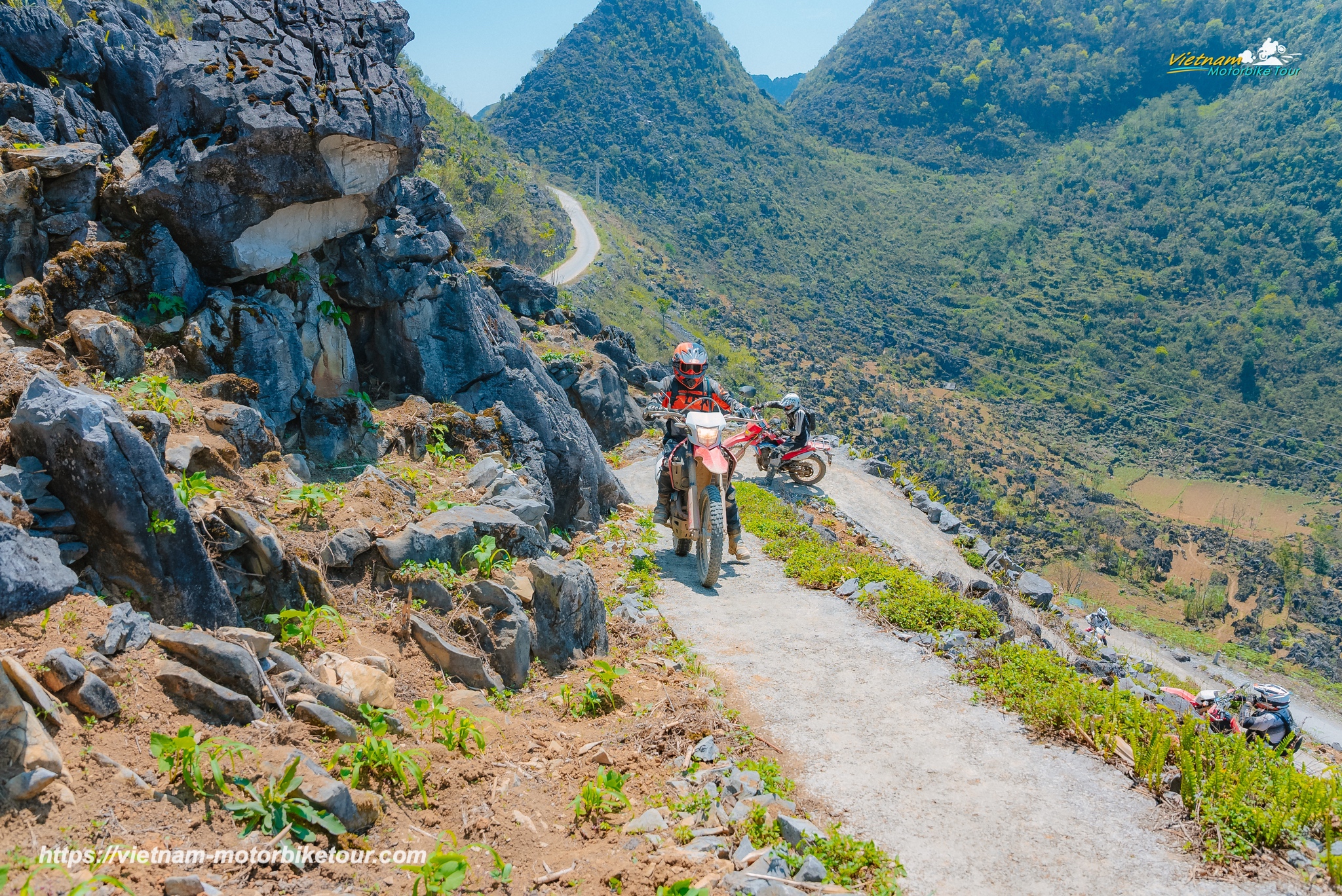
Leave Ha Giang after breakfast and follow National Highway 4C into the mountains. The climb through Bac Sum establishes the day’s rhythm: a sequence of bends, short straights and glimpses back towards the valleys below. At Quan Ba, the landscape opens around Heaven’s Gate, a well-known viewpoint over the surrounding hills. Nearby, the rounded Twin Mountains rise above cultivated land, their gentle forms offering an arresting contrast to the more angular limestone scenery waiting farther north. Stop where access and visibility allow.

Continue towards Yen Minh through a landscape that changes in small but persistent ways. Villages sit beside narrow fields, slopes become more stony and every ridge seems to reveal another range behind it. The road is part of the northern corridor widely known as the Happiness Road, whose construction helped connect isolated highland settlements. Its importance becomes easier to understand as you ride: a route that visitors celebrate for its views is also an everyday link between homes, markets, schools and services.

After lunch around Yen Minh, climb towards the Tham Ma bends, one of the recognisable road scenes of a Ha Giang motorbike tour. Enjoy the geometry from an established stopping place, keeping the carriageway clear for through traffic. Beyond, the Dong Van Karst Plateau UNESCO Global Geopark becomes increasingly apparent in the limestone outcrops and closely packed peaks. Your guide can introduce the basic geology without letting the vast timescale obscure the human story: families continue to cultivate small pockets of usable soil among the stones.

A brief stop in Sung La offers a closer view of the plateau’s settlement pattern. Earth-walled houses, stone boundaries and seasonal crops give the valley a character distinct from the rice terraces farther west. An agreed village visit may include the house associated with the Vietnamese film The Story of Pao, subject to opening and timing. Visits should leave space for ordinary life, with photographs requested respectfully. The Vuong family residence at Sa Phin is reserved for tomorrow’s optional circuit, keeping today’s arrival manageable.

Reach Dong Van before evening and settle into your accommodation for two nights. A walk through the Old Quarter introduces tiled roofs, older houses and a compact trading centre shaped by the plateau’s many connections. Choose a small café or an unhurried dinner and watch the town settle around you. The famous Sunday market is an additional possibility only when your dates coincide. Today has brought the grand arrival; tomorrow offers the freedom to explore the northern borderland more closely or simply enjoy Dong Van at your own pace.


12

Day 12 Dong Van at Leisure with Optional Borderland Ride

Optional circuit Dong Van • Ma Le • Lung Cu • Lo Lo Chai • Sa Phin • Dong Van

Distance  0 km if resting • approximately 80–110 km for the optional circuit

Time  No compulsory riding • optional circuit 3–4 hours riding and 6–8 hours overall

Road character  Narrow paved highland roads, bends and village approaches; walking and steps at selected attractions.

Key highlights  Optional Lung Cu Flag Tower; Lo Lo Chai village; Vuong family residence at Sa Phin; Dong Van Old Quarter.

Overnight  Dong Van • same proposed hotel or guesthouse

hagiang motorbike loop tour to dong van 6 - 17 days from Hanoi through the mountain north to the coast

Wake in Dong Van with the welcome knowledge that your room is waiting for another night. This is a flexible day rather than a compulsory transfer, and you can keep it entirely free for rest, cafés and a slower exploration of the Old Quarter. For riders who want to see more, an optional circuit towards Lung Cu, Lo Lo Chai and Sa Phin offers a rewarding introduction to the northern borderland. Choose the outing around your energy, the weather and current local access arrangements.

The ride towards Lung Cu follows small highland roads through limestone scenery and cultivated hollows. At the Lung Cu Flag Tower, a large national flag stands above Dragon Mountain, making this an important symbol of Vietnam’s far north. Walking and steps are needed to reach the viewing areas. When the weather is clear, the surrounding hills reveal the scale of this border landscape. The tower is a landmark near the northern frontier; it should not be mistaken for the exact geographical northernmost point of the country.

Nearby Lo Lo Chai provides a more intimate perspective. Known for its Lo Lo community, the village has rammed-earth houses, tiled roofs and a growing network of cafés and locally hosted stays. Take a gentle walk through permitted lanes and, where an introduction is welcome, learn about household life and textile traditions. Tourism is now part of the village economy, so a thoughtful visit recognises both cultural continuity and change. A craft purchase made directly from an artisan can be a meaningful souvenir when the origin is clear.

After lunch, continue to the Vuong family residence at Sa Phin if the chosen circuit and opening hours allow. Often called the Hmong King’s Palace in travel literature, this former residence is associated with a powerful local family rather than a royal dynasty ruling all Hmong people. Stone, timber, tiled roofs and enclosed courtyards tell a story of wealth and regional influence. A guided visit helps place the building within the plateau’s complex political and trading history, giving the architecture more meaning than photographs alone.

All sightseeing remains on the Vietnamese side. Any visit nearer the boundary depends on permission and local instructions; this programme includes neither a border crossing nor access to restricted markers or patrol roads. Return to Dong Van with time to relax before dinner. If your stay coincides with the Sunday market, the morning plan can be adjusted to include it instead of adding another rushed stop. Whether you choose the full circuit or a quiet day in town, this pause gives the Ha Giang experience room to become more personal.


13

Day 13 Dong Van to Bao Lac via Ma Pi Leng and Meo Vac

Dong Van • Ma Pi Leng Pass • Meo Vac • Niem Son • Ly Bon • Bao Lac

Distance  Approximately 120–150 km before optional river or village detours

Time  4–5.5 hours riding • 7–8 hours overall with viewpoints

Road character  Paved mountain roads with exposed bends, long descents and possible damaged sections; demanding despite modest mileage.

Key highlights  Ma Pi Leng Pass; Nho Que River and Tu San canyon views; Meo Vac; Gam River landscape towards Bao Lac.

Overnight  Bao Lac • proposed town hotel or guesthouse

Ma Pi Leng Pass - 17 days from Hanoi through the mountain north to the coast
Ma Pi Leng Pass

There is a particular anticipation to leaving Dong Van this morning. Ahead lies Ma Pi Leng, where the mountain road cuts across steep limestone slopes above the Nho Que River. Start early enough to enjoy the pass without crowding the rest of the day. The distance to Bao Lac is modest on paper, but the scenery deserves time and the riding demands attention. As the first broad views appear, find a proper stopping place and let the scale of the valley become clear.

From established viewpoints, the river winds far below between the walls of the Tu San canyon. Its colour changes with water conditions and light, while mist can hide the depth entirely. Ma Pi Leng’s power lies in this meeting of road, rock and open space. Your guide can also explain the labour involved in building the Happiness Road through the plateau. What feels like an extraordinary leisure ride today represents a much larger story of access and connection for the communities living along it.

Continue towards Meo Vac, keeping stops deliberate and riding within the visible road. Narrow cliffside trails promoted online are separate from the main pass and are not part of this programme. A Nho Que boat excursion can be considered only as a separately arranged alternative, allowing for the descent, transfers, queues and return to the through-route. It is not automatically added to the day. For many riders, time at the pass viewpoints and an unhurried lunch provide the more balanced experience.

Beyond Meo Vac, descend through the Niem Son corridor towards Ly Bon and the Gam River landscape, then follow the onward road to Bao Lac. The country gradually becomes greener and the heights of the plateau begin to recede. Settlements and farming patterns change with the terrain, reminding you how diverse the far north is over relatively short distances. If the Meo Vac market coincides with your travel date, a brief visit may replace another stop; it cannot be promised on every departure.

Arrive in Bao Lac and settle into your accommodation. The surrounding region is home to several communities, including Black Lo Lo residents at Khuoi Khon. That village is a separate detour, with access and introductions to be checked locally; it should replace other sightseeing rather than become a late-afternoon obligation. An easy town walk and dinner are a satisfying close in their own right. This Northeast Vietnam motorcycle tour stage begins with one of the country’s great mountain panoramas and ends with the quieter pleasures of a small regional centre.


14

Day 14 Bao Lac to Ban Gioc Waterfall

Bao Lac • Tinh Tuc • Nguyen Binh • Cao Bang • Ma Phuc • Quang Uyen • Trung Khanh • Ban Gioc

Distance  Approximately 210–250 km on the main-road approach

Time  6–8 hours riding • 8–10 hours overall

Road character  Predominantly paved mountain and regional roads; repeated bends, town traffic and variable surfaces.

Key highlights  Cao Bang karst landscapes; Ma Phuc Pass; Quay Son valley; Ban Gioc Waterfall, subject to arrival time.

Overnight  Ban Gioc or nearby Dam Thuy area • proposed hotel or locally hosted stay

ba be lake motorbike tour to ban gioc waterfall cao bang 10 - 17 days from Hanoi through the mountain north to the coast

From Bao Lac, the journey turns east into Cao Bang’s mountain country. Leave early, with the motorcycles fuelled and the day’s route clearly briefed. The main-road approach through Tinh Tuc and Nguyen Binh is selected for its access to services, rather than following more remote routes close to the frontier. Wooded slopes and cultivated valleys accompany the morning, while the old mining settlement of Tinh Tuc hints at another chapter in the region’s economy. This is a substantial riding day, with the landscapes themselves providing much of the experience.

After a practical lunch stop, continue through the Cao Bang area and towards Ma Phuc Pass. Limestone peaks gather beside the road, opening onto the broader valleys around Quang Uyen. The surrounding countryside forms part of the Non nuoc Cao Bang UNESCO Global Geopark, where geology and community life are closely intertwined. A brief stop in the Phuc Sen area may introduce the blacksmithing traditions of Nung An households, if a workshop welcomes visitors and time permits. Working tools, heat and skilled hands give this landscape a human scale.

Farther east, the approach through Trung Khanh brings you towards the Quay Son valley. Rice fields, villages and limestone towers create a different setting from the stark slopes around Dong Van. Water shapes the view as much as stone, and the road begins to feel like an approach to something larger. Keep the afternoon focused on reaching the Ban Gioc area with daylight in hand. Longer detours into Phong Nam, Pac Bo or the Phia Oac mountains are better left for a tour with more time.

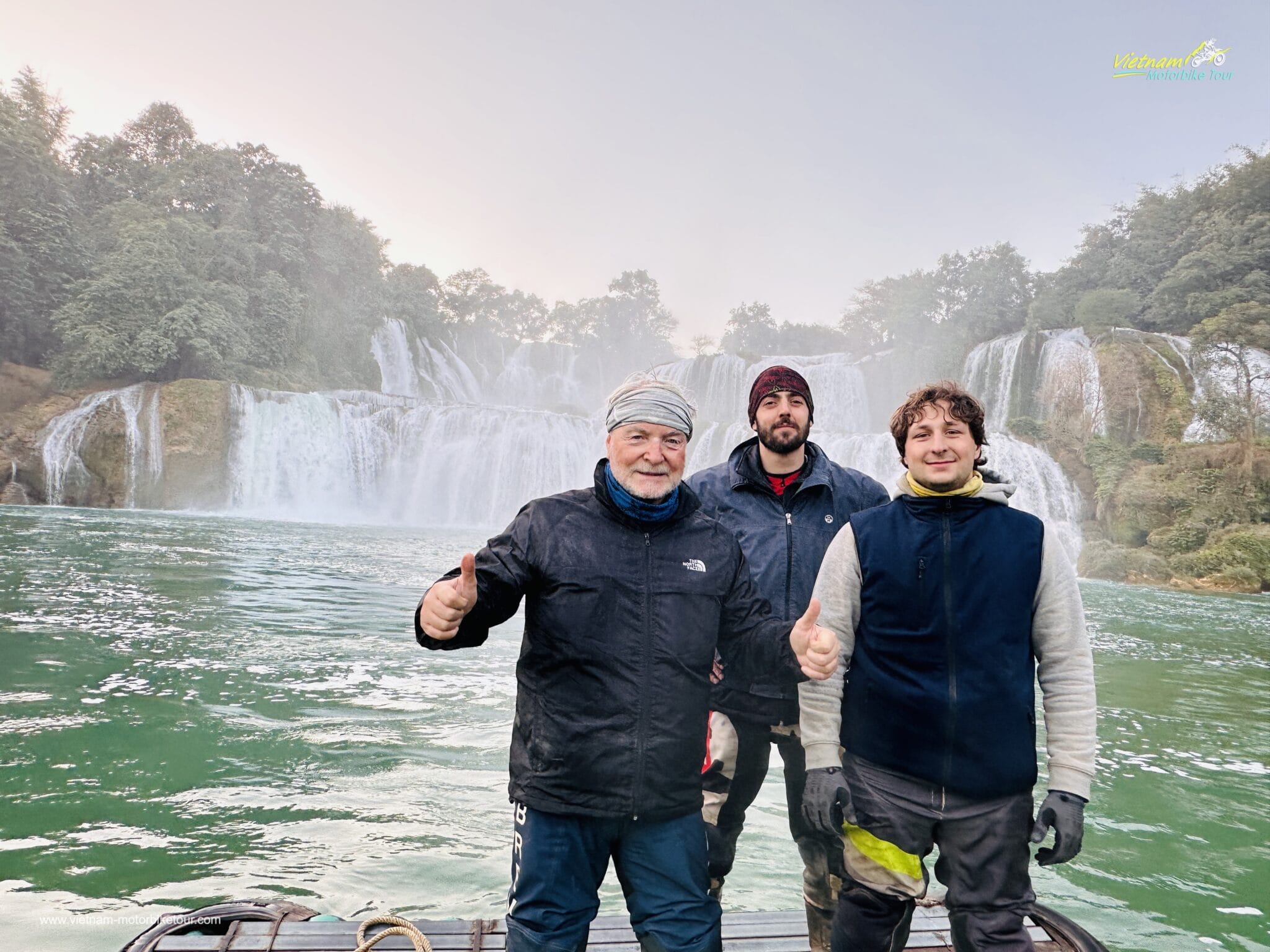
If arrival and admission hours allow, make your first visit to Ban Gioc Waterfall from the Vietnamese visitor area. Across broad rock steps, the Quay Son River falls in white curtains into the valley below. Spray, changing light and the surrounding karst make this a powerful finale to the day’s ride. Water volume and colour vary with rainfall and upstream conditions; the waterfall does not look identical in every season. The international boundary gives the setting additional significance, and all visits follow local access instructions.

If the ride takes longer than expected, check in first and reserve the waterfall visit for tomorrow morning. This overnight stop is deliberately close to Ban Gioc, giving the tour a second opportunity to enjoy its main attraction. A raft outing, when permitted and suitable, is a separate option rather than an assumed inclusion. Enjoy dinner and a quieter evening near the valley. After the mountain roads of this Cao Bang motorcycle tour, falling water offers a different kind of energy, one you can appreciate without another kilometre in the saddle.


15

Day 15 Ban Gioc to Lang Son

Ban Gioc • Trung Khanh • Quang Uyen • Dong Khe • That Khe • Lang Son

Distance  Approximately 210–250 km

Time  6–7.5 hours riding • 8–10 hours overall with selected visits

Road character  Paved regional roads and National Highway 4A; mountain bends, freight traffic and possible construction delays.

Key highlights  Ban Gioc morning visit if needed; optional Nguom Ngao Cave; historic Dong Khe corridor; Lang Son border trading culture.

Overnight  Lang Son • proposed town hotel

Begin with the waterfall if yesterday’s arrival left too little time to appreciate it. Staying nearby makes this possible without repeating a long approach, although access still follows local opening arrangements. Morning light can reveal a different face of Ban Gioc, with the sound of water carrying across the valley before the day becomes busier. If the main visit was completed yesterday, an early excursion to nearby Nguom Ngao Cave may be considered instead. These are alternatives within a long transfer day, rather than two lengthy visits added together.

Nguom Ngao’s visitor route passes through illuminated chambers with stalactites, stalagmites and flowing mineral forms. After days of limestone scenery above ground, the cave offers a revealing glimpse of the processes working beneath it. Walking surfaces can be wet and uneven, so suitable footwear and a measured pace matter. An extended cave visit should be omitted when it would compromise the ride to Lang Son. The purpose of this morning is to enjoy one memorable experience well and leave with a comfortable daylight margin.

Ride back through Trung Khanh and the Quang Uyen corridor, then continue towards Dong Khe and National Highway 4A. Farmed valleys, small settlements and winding sections keep the scenery varied. Around Dong Khe, your guide can explain the significance of the 1950 Border Campaign during the First Indochina War. The route connects naturally with the history encountered earlier at Dien Bien Phu, while showing that the struggle for access and supply routes extended across a much wider northern landscape. A short historical pause depends on the day’s progress.

Continue south through That Khe towards Lang Son. The road serves local communities and regional trade, so expect trucks, turning vehicles and changing traffic levels. After lunch, maintain a steady rhythm and use short breaks to keep attention fresh. This is the final full motorcycle stage of the proposed programme, a moment to enjoy the confidence and companionship built over the journey. It deserves the same care as the opening day, especially when familiar riding habits and the anticipation of the coast make it tempting to hurry.

Arrive in Lang Son, complete the planned motorcycle handover and settle into your hotel. If time allows, take a gentle walk near the Ky Cung River or choose a local dinner featuring roast duck or pho chua, the region’s tangy noodle dish. Tam Thanh Cave and Pagoda are an additional possibility only with an early arrival. Tonight’s priority is a good meal, straightforward packing and rest before the early cruise transfer. The riding chapter closes in a town shaped by movement and exchange, an apt place to look back on the roads you have shared.


16

Day 16 Lang Son to Lan Ha Bay and Overnight Cruise

Lang Son • prearranged private road transfer • confirmed cruise port • Lan Ha Bay

Distance  Approximately 200–240 road km to the Tuan Chau area • cruise distance varies

Time  No scheduled riding • allow roughly 4.5–6 hours for the private road transfer

Travel character  Early private vehicle transfer; route, departure time and arrival buffer matched to the cruise. Tender transfer may follow.

Key highlights  Lan Ha Bay limestone islands; first afternoon afloat; operator-dependent kayaking or rowing-boat activity; overnight cabin.

Overnight  On board • proposed one-night Lan Ha Bay cruise with cabin category to be agreed

ha long bay vietnam 12 - 17 days from Hanoi through the mountain north to the coast
Lan Ha Bay

Today changes the journey’s pace completely. After an early breakfast or a packed breakfast arranged by the hotel, leave Lang Son by private vehicle for the confirmed cruise departure point. In the recommended 17-day design, the motorcycles are handed over yesterday and recovered under the operator’s prearranged logistics. This protects the cruise connection and lets you enjoy the transition towards the coast. Departure is calculated backwards from the ship’s check-in deadline, with a generous margin for road conditions rather than a last-minute dash to the pier.

Tuan Chau is the planning basis for this programme, but the actual port, lounge and tender arrangements depend on the selected cruise. Many overnight Lan Ha sailings require guests to arrive late in the morning. The transfer route must be checked shortly before departure, particularly where roadworks affect the Lang Son–Quang Ninh connection. Continuing by motorcycle is an alternative only when a suitable later embarkation has been confirmed in writing. The standard plan uses a passenger transfer, keeping the connection clear and leaving you free to enjoy the first afternoon afloat.

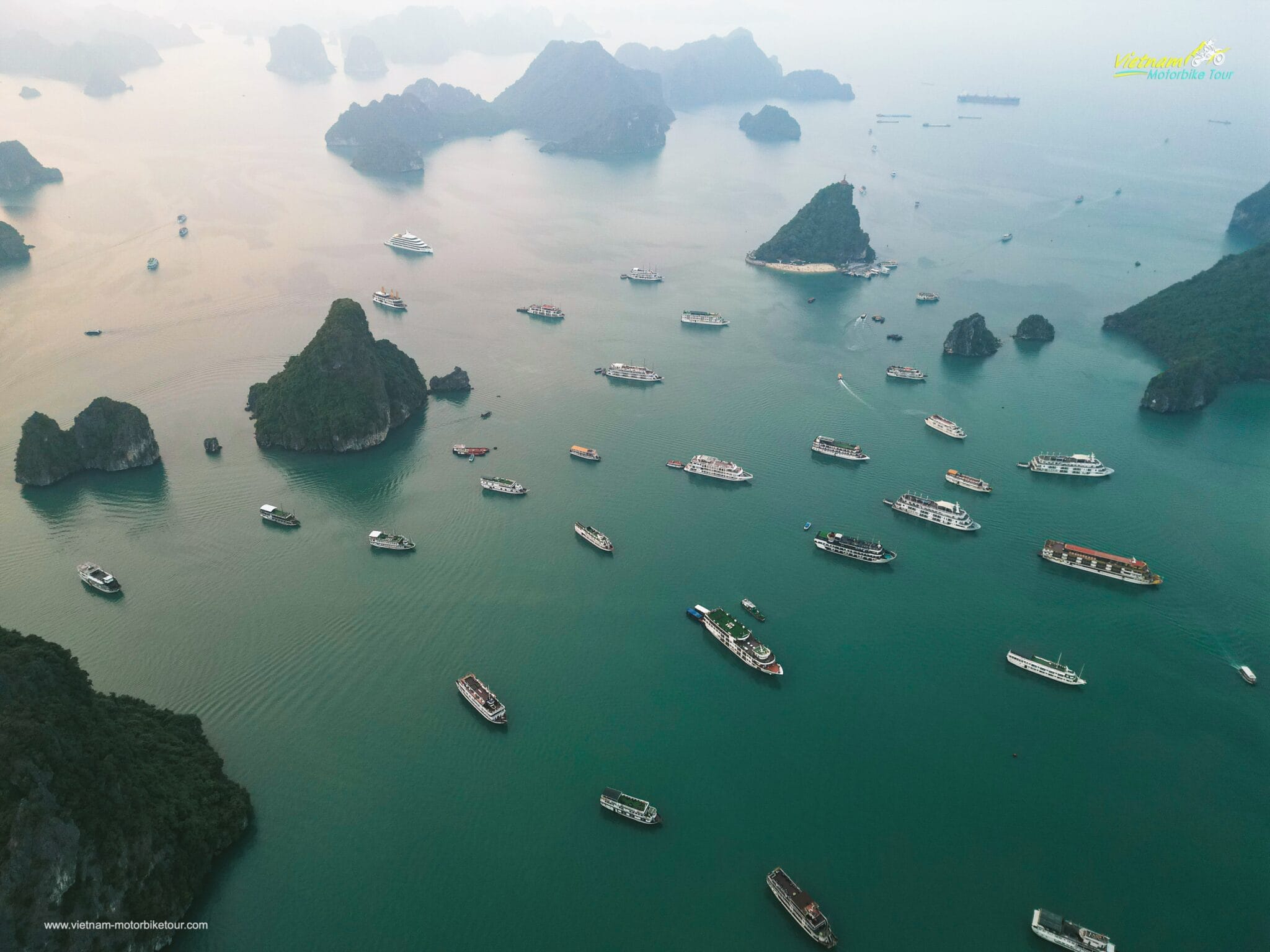
At the port, complete registration and follow the crew’s boarding instructions, with your passport available for the required checks. A welcome briefing introduces the vessel, cabin arrangements and safety procedures. Lunch is normally part of the selected overnight cruise programme, although the final meal plan must be confirmed. As the vessel moves into the bay system, limestone islands begin to rise around the water. After weeks of climbing through karst country, seeing related landforms standing in the sea gives the journey a satisfying visual connection.

The afternoon follows the booked ship’s authorised itinerary. Depending on the vessel, this may include kayaking in a sheltered area, a rowing-boat outing or time to enjoy the scenery from the deck. Some cruises visit the Dark and Bright Cave area, while others use different lagoons or anchorages; no particular stop is guaranteed until the cruise is selected. Activities depend on tides, weather, local permissions and operating conditions. You can also choose a quieter afternoon on board, enjoying the simple pleasure of moving through the landscape without steering.

As evening settles, take time on deck before dinner. The bay is a working and visited seascape, so expect other vessels as well as moments of stillness. What matters is the change in perspective: ridgelines now appear as island silhouettes, and the day’s destination comes to you across the water. Retire to your cabin for the final night of this Northern Vietnam motorcycle and cruise journey. After the intensity of the roads, an evening afloat provides space for the experiences to settle.


17

Day 17 Lan Ha Bay to Hanoi

Lan Ha Bay • confirmed disembarkation port • prearranged road transfer • Hanoi

Distance  Approximately 150–180 road km from the Tuan Chau area to central Hanoi • cruise distance varies

Time  No scheduled riding • morning cruise programme then approximately 2.5–3.5 hours by road

Travel character  Cruise and possible tender transfer, followed by a passenger vehicle using roads appropriate to that vehicle.

Key highlights  Early morning bay scenery; selected cruise activity; brunch or breakfast according to the ship; return to Hanoi.

Overnight  Tour ends in Hanoi • an additional hotel night is recommended before onward flights

Wake to the bay outside your cabin window. After the concentrated attention of mountain riding, there is a particular luxury in having nowhere to steer and no luggage to strap onto a motorcycle. Step onto the deck if conditions allow and watch the islands emerge through the morning light. Some sailings offer an early tai chi session, while others begin more quietly with breakfast. Neither sunrise colours nor a particular activity can be promised, but the chance to enjoy the water before disembarkation is a fitting final experience.

The morning follows the itinerary of the vessel booked for your departure. It may include a short cave, lagoon or rowing-boat visit, or simply scenic cruising back towards the port. The exact sequence depends on the ship and its permitted sailing area. Listen to the crew’s instructions about tenders, life jackets, cabin checkout and the return sailing. For guests who prefer to rest, remaining on board may be possible within the ship’s operating arrangements. The emphasis is on an enjoyable close rather than one last demanding excursion.

Breakfast, an early lunch or brunch is served according to the selected cruise’s meal schedule. While the ship returns, the landscape offers time to connect the tour’s many forms of limestone: the forested hills of Pu Luong, the cultivated rock country of Dong Van, the towers around Ban Gioc and the islands of the bay. These are different places with different stories, joined here by a journey that has allowed the changes between them to be felt. The final photographs may be of water, but the memories reach much farther inland.

Disembark at the confirmed port, commonly in the late morning for a one-night sailing, and meet the prearranged driver for Hanoi. If Tuan Chau is used, allow approximately two and a half to three and a half hours by road, depending on traffic and the finishing point. This is a passenger transfer, so its route can differ from the roads used during the motorcycle section. Keep valuables, travel documents and essential medicines in your hand luggage, and check that all personal belongings have been collected from the cabin.

Aim to reach Hanoi during the afternoon, with the exact timing governed by the ship’s arrival and road conditions. The programme ends at the agreed hotel or central drop-off point; airport transfers require separate arrangements. An additional Hanoi night is recommended before onward flights, especially because weather restrictions can alter cruise operations. Seventeen days after departure, the capital feels familiar in a new way. Behind its traffic and café doors now lies a much larger personal map of northern Vietnam, traced through mountain roads, local conversations and an unhurried final night at sea.

The Motorbikes: Your Choice of Machine

GENUINE DUAL-SPORT FLEET · 150CC – 300CC

Our motorcycle fleet features genuine, modern adventure-touring and dual-sport machines (150cc – 300cc) built for all terrains—from winding tarmac mountain passes like O Quy Ho, Hai Van, and Ma Pi Leng to rugged backcountry trails.

Thoroughly Inspected — Before Every Tour
Daily Pro Inspection — Certified Mechanics
Full Touring Rigging — Racks, Bars & USB
DUAL SPORT · 149 CC Fleet Ready Honda XR150L

Honda XR150L

Accessible, economical dual-sport for backroads & scenic loops

The Honda XR150L is built for riders seeking both reliability and affordability on their Vietnam journeys. With smooth handling, strong fuel efficiency, and off-road capability, this bike is a favorite choice for Vietnam motorcycle tours, whether cruising rural backroads or venturing into remote landscapes.

  • Engine Air-cooled, single-cylinder, four-stroke dual-sport
  • Power / Torque 12 bhp · 12.5 Nm @ 6,000 RPM
  • Kerb weight 129 kg
  • Seat height 825 mm
  • Fuel capacity 12 L (450+ km range)
View Machine Details
DUAL SPORT · 249 CC Fleet Ready Honda CRF250L

Honda CRF250L

Proven, reliable dual-sport for technical trail adventures

The Honda CRF250L is a proven dirt bike designed for riders who love off-road adventures. With its agile frame, reliable Honda engineering, and smooth handling, it’s the perfect motorcycle for exploring Vietnam’s rugged mountain trails, jungle tracks, and remote villages on a Vietnam Dirt Bike Tour.

  • Engine Single cylinder, 4 stroke, 4 valve, DOHC
  • Power / Torque 24 bhp · 22 Nm @ 7,000 RPM
  • Kerb weight 144 kg
  • Seat height 875 mm
  • Fuel capacity 7.8 L (lightweight agile range)
View Machine Details
DUAL SPORT · 286 CC Fleet Ready Honda CRF300L

Honda CRF300L

Lightweight off-road agility with responsive power

The Honda CRF300L is the ultimate dirt bike for riders craving off-road adventures in Vietnam. From rugged mountain trails to jungle tracks and river crossings, this lightweight dual-sport machine delivers agility, power, and excitement. Perfect for Vietnam Dirt Bike Tours and enduro lovers who want to explore beyond the pavement.

  • Engine Liquid- cooled, Single, DOHC
  • Power / Torque 27 bhp · 26.6 Nm @ 6,500 RPM
  • Kerb weight 142 kg
  • Seat height 880 mm
  • Fuel capacity 7.8 L (lightweight trail agile range)
View Machine Details

Important Tour Advice · Read Before Riding

ESSENTIAL BOOKING & EXPEDITION TERMS
01

Personal Tailoring: We can fully customize riding pace, daily distance, and accommodation to match your preferred travel dates and riding style.

02

Deposit & Confirmation: A 30% deposit secures your tour booking. The remaining balance is payable prior to tour departure or upon arrival in Hanoi.

03

Travel Insurance: Personal travel and medical insurance is compulsory for all riders participating in motorcycle adventure tours in Vietnam.

04

Technical Support: In case of technical breakdown, we replace or repair the bike promptly. If an unavoidable issue shortens your ride, unused days are refunded.

05

Rider Experience: All riders must be healthy, physically fit, and confident in their motorbiking ability for medium-to-large displacement motorcycles.

06

Flexible Rescheduling: Deposits are non-refundable, but you are free to postpone your booking to another scheduled date should unforeseen changes arise.

Price & Reservation

TRANSPARENT PRICING · DIRECT LOCAL BOOKING
All-inclusive per rider
Contact
Deposit to hold a place30% deposit upon confirmation
Payment termsBalance due on arrival / prior to tour
Motorcycle choiceIncluded with fuel & gears
Group format2 - 10 Riders (Max 12)
DIRECT OPERATOR GUARANTEE

All tours are organized and operated directly by Vietnam Motorbike Tour. Experienced English-speaking road captains, professional mechanics, and 24/7 dedicated support.

TALK TO A LOCAL EXPERT

Have questions about route difficulty, bike selection, or customized dates? Our tour specialists are ready to help you plan the ride.

WhatsApp Us

Frequently Asked Questions

How much riding experience do I need?

This itinerary suits riders already comfortable with their own motorcycle, sustained mountain riding and several consecutive days on the road. You should be confident with clutch control where applicable, hill starts, cornering and controlled downhill braking. Days 2, 4, 8, 9, 14 and 15 are substantial stages, and the Dong Van plateau adds exposed mountain roads. It is not an appropriate first riding lesson; discuss your recent experience honestly before booking.

What licence do foreign riders need in Vietnam?

You need motorcycle entitlement legally recognised in Vietnam for the motorcycle supplied. For many visitors this means an eligible 1968 Vienna Convention International Driving Permit together with the original valid domestic motorcycle licence in the appropriate category; recognition depends on the issuing country and documents. A car-only licence, a 1949-format permit or an unofficial online permit should not be assumed sufficient. Ask the operator to check your exact documents and current requirements before paying a deposit.

Can I join as a passenger instead of riding?

A passenger place with an experienced local rider may be possible, but it requires separate confirmation. Ask about rider qualifications, motorcycle suitability, passenger comfort, luggage space and insurance. Long mountain days can also be tiring for passengers. If nobody in your party is an experienced rider, a different pace or vehicle-supported itinerary may be more suitable.

When is the best time for this tour?

Spring and autumn are often useful planning windows, but there is no ideal month for every stop. Rice cycles differ between Pu Luong, Sapa and Mu Cang Chai, while waterfall flow responds to rainfall and upstream conditions. Summer can bring heat, heavy rain and landslide disruption; winter can bring cold and fog at altitude. Coastal storms can affect Lan Ha sailings. Choose dates around riding conditions and cruise reliability before concentrating on a particular landscape colour.

Is this a paved-road tour or an off-road tour?

The described programme primarily follows paved roads, with narrower concrete or surfaced village approaches. Mountain roads may still have gravel, mud, potholes, broken edges or temporary repairs. This is not a promise of continuous smooth tarmac, nor a scheduled technical off-road expedition. Optional terrace lanes and the Tram Tau connection require a separate assessment and are omitted when unsuitable.

Which motorcycle and support services are included?

No particular model or engine size is specified by this programme. Before booking, request the exact motorcycle, seat height, maintenance standard, luggage system, helmet and protective equipment. Confirm whether the price includes an English-speaking riding guide, mechanic, support vehicle, fuel, spare parts and recovery. Ask how breakdowns, bike damage and any damage excess are handled in writing.

What travel insurance should I arrange?

Ask your insurer to confirm in writing that the policy covers you for the actual motorcycle capacity, riding or pillion status, licence documents and guided tour activities. Check medical treatment, evacuation, repatriation and personal liability, as well as exclusions. The operator’s vehicle insurance and your personal travel cover serve different purposes. Do not assume a general holiday policy automatically covers motorcycle touring. Check cover for the planned water activities and weather-related disruption as well.

What should I pack?

Bring appropriate protective riding equipment, waterproof layers and warm clothing for altitude. Add light clothing and footwear suitable for the cruise, with swimwear if you want to join permitted water activities. Pack a small overnight bag for the ship and keep your passport, medicines and valuables with you. Before booking, confirm where motorcycle equipment and the main luggage will be stored or transported after the Lang Son handover, and when you will receive them again.

What accommodation and food should I expect?

The proposed mix includes town hotels, rural lodges or homestays, and one cruise night. Room standards, heating, bathrooms and bed arrangements vary, particularly in remote locations. Confirm named properties, the vessel and cabin category before booking. Share allergies and dietary requirements early; small kitchens and shared cruise facilities may have limitations. Land meals, cruise meals, beverages and any supplements should be itemised in the quotation.

Which activities are optional and what does the cruise include?

Fansipan, the Thac Ba boat trip, the Dong Van circuit and a Nho Que excursion need separate confirmation. At Ban Gioc, cave and raft visits depend on the agreed schedule and access. The cruise finale is part of the proposed product, but the actual vessel, cabin, meals, transfers and activities must be specified in the quotation. Kayaking, rowing boats, swimming and particular cave visits depend on the selected ship and conditions; they are not interchangeable guarantees.

Do I need permission near the China border?

Foreign visitors may need local permission for some places around the northern frontier. The operator should check the exact Dong Van, Lung Cu and Ban Gioc routes with the relevant authorities before departure. Carry your passport and follow signs, checkpoints and local instructions. This programme stays in Vietnam: crossing into China, visiting restricted markers and riding patrol roads are not included. Access can change even where a general permit or itinerary has been arranged.

Can I keep the Dong Van day completely free?

Yes. Day 12 has no compulsory transfer and can be used for rest or independent time in town. The optional 80–110 km Lung Cu, Lo Lo Chai and Sa Phin circuit is a substantial sightseeing outing, so choose it according to your energy. Day 6 in Sapa also has no scheduled riding. For longer visits at Ta Xua, Nho Que or Ban Gioc, extending the journey gives a better experience than adding stops to already demanding transfer days.

Why use a private vehicle from Lang Son to the cruise?

A scheduled overnight cruise usually requires arrival late in the morning, while a motorcycle journey needs a larger margin for road conditions, fatigue and handover. The recommended design finishes riding in Lang Son on Day 15 and uses a prearranged private transfer on Day 16. Riders wishing to continue on two wheels need a separately confirmed later embarkation that works with daylight riding. Without that arrangement, add a coastal night and extend the tour rather than rely on a rushed connection.

What happens if the weather or roads change?

The guide reassesses mountain stages using current local information and may change routes, stops or accommodation. The cruise also depends on weather, port clearance and the vessel’s operating conditions. A shore-based replacement or another arrangement may

Comments & Discussion

SHARE YOUR THOUGHTS

Leave a Reply

Your email address will not be published. Required fields are marked *

This site uses Akismet to reduce spam. Learn how your comment data is processed.

17 DAYS TOUR Contact
Reserve