A 12-Day Motorbike Adventure from Mountain Passes to Halong Bay
12 DAYS · Vietnam Loop GUIDED MOTORCYCLE TOUR HONDA FLEET ALL-TERRAIN

A 12-Day Motorbike Adventure from Mountain Passes to Halong Bay

Route
13 Waypoints Circuit View Itinerary
Hanoi Ba Be Lake Ban Gioc Waterfall Bao Lac Dong Van Ha Giang Sapa Mu Cang Chai Ta Xua Mai Chau Ninh Binh Halong Bay Ha noi
Reserve a place Contact Tailored custom quote
Duration 12 Days 11 Nights Riding
Fleet Honda Fleet 150cc – 300cc
Group 2 - 10 Riders (Max 12) Small Group Tour
Support Mechanic from 7+ riders Guide & Support
Deposit 30% deposit upon confirmation Secure Booking

Tour Overview & Highlights

12 DAYS EXPEDITION

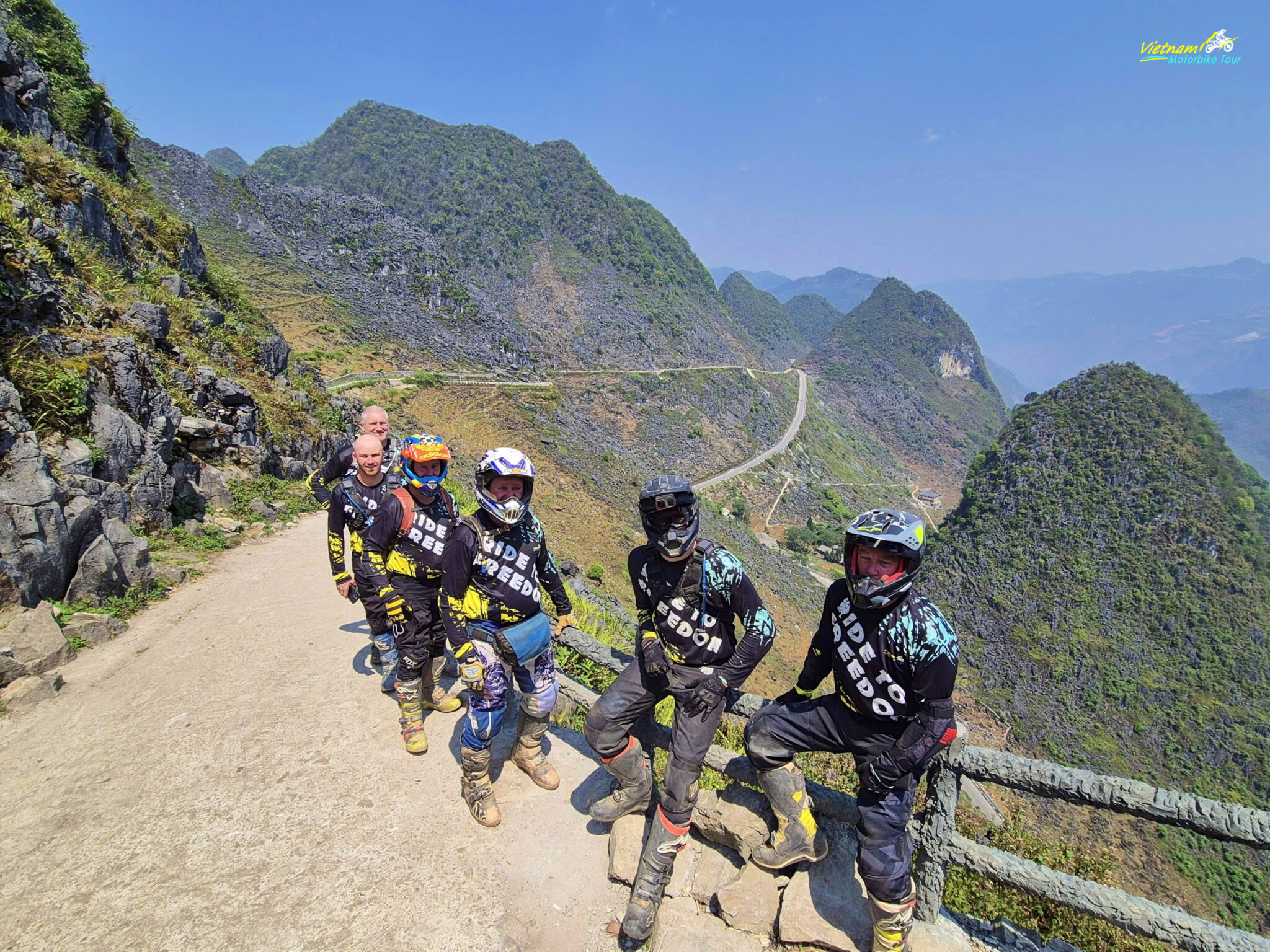
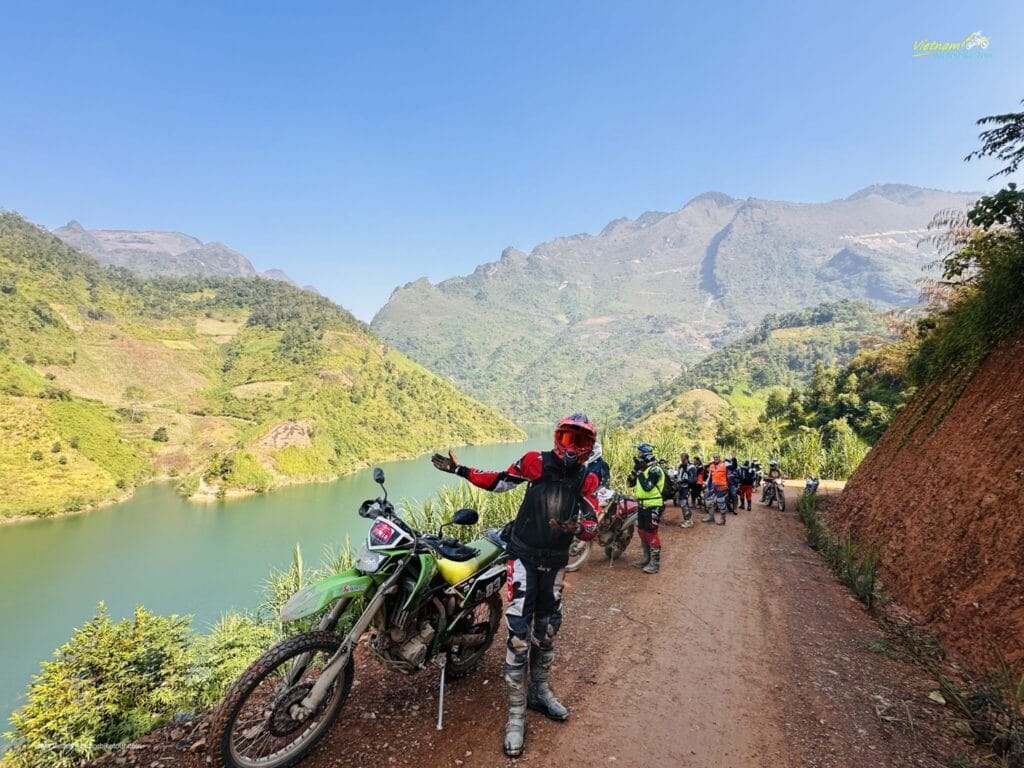
There is a moment on a northern Vietnam motorcycle journey when the road becomes more than a way of getting somewhere. It happens above a limestone gorge, beside a hillside of rice terraces, or over tea with someone whose village you would never have found from a coach window. This 12-day Northern Vietnam motorbike tour follows those moments from Hanoi to Ba Be Lake, Ban Gioc Waterfall and the dramatic passes of Ha Giang, before crossing to Sapa, Mu Cang Chai and the cloud country of Ta Xua. Ride winding mountain roads and village backroads, with selected dirt sections when conditions allow. Discover the living traditions behind the landscapes, unwind in Mai Chau and Ninh Binh, and trade your riding boots for a night on Halong Bay. A rewarding dual-sport adventure for experienced riders who want to feel the journey.

Expedition Route Map

GPS TRACKS · 12 DAYS

Detailed Tour Itinerary

12 DAYS · DAY-BY-DAY ROUTE
01

Day 1 — Hanoi to Ba Be Lake: Leaving the City, Finding the Rhythm

Distance: approximately 230–260 km | Riding: 6–7 hours
Terrain: urban traffic, paved secondary roads, winding rural lanes; occasional broken surfaces.
Highlights: countryside north of Hanoi, Ba Be National Park, lakeside Tay communities.
Proposed overnight: Ba Be lakeside area.
dong van motorcycle tour to ba be lake 25 - A 12-Day Motorbike Adventure from Mountain Passes to Halong Bay
Ba Be Lake


Hanoi is already awake when we prepare to leave: breakfast stalls steaming, coffee dripping slowly through metal filters, and scooters threading their way through the morning. After the motorcycle briefing, equipment checks and a chance to settle into your riding position, we begin our journey north. The first kilometres are about finding a comfortable rhythm together, getting used to local traffic and allowing the city to fall behind us.

Gradually, shopfronts give way to vegetable gardens, small workshops and stretches of cultivated countryside. Wherever the day’s timing allows, quieter secondary roads bring us closer to ordinary life: a roadside market setting up for the day, farmers moving between their fields, children cycling home. These modest scenes are part of what makes a Vietnam motorbike adventure so absorbing. You are travelling through a working landscape, with time to notice its details.

We pause for a straightforward local lunch before continuing into hillier country. The corners become more frequent, the air feels different, and the road begins to demand a little more attention. Today establishes the habits that will serve us throughout the tour: relaxed shoulders, smooth braking, sensible spacing and an unhurried approach to blind bends. There is plenty of riding ahead; the pleasure lies in settling into it.

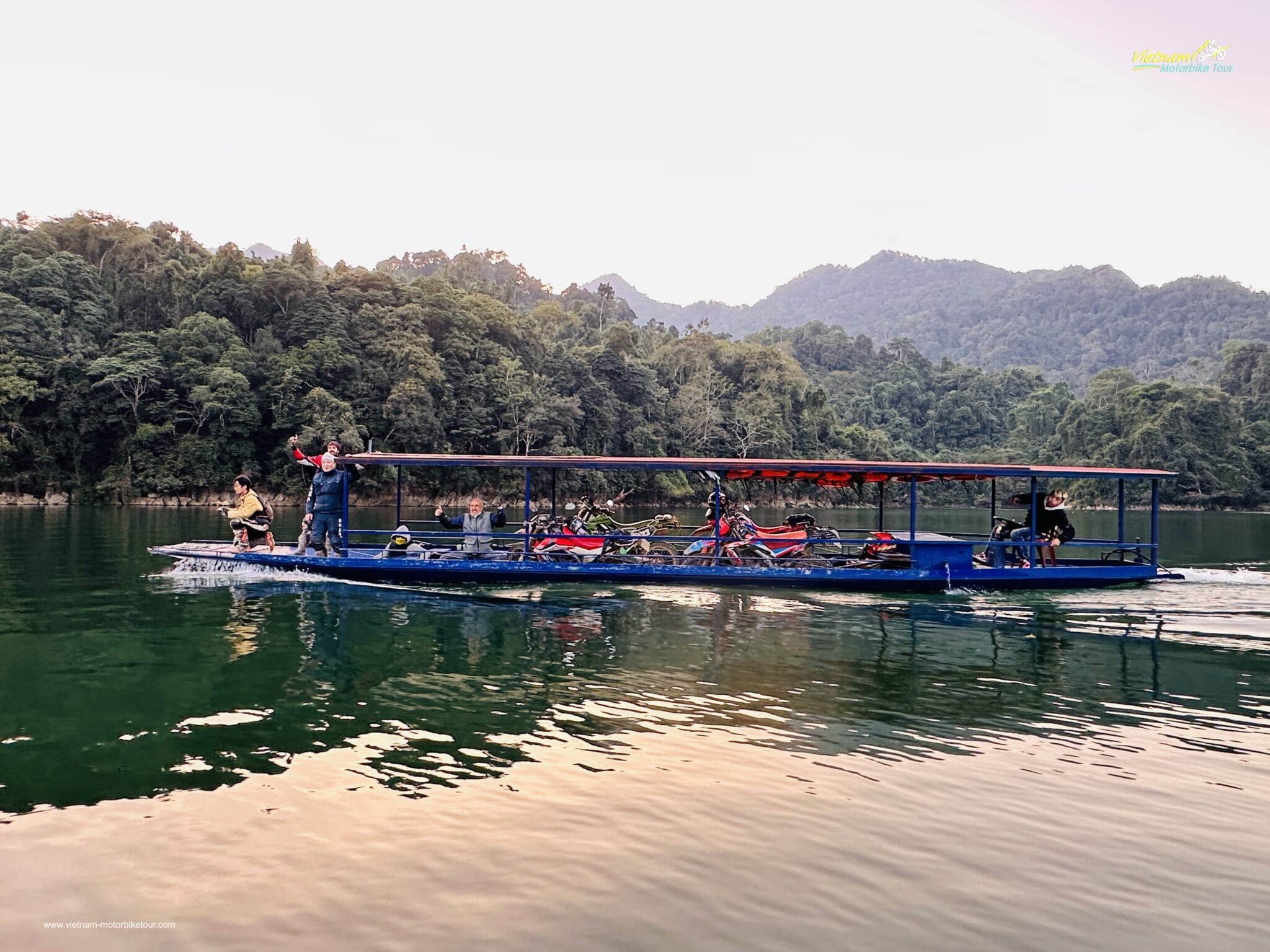
By late afternoon, we aim to reach Ba Be, where forested limestone slopes gather around the lake. This protected wetland landscape supports both remarkable biodiversity and communities whose lives are closely connected with the surrounding land and water. A short lakeside walk offers a gentle introduction, with the possibility of a brief boat outing if arrival time and local arrangements permit. A longer lake excursion would require additional time in the itinerary. Background: Ramsar’s Ba Be case study.

The evening is best kept simple. Settle into the proposed lakeside accommodation, rinse away the road dust and enjoy dinner at an easy pace. In a Tay village setting, timber houses, family kitchens and the sounds carrying across the water introduce a different tempo from Hanoi. The first day ends with the satisfying feeling of having travelled somewhere, rather than merely arrived.
02

Day 2 — Ba Be Lake to Ban Gioc Waterfall: Into the Limestone Borderlands

Distance: approximately 230–260 km | Riding: 6–7.5 hours
Terrain: paved mountain roads, winding passes and village approaches; intermittent gravel or roadworks possible.
Highlights: Cao Bang limestone scenery, Quay Son River, Ban Gioc Waterfall.
Proposed overnight: Ban Gioc or nearby village accommodation.

ba be lake motorbike tour to ban gioc waterfall cao bang 7 - A 12-Day Motorbike Adventure from Mountain Passes to Halong Bay
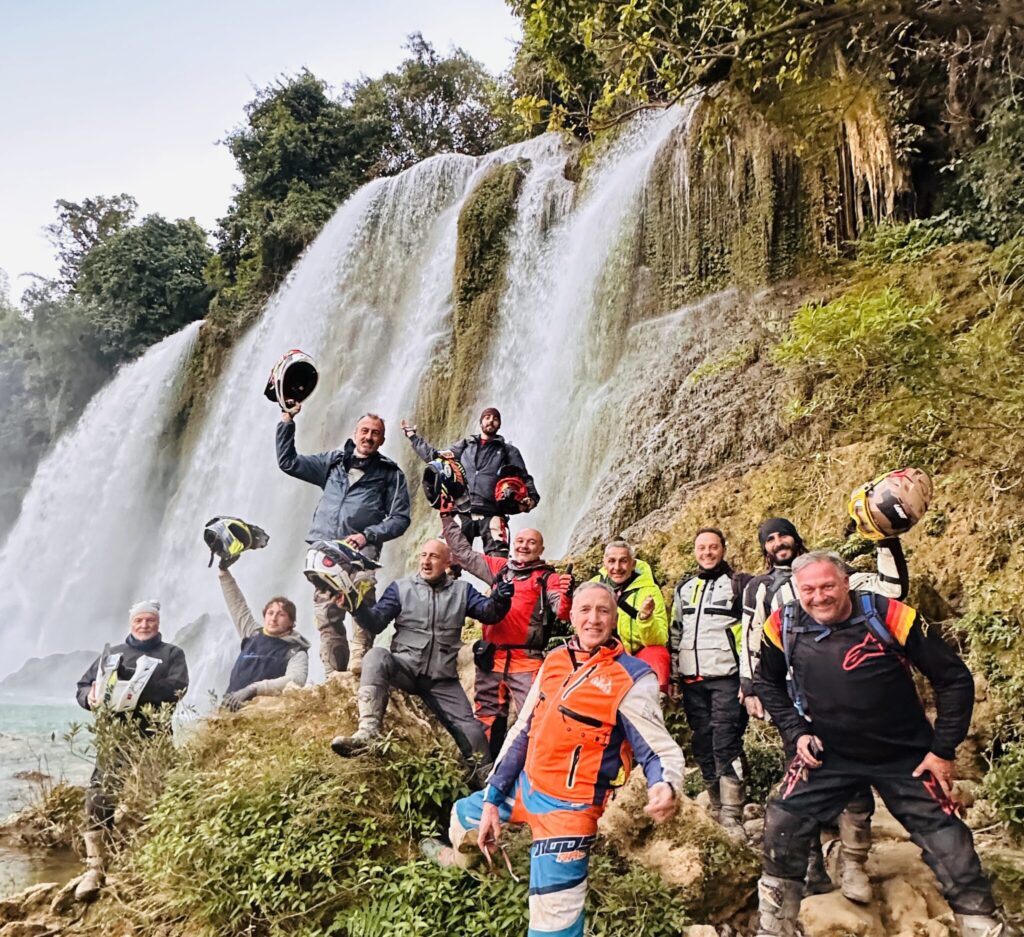
Ban Gioc Waterfall


Morning at Ba Be invites you to linger. A little mist may soften the water, and breakfast feels far removed from the bustle of the capital. Today, however, is a substantial riding stage, so we leave early and follow the roads northeast towards Cao Bang’s limestone country. The lake disappears behind us, replaced by wooded hills, cultivated valleys and a succession of bends that gradually draw us deeper into the mountains.

This is a day to enjoy the changing scale of the landscape. At one moment, the road runs beside modest houses and kitchen gardens; at the next, a wall of limestone rises beyond the fields. We take breaks where there is room to stop comfortably, giving you time to look properly rather than collecting photographs from the saddle. The route itself provides much of today’s discovery, so we keep unnecessary detours to a minimum.

As we approach the Ban Gioc area, the countryside opens into river valleys framed by steep karst formations. Here, roads connect communities, farms and market towns across a striking border landscape. Your guide can help make sense of what you see, from the crops in season to the different building styles along the way. Cultural encounters remain spontaneous and respectful; village life is not arranged around our arrival.

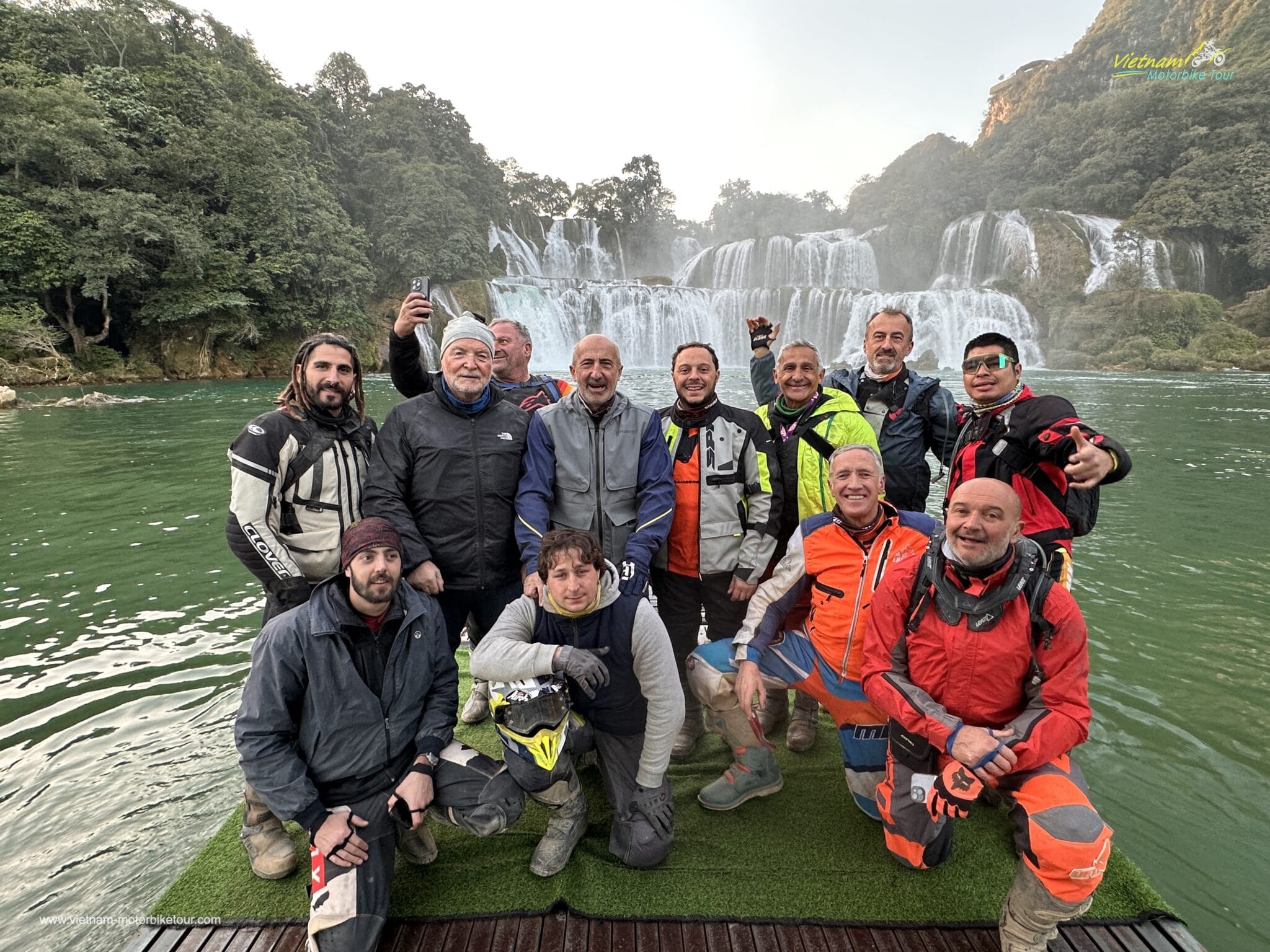
Ban Gioc is the day’s main event. On the Vietnam–China border, the Quay Son River spills across broad limestone steps, breaking into separate curtains of water. Its character changes with rainfall: sometimes elegant and translucent, sometimes powerful enough for the sound and spray to announce it before the full view appears. We allow time to walk the designated visitor area and enjoy the falls from the Vietnamese side. A local raft excursion may be considered if conditions, operating arrangements and timing are suitable. Destination reference: Vietnam Tourism.

By evening, the bikes are parked and the pace eases. Nearby accommodation gives us a chance to enjoy this corner of Cao Bang beyond a brief sightseeing stop. Nguom Ngao Cave is a worthwhile possible addition, but it is deliberately optional on this long day. The priority is an enjoyable waterfall visit and a daylight arrival, followed by dinner and a proper rest before tomorrow’s mountain roads.

03

Day 3 — Ban Gioc to Bao Lac via Me Pia Pass: The Road Takes Centre Stage

Distance: approximately 240–280 km | Riding: 7–8 hours
Terrain: twisting mountain tarmac, tight hairpins, narrow village roads and potentially damaged sections.
Highlights: western Cao Bang landscapes, Me Pia/Khau Coc Cha Pass, Bao Lac.
Proposed overnight: Bao Lac.

We leave the waterfall country early, heading west into a more demanding day of mountain travel. Breakfast is followed by a careful review of the route and current road conditions: today’s distance matters, but the sequence of bends, village crossings and slower mountain sections matters more. This is the sort of stage that rewards riders who enjoy sustained concentration and the quiet satisfaction of handling a motorcycle smoothly.

The landscape unfolds in layers. Valleys narrow, ridgelines overlap, and villages appear between cultivated slopes. There are stretches where the road feels almost conversational, gently curving from one settlement to the next, followed by climbs that call for more deliberate gear selection. Lunch is a practical pause along the route, with time to drink, stretch and reset before the afternoon’s riding.

Our defining objective is Me Pia Pass, also known as Khau Coc Cha. Famous for its tightly stacked bends, it has become one of Cao Bang’s most recognisable mountain-road images. Yet the experience from the saddle is more intimate than the photograph suggests: a series of individual corners, changing gradients and brief glimpses across the valley. The right approach is patient and controlled, with enough attention left over to appreciate where you are.

We stop at an appropriate location to enjoy the setting. The elevated viewpoint commonly seen in photographs involves a separate walk, so it is not treated as a quick roadside photo stop. If the group is progressing well, the weather is clear and the trail is suitable, there may be time to walk towards it. Otherwise, we enjoy the pass itself and continue towards Bao Lac. The characteristic fourteen bends are documented in Cao Bang’s local cultural publication. Cao Bang reference.

Late in the day, Bao Lac provides a welcome change of pace. This working mountain town is a place to refuel, rest and prepare for the next stage, rather than rush through an additional sightseeing list. After checking in, a short stroll offers a glimpse of everyday trading and evening routines. Over dinner, the conversation often returns to the road: the corner that flowed perfectly, the valley that appeared unexpectedly, and the growing feeling of being properly immersed in northern Vietnam.

04

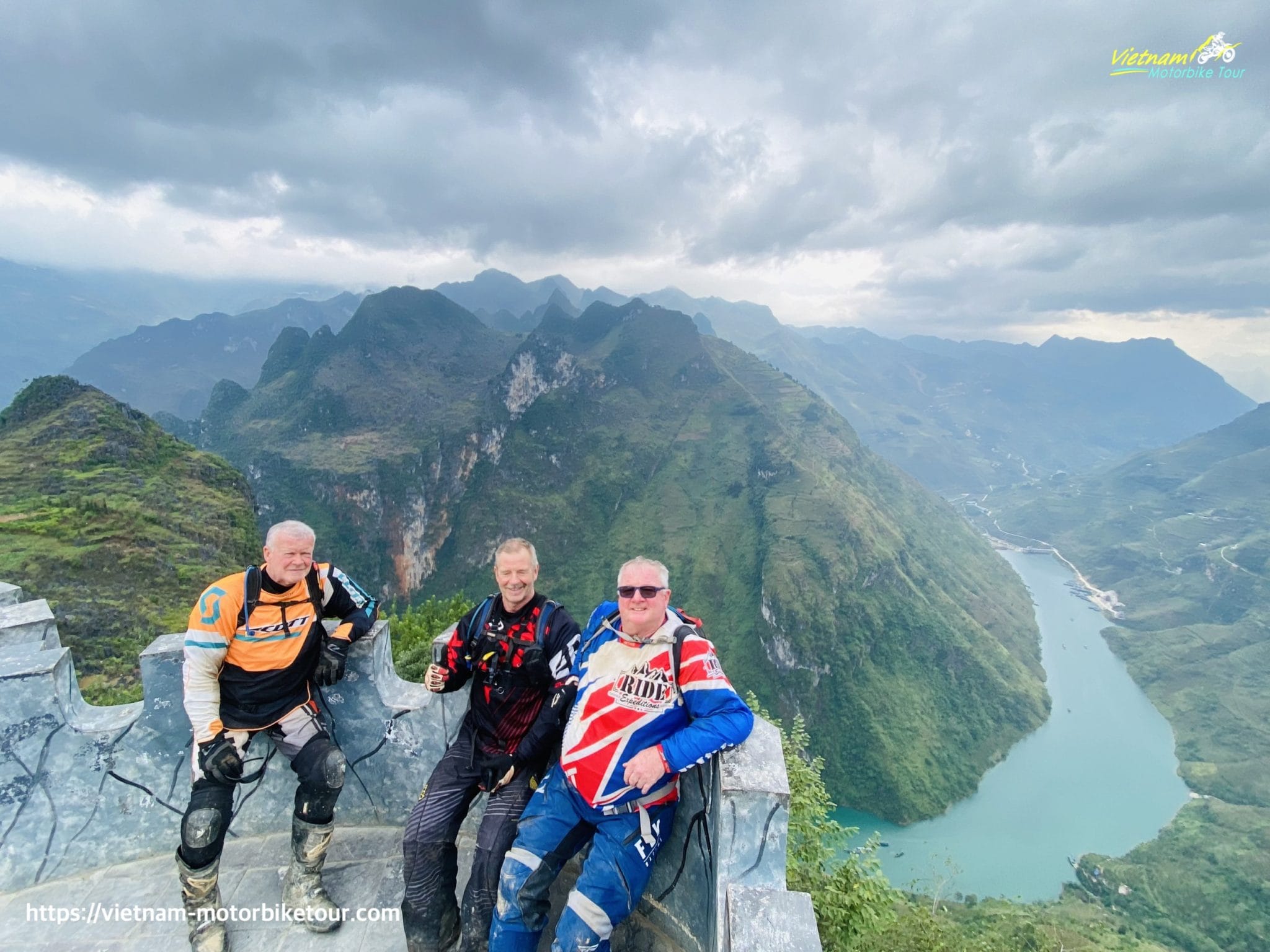
Day 4 — Bao Lac to Dong Van via Meo Vac and Ma Pi Leng: Above the Nho Que Gorge

Distance: approximately 120–150 km | Riding: 4–5 hours
Terrain: paved mountain roads, sustained bends, steep drops and occasional rough patches.
Highlights: Meo Vac, Ma Pi Leng Pass, Nho Que River viewpoints, Dong Van Old Quarter.
Proposed overnight: Dong Van.

ha giang loop motorbike tour 9 - A 12-Day Motorbike Adventure from Mountain Passes to Halong Bay

Today’s shorter distance gives us something precious after yesterday’s long stage: room to stop, look and enjoy the landscape without constantly watching the clock. Leaving Bao Lac, we follow mountain roads towards Meo Vac, climbing into country where limestone becomes the dominant presence. Slopes grow steeper, valleys deeper, and the road begins to feel suspended between the two.

Approaching Meo Vac, small fields and settlements reveal how people make a living in this demanding terrain. A patch of cultivated earth between rocks represents work, knowledge and persistence. Your guide can introduce the local context without reducing the region’s many communities to a single story. If our visit coincides with an operating market, there may be a chance to pause; market activity depends on the actual travel date.

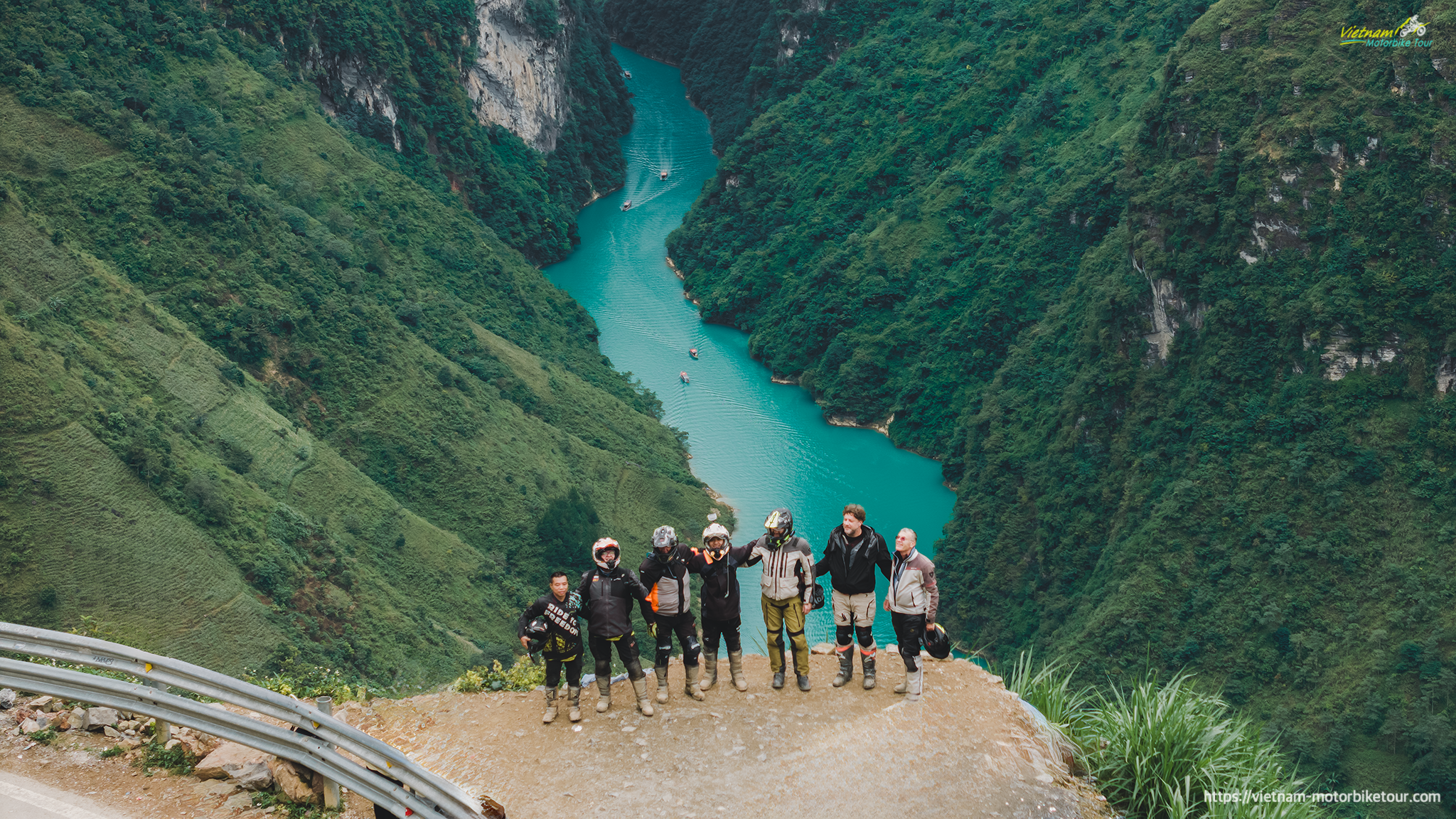
Beyond Meo Vac comes Ma Pi Leng, the signature riding experience of the day. The road follows the mountainside above the Nho Que River, opening to views into a gorge of extraordinary depth and scale. We ride this stretch at a measured pace, stopping only where there is suitable space. A great mountain road deserves your full attention while moving and your full appreciation once the engine is switched off.

At a viewpoint, the relationship between river, rock and road becomes clearer. The Nho Que may appear blue-green far below, although its colour and visibility change with weather and water conditions. This is one of the defining landscapes of the Dong Van karst region, and a compelling reason why a Ha Giang motorbike tour belongs on so many riders’ wish lists. Destination background: Vietnam Tourism.

We continue to Dong Van with time to settle in and explore the old quarter on foot. Older houses, tiled roofs and cafés clustered around the centre create a setting that is especially enjoyable as the afternoon cools. Order a coffee, watch the street become busier around dinner time, and allow the day’s views to settle in.

A boat trip on the Nho Que River can be discussed as an alternative activity, but it requires extra transfers and time. The core programme prioritises the pass, its viewpoints and an unhurried arrival in Dong Van—a combination that gives this spectacular riding day its balance.

05

Day 5 — Dong Van to Ha Giang via Yen Minh and Quan Ba: Stories Written in Stone

Distance: approximately 150–175 km | Riding: 5–6 hours
Terrain: predominantly paved mountain roads, hairpins, village traffic and winding descents.
Highlights: Vuong family residence at Sa Phin, Tham Ma Pass, Yen Minh, Quan Ba Twin Mountains.
Proposed overnight: Ha Giang.

dong van - A 12-Day Motorbike Adventure from Mountain Passes to Halong Bay

Dong Van is a rewarding place to wake early. Before the day’s visitors gather, the streets belong to breakfast vendors, delivery bikes and people getting on with their routines. After breakfast, we begin the journey south through the karst plateau, following a route that combines memorable riding with a closer look at the human history behind the scenery.

At Sa Phin, we plan a visit to the Vuong family residence, widely known as the Hmong King’s Palace. Its stonework, timber interiors and enclosed courtyards offer a different perspective from the open mountain road. This was a home associated with a powerful local family, and its story provides an introduction to regional authority, trade and life during the colonial period. A guided visit helps place the building in context rather than leaving it as an attractive collection of rooms. Historical background: Vietnam’s tourism authority.

Back on the bikes, the road descends through a series of mountain bends towards Yen Minh. Tham Ma Pass provides one of the route’s familiar viewpoints, where the road can be seen folding across the hillside. We stop for the landscape, keeping photographs of local people respectful and asking permission where appropriate. The most meaningful encounters usually begin with a greeting rather than a camera.

The countryside changes gradually through the day. Exposed limestone gives way to softer valleys, wooded slopes and more continuous cultivation. After lunch, we continue towards Quan Ba, where the Twin Mountains rise from the surrounding farmland. From a suitable viewpoint near Heaven’s Gate, the valley below makes a fine place to pause and take stock of the journey from Dong Van.

The final approach to Ha Giang brings warmer air, more traffic and the feeling of returning to a larger town after several nights in the mountains. We aim to arrive with enough time for a shower, a short walk and any routine motorcycle checks needed before tomorrow’s westward stage.

Dinner offers a chance to reflect on the contrast within a single day: a historic residence, rocky uplands, carefully worked fields and the everyday bustle of Ha Giang. This is what gives a northern Vietnam motorcycle itinerary its depth—the roads are memorable, but the places they connect make them matter.

06

Day 6 — Ha Giang to Sapa: Across the Valleys to the Hoang Lien Mountains

Distance: approximately 240–280 km | Riding: 6–7.5 hours
Terrain: paved inter-town roads, rural connectors, busier approaches and a winding final climb.
Highlights: changing rural landscapes, Viet Quang–Pho Rang corridor, Lao Cai, Sapa.
Proposed overnight: Sapa.

Today links two very different mountain regions. We leave Ha Giang early and head towards the northwest, following the more practical connection through the Viet Quang and Pho Rang corridor towards Lao Cai. It is a substantial travel day, shaped by changing scenery and roadside life rather than a crowded list of major attractions.

The first hours bring a different riding rhythm from the karst plateau. There are longer stretches between tight bends, broader valleys and towns where shops spill towards the roadside. We keep the pace steady and build in regular breaks, especially where traffic becomes busier. A good long-distance motorcycle day is rarely about maintaining one speed; it is about adapting comfortably to each new section.

Along the way, the landscape offers small, absorbing details. Farm vehicles move between fields, produce waits outside shops, and roadside cafés provide places to pause over tea or coffee. Lunch is taken in a convenient town, with time to relax rather than turn the meal into another hurried stop. These ordinary pauses often become some of the most enjoyable memories of an adventure ride.

As we reach the Lao Cai area, the Hoang Lien mountains begin to dominate the horizon. The final climb to Sapa brings cooler air and a return to sustained bends. Views may open across deeply folded valleys, or cloud may gather around the slopes and reduce the world to the next stretch of road. Both are familiar mountain experiences, and we adjust the pace accordingly.

Sapa offers a livelier evening setting than the smaller towns of the previous nights. Around the central church and nearby streets, cafés, restaurants and shops reflect its role as a long-established mountain tourism centre. After checking in, there is time for a gentle walk and a warm meal, with the welcome possibility of an early night.

This itinerary deliberately avoids adding the slower Hoang Su Phi–Xin Man mountain traverse to the same day. That alternative deserves more time and is better developed as a separate overnight stage. Today’s reward is reaching Sapa with enough energy to enjoy it, ready for tomorrow’s ride over Tram Ton Pass. The mountains ahead are a major part of the journey, and they deserve a rested rider.

07

Day 7 — Sapa to Mu Cang Chai via Tram Ton Pass: From High Ridges to Rice Terraces

Distance: approximately 160–190 km | Riding: 4.5–6 hours
Terrain: paved mountain highways, sweeping bends, valley roads and optional village access lanes.
Highlights: Tram Ton/O Quy Ho Pass, Hoang Lien mountain views, Than Uyen valley, Mu Cang Chai terraces.
Proposed overnight: Mu Cang Chai area.
PHU YEN MOTORCYCLE TOUR TO MU CANG CHAI 7 - A 12-Day Motorbike Adventure from Mountain Passes to Halong Bay

We leave Sapa with the mountains close around us, climbing towards the Tram Ton section of the O Quy Ho Pass. The morning air can feel sharp here, making an extra layer welcome beneath your riding jacket. As the road gains height, the views begin to stretch across the Hoang Lien range—when the clouds allow them.

This is a wonderful stretch of mountain riding, but its appeal comes from more than the bends. Weather can change across the ridge, with mist on one side and clearer conditions on the other. We stop at a suitable viewpoint when visibility is worthwhile, giving ourselves time to appreciate the shape of the valleys below. The pass is a major scenic connection through the Hoang Lien mountains. Destination reference: Vietnam Airlines.

Descending towards the Than Uyen area, the landscape opens into broader agricultural valleys. After the intensity of the high pass, these stretches feel generous and spacious. The riding becomes more flowing, with opportunities to pause beside fields or in a small town for lunch. It is a day to enjoy the changing terrain without making every stop an organised attraction.

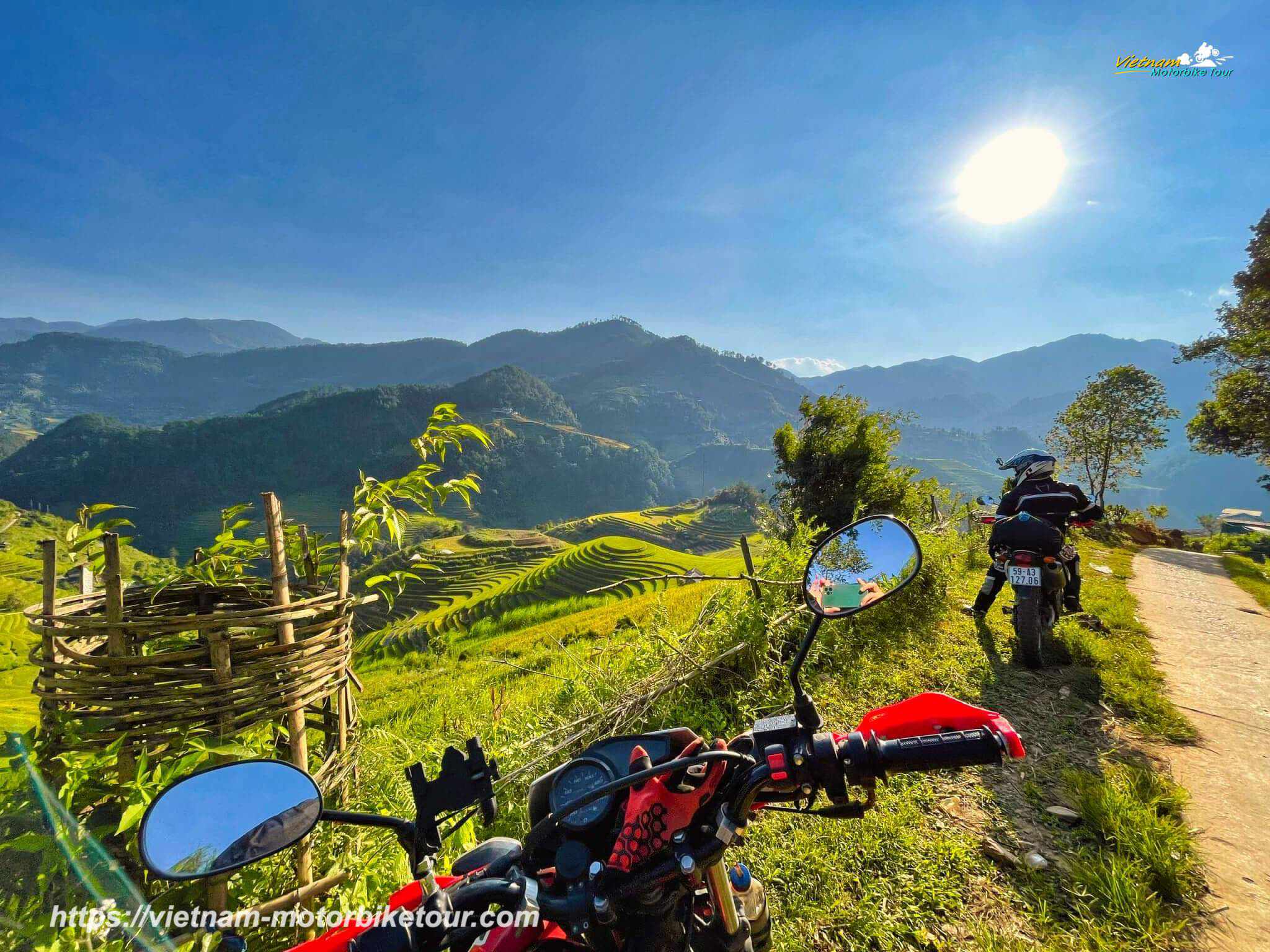
By afternoon, we approach Mu Cang Chai, where rice terraces trace the contours of the hills. Their beauty changes throughout the agricultural year. Flooded plots reflect the sky during the planting period; growing rice turns the slopes green; and mature crops bring golden tones before harvest. The exact appearance depends on the season, local planting schedules and recent weather.

We choose a terrace viewpoint or village approach that suits the remaining daylight and surface conditions. The La Pan Tan area is a possible focus, with walking often the best way to appreciate the fields closely. These are productive landscapes shaped by generations of farming knowledge, especially among local Hmong communities. Narrow access tracks should be treated with respect for residents, crops and other road users. Landscape background: Vietnam Tourism.

After settling into accommodation, the evening belongs to the hills. Watch the light fade across the terraces, enjoy a leisurely dinner and give your legs a rest. Tomorrow brings a more demanding connection towards Ta Xua, making tonight’s quieter rhythm particularly welcome.

08

Day 8 — Mu Cang Chai to Ta Xua: Into the Cloud Country

Distance: approximately 200–230 km on the conditional Tram Tau connection | Riding: 7–9 hours
Terrain: paved passes followed by potentially steep concrete, broken pavement, gravel or dirt.
Highlights: Khau Pha Pass, Tu Le valley, remote highland scenery, Ta Xua.
Proposed overnight: Ta Xua area.

An early departure gives us the best chance to enjoy this demanding stage in daylight. Leaving Mu Cang Chai, we follow the road towards Khau Pha Pass, where the hills open above the valleys below. The terraces that seemed so close yesterday now become part of a broader mountain landscape, their lines following the slopes into the distance.

Beyond the pass, Tu Le provides a natural pause. The valley is known for its rice-growing landscape and sticky-rice traditions, and a short stop offers a chance to stretch before continuing towards Nghia Lo. We keep sightseeing purposeful today. There is a long afternoon ahead, and time saved early becomes valuable on slower mountain sections later.

The onward route towards Ta Xua is where current local knowledge becomes essential. The shorter connection through the Tram Tau area can involve steep, rough or damaged sections, with conditions becoming significantly harder after rain. It is considered only after a fresh road check and an assessment of the group’s riding ability. A motorcycle route specialist describes this as a demanding stage and identifies the Phu Yen route as an alternative when appropriate. Route reference: Rentabike Vietnam.

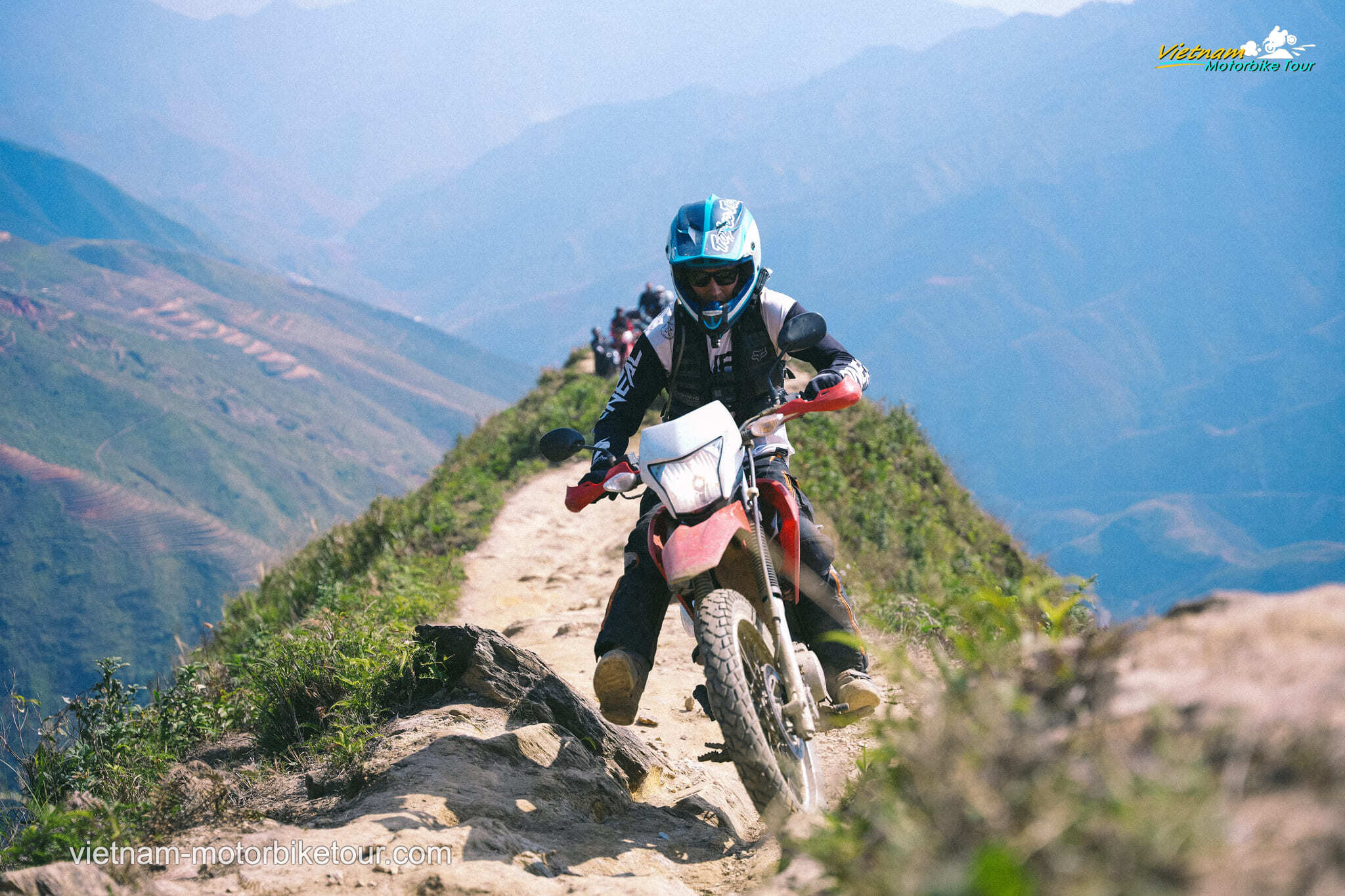
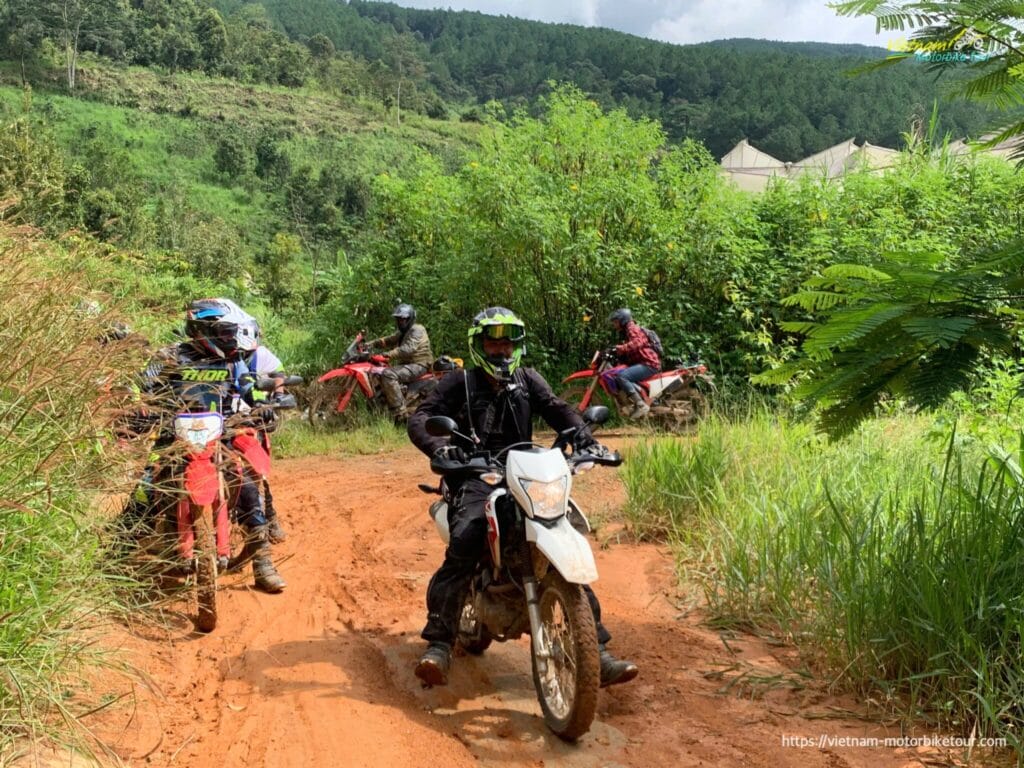
Where suitable unsealed sections are used, this is genuine dual-sport riding: choosing a sensible line, managing traction and keeping inputs smooth. It is not an invitation to race the mountain. If conditions make the shorter crossing unsuitable, the longer approach through Phu Yen and Bac Yen requires revised mileage, timing and potentially a change to the day’s activities.

Ta Xua is our destination, with its ridges, cool air and celebrated cloud views. Here, “Ta Xua” refers to the accessible highland area around the village and Hang Dong, rather than a trek to the separate mountain summit. The famous Dinosaur’s Backbone is a narrow ridge excursion, not a promised motorcycle ride along an exposed crest. Destination clarification: Vietnam Tourism.

If we arrive early enough and conditions are suitable, a short local viewpoint visit may be possible. Otherwise, the ridge experience moves to tomorrow morning. Tonight’s achievement is reaching Ta Xua comfortably in daylight, parking the motorcycles and enjoying the mountain atmosphere. Clouds may fill the valleys or remain elusive; the highland setting has its own appeal either way.

09

Day 9 — Ta Xua to Mai Chau: From Mountain Mist to a Welcoming Valley

Distance: approximately 200–240 km, plus any separate Hang Dong excursion | Riding: 6–7 hours, excluding that excursion
Terrain: steep mountain descents, paved regional roads, winding approaches and village lanes.
Highlights: Ta Xua ridgelines, optional Dinosaur’s Backbone walk, Moc Chau corridor, Mai Chau valley.
Proposed overnight: Mai Chau.

Vietnam Offroad Motorbike Tour to Ta Xua 5 - A 12-Day Motorbike Adventure from Mountain Passes to Halong Bay
Ta Xua Dinosaur Spine

The first decision of the morning belongs to the weather. If yesterday’s arrival left no time for the Dinosaur’s Backbone and conditions are favourable, we make an early visit towards Hang Dong. The attraction is the ridge itself: a narrow line of land reaching into a deep mountain setting, sometimes surrounded by cloud, sometimes revealing the valleys on either side.

We approach the experience on foot from an appropriate stopping point, with the extent of the walk determined by footing, visibility and individual comfort. There is no need to reach the furthest point to appreciate the landscape. If conditions are poor, we leave the excursion aside and begin the ride south. A cloud-hunting itinerary should leave room for the mountain to behave like a mountain.

Descending towards Bac Yen, the air gradually warms and the road reconnects us with busier settlements. Our onward route follows the practical connection towards the Moc Chau corridor before continuing to Mai Chau. The day requires steady progress, so any additional viewpoint or refreshment stop is selected around the actual schedule. This is not the day for a long tea-plantation visit or another major detour.

Lunch brings a welcome pause before the final riding stage. The scenery changes again as we approach Mai Chau: enclosing hills give way to a broad cultivated valley, with villages gathered among fields. After days of high passes and exposed ridgelines, the gentler landscape feels immediately inviting.

We aim to arrive with time for a short walk around the village near our accommodation. Mai Chau is well known for its Thai communities, stilt-house architecture and weaving traditions. Depending on where we stay, you may see looms beneath houses or textiles displayed for sale. A conversation through your guide can reveal more than a quick shopping stop, particularly when there is time to ask about how an item is made. Cultural background: Vietnam Tourism.

Dinner is an opportunity to enjoy the valley’s hospitality at a relaxed pace. A locally hosted performance can be discussed if genuinely available and desired, but it is not assumed. Often the most satisfying evening is simpler: a good meal, a comfortable seat and the pleasure of looking out towards the fields after a full day on the road.

10

Day 10 — Mai Chau to Ninh Binh: Quiet Water and Limestone Reflections

tam coc ninh binh 1 - A 12-Day Motorbike Adventure from Mountain Passes to Halong Bay
Tam Coc Ninh Binh

Distance: approximately 180–210 km, including local sightseeing | Riding: 4.5–5.5 hours
Terrain: paved rural roads, regional connectors and mostly level lanes around Ninh Binh.
Highlights: Van Long Wetland Nature Reserve, sampan excursion, Tam Coc countryside.
Proposed overnight: Ninh Binh, location selected around the next morning’s departure.

We leave Mai Chau early, taking one last look across the valley before following the road towards Ninh Binh. The mountains gradually soften into lower hills and more open agricultural country. After several demanding riding days, the changing terrain brings a different pleasure: longer views across fields, less continuous climbing and the sense of moving towards the lowlands.

The route is planned around reaching Ninh Binh with a useful afternoon available. We keep the morning’s stops modest and take lunch along the way. A full Pu Luong exploration would add another substantial experience, so it is not folded into this already busy day. The focus is on reaching the limestone wetlands with enough time to enjoy them properly.

At Van Long, we leave the motorcycles behind and step into a small local boat. The contrast is immediate. Instead of engine noise and changing gears, there is the soft movement of an oar and the slow passage of reeds, open water and limestone cliffs. This is a landscape best appreciated at the boat’s unhurried pace, with time to study reflections and listen for birds.

Van Long’s conservation importance gives the visit substance beyond its beauty. Its limestone habitat supports the critically endangered Delacour’s langur, although sightings are never assured. Your boat outing is a chance to appreciate the wetland as a living ecosystem, rather than treat wildlife as a scheduled attraction. Conservation reference: Convention on Wetlands.

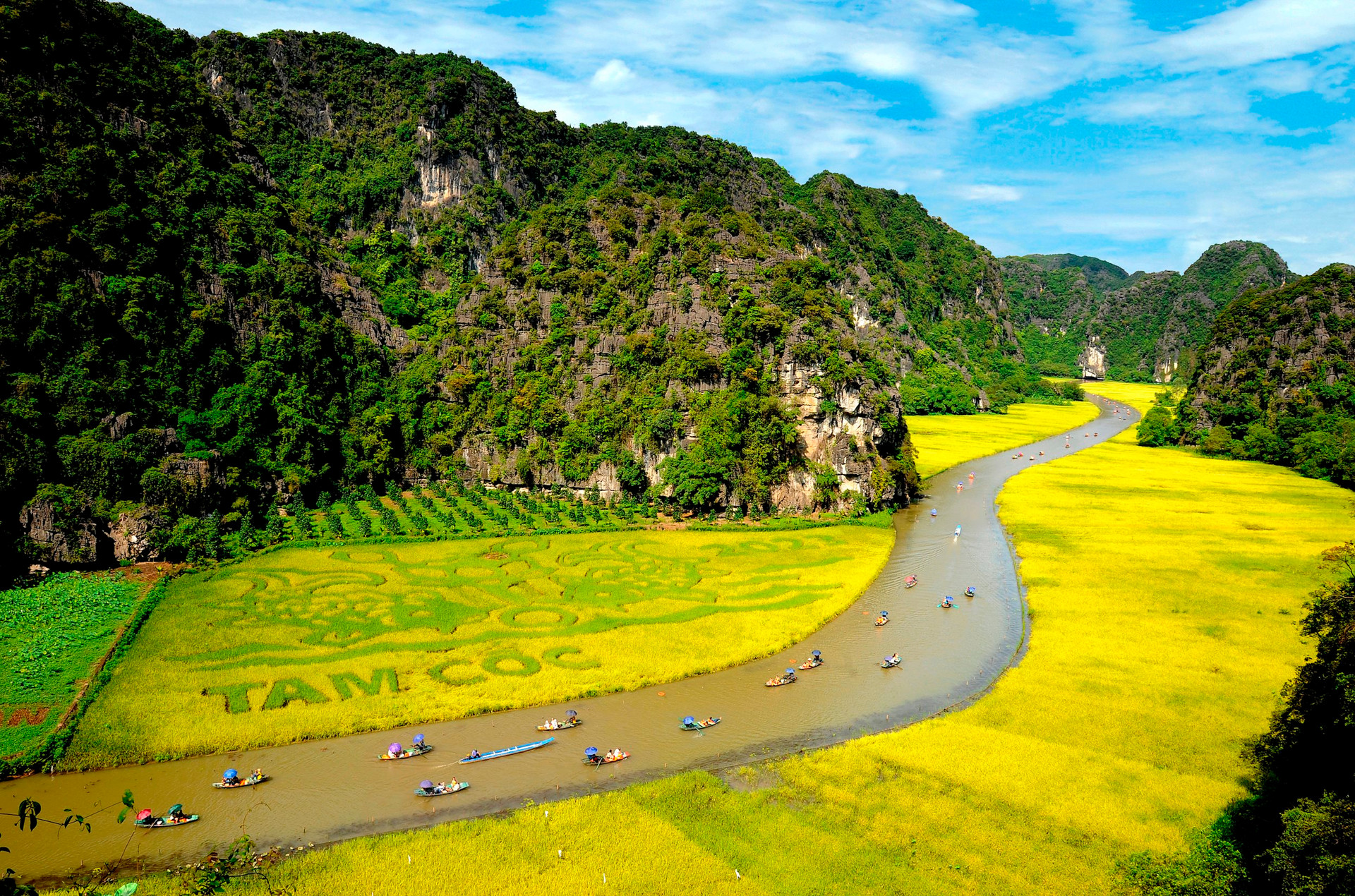
Later, we continue towards Tam Coc for a ride or walk through the surrounding countryside. Limestone towers rise beside fields and village lanes, creating the landscape often described as “Halong Bay on land”. The comparison is understandable, but Tam Coc has a character of its own: farmers at work, bicycles passing between houses and small waterside businesses serving visitors.

To keep the programme enjoyable, today includes one principal boat experience at Van Long. Tam Coc is explored from the land; its separate river-and-cave boat trip would require additional time or replace the Van Long outing. We finish with dinner and an early night. Tomorrow’s cruise departure makes preparation important, so luggage, departure timing and the onward transport arrangement are settled this evening.

11

Day 11 — Ninh Binh to Halong Bay: From the Delta to a Night Afloat

Distance: approximately 210–240 km by motorcycle-compatible roads | Riding: 5.5–6.5 hours if operationally feasible
Terrain: paved delta roads, town traffic and busy regional corridors.
Highlights: Red River Delta landscapes, Halong Bay limestone islands, overnight cruise.
Proposed overnight: cruise cabin; vessel and itinerary to be confirmed.

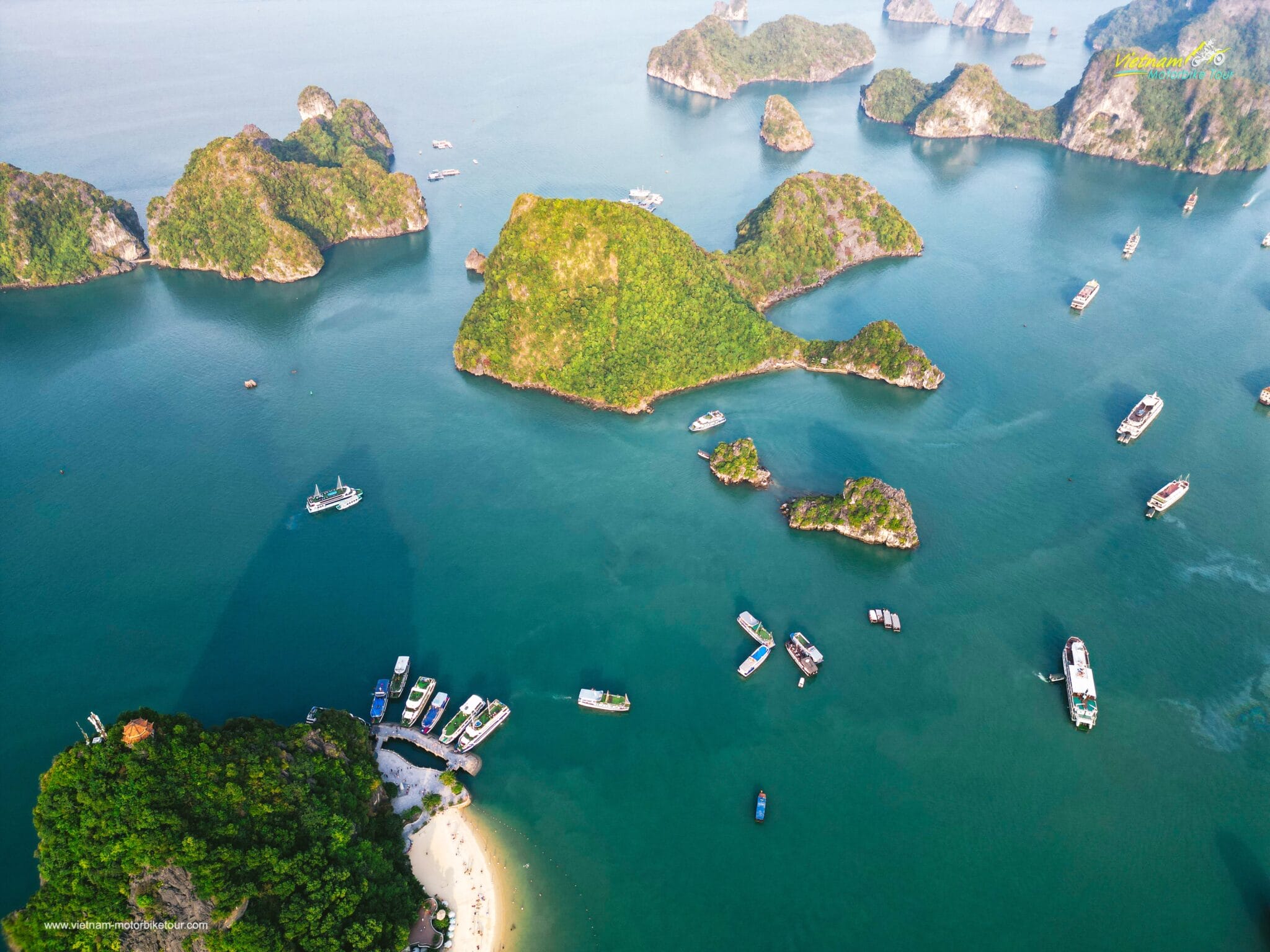
ha long bay vietnam 4 - A 12-Day Motorbike Adventure from Mountain Passes to Halong Bay
Ha Long Bay

Today carries us from inland limestone country to the sea, ending with a completely different perspective on northern Vietnam. The transition is a fitting reward after the mountain stages: cultivated plains and busy market towns gradually give way to the coastal landscape, before the road ends and the journey continues on water.

The morning arrangement must be built around the selected cruise’s check-in deadline. A motorcycle ride from Ninh Binh is possible only when the confirmed road route, daylight departure and realistic riding time leave a comfortable margin. It should never become a race to the harbour. Where that margin cannot be secured, the recommended plan is an early vehicle transfer for guests, with motorcycles transported separately and available for the following day.

For a confirmed riding departure, the experience is primarily a purposeful transit through the Red River Delta. We use roads open to motorcycles, keep breaks efficient and avoid additional sightseeing commitments. Fields, waterways, workshops and trading towns provide the passing scenery. This stage reveals another side of Vietnam: densely inhabited, industrious and closely connected to the movement of goods and people.

At the harbour, the motorcycles remain ashore under a prearranged storage or transport plan. We board with an overnight bag, meet the crew and settle into the cruise. Lunch accompanies the departure into the bay, where limestone islands begin to overlap across the water. After days of judging corners and road surfaces, simply watching the scenery move past feels wonderfully indulgent.

The afternoon follows the chosen vessel’s licensed itinerary. Depending on the cruise, this may include a cave visit, kayaking, a local rowing-boat excursion or an island viewpoint. These activities are examples rather than a combined promise; exact stops and inclusions depend on the booked sailing. One established operator currently publishes noon check-in, illustrating why the morning connection needs careful planning. Cruise schedule example: Paradise Vietnam.

As evening approaches, find a place on deck and let the bay provide the entertainment. Dinner, sheltered water and the silhouettes of islands bring the day to a gentle close. This overnight pause gives the whole journey breathing space—a chance to enjoy where you are before tomorrow’s final ride home.

12

Day 12 — Halong Bay to Hanoi: One Last Ride, a Different View of Vietnam

Distance: approximately 160–180 km | Riding: 4–5 hours after disembarkation
Terrain: paved regional roads, town crossings and increasingly busy urban approaches.
Highlights: morning scenery on Halong Bay, final cruise activity if scheduled, return to Hanoi.
Tour ends: Hanoi; arrival time depends on disembarkation and traffic.

Wake early if you can. Before breakfast, the bay may offer one of the journey’s quietest moments: pale light between the islands, water moving gently against the hull, and the feeling of being somewhere quite separate from the road. Whether the morning is clear or softly misted, it is worth stepping outside for a few minutes before the day gathers pace.

The cruise continues according to its own programme. There may be a final excursion, an early deck activity or simply time to enjoy breakfast while sailing back towards the harbour. We follow the booked itinerary and keep the onward riding plan aligned with the actual disembarkation time. A leisurely cruise morning and a long afternoon ride need to fit together honestly.

Back ashore, we collect the motorcycles or meet the transport team, change into riding equipment and make the checks needed before departure. After a night afloat, it is sensible to take a moment to reset. The final stage may be less dramatic than Ma Pi Leng or Tram Ton, but it still calls for attention, particularly around commercial traffic and town junctions.

Our route towards Hanoi follows roads available to motorcycles rather than relying on expressway travel times. We break the journey for refreshments and a stretch, keeping the afternoon straightforward. The scenery gradually becomes more built-up: roadside shops, workshops, suburban streets and the familiar movement of a city drawing closer.

There is something satisfying about returning to Hanoi by motorcycle. The traffic that seemed so unfamiliar on the first morning now sits within a much larger picture of the country. Behind you are the waters of Ba Be, the spray of Ban Gioc, limestone passes, terraced hillsides, village dinners and a night among the islands. None of those places feels quite like the next, and the roads between them have made their differences tangible.

The tour concludes with the motorcycle handover and time to gather your belongings. A final coffee or shared meal can provide an easy closing moment if the group’s arrangements allow. We recommend spending tonight in Hanoi rather than booking a tightly timed onward flight. After twelve days on the move, it is worth leaving space for a proper farewell—and for the realisation that the journey has given you far more than photographs.

The Motorbikes: Your Choice of Machine

GENUINE DUAL-SPORT FLEET · 150CC – 300CC

Our motorcycle fleet features genuine, modern adventure-touring and dual-sport machines (150cc – 300cc) built for all terrains—from winding tarmac mountain passes like O Quy Ho, Hai Van, and Ma Pi Leng to rugged backcountry trails.

Thoroughly Inspected — Before Every Tour
Daily Pro Inspection — Certified Mechanics
Full Touring Rigging — Racks, Bars & USB
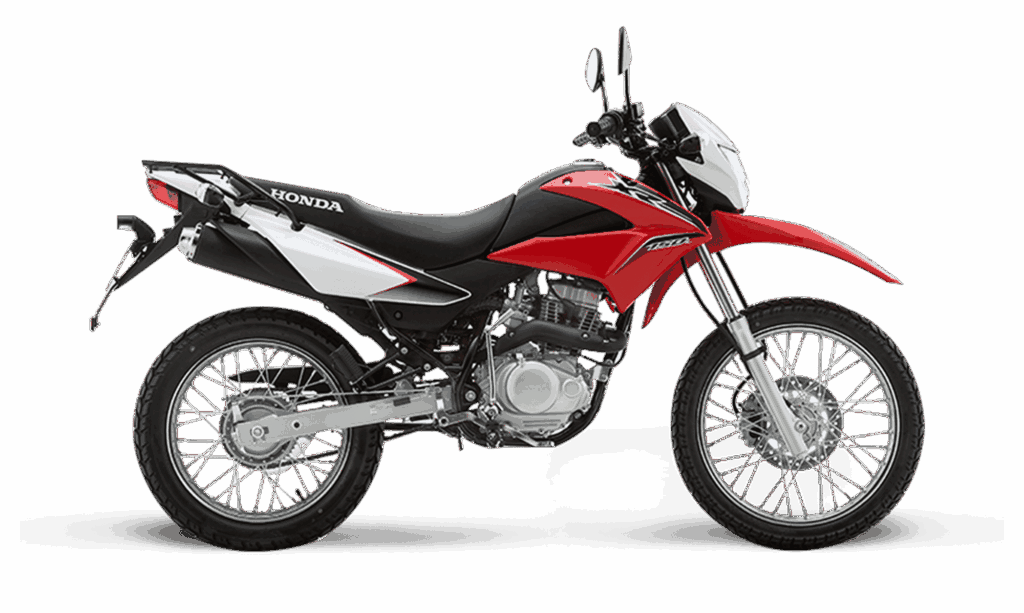
DUAL SPORT · 149 CC Fleet Ready Honda XR150L

Honda XR150L

Accessible, economical dual-sport for backroads & scenic loops

The Honda XR150L is built for riders seeking both reliability and affordability on their Vietnam journeys. With smooth handling, strong fuel efficiency, and off-road capability, this bike is a favorite choice for Vietnam motorcycle tours, whether cruising rural backroads or venturing into remote landscapes.

  • Engine Air-cooled, single-cylinder, four-stroke dual-sport
  • Power / Torque 12 bhp · 12.5 Nm @ 6,000 RPM
  • Kerb weight 129 kg
  • Seat height 825 mm
  • Fuel capacity 12 L (450+ km range)
View Machine Details
DUAL SPORT · 249 CC Fleet Ready Honda CRF250L

Honda CRF250L

Proven, reliable dual-sport for technical trail adventures

The Honda CRF250L is a proven dirt bike designed for riders who love off-road adventures. With its agile frame, reliable Honda engineering, and smooth handling, it’s the perfect motorcycle for exploring Vietnam’s rugged mountain trails, jungle tracks, and remote villages on a Vietnam Dirt Bike Tour.

  • Engine Single cylinder, 4 stroke, 4 valve, DOHC
  • Power / Torque 24 bhp · 22 Nm @ 7,000 RPM
  • Kerb weight 144 kg
  • Seat height 875 mm
  • Fuel capacity 7.8 L (lightweight agile range)
View Machine Details
DUAL SPORT · 286 CC Fleet Ready Honda CRF300L

Honda CRF300L

Lightweight off-road agility with responsive power

The Honda CRF300L is the ultimate dirt bike for riders craving off-road adventures in Vietnam. From rugged mountain trails to jungle tracks and river crossings, this lightweight dual-sport machine delivers agility, power, and excitement. Perfect for Vietnam Dirt Bike Tours and enduro lovers who want to explore beyond the pavement.

  • Engine Liquid- cooled, Single, DOHC
  • Power / Torque 27 bhp · 26.6 Nm @ 6,500 RPM
  • Kerb weight 142 kg
  • Seat height 880 mm
  • Fuel capacity 7.8 L (lightweight trail agile range)
View Machine Details

Important Tour Advice · Read Before Riding

ESSENTIAL BOOKING & EXPEDITION TERMS
01

Personal Tailoring: We can fully customize riding pace, daily distance, and accommodation to match your preferred travel dates and riding style.

02

Deposit & Confirmation: A 30% deposit secures your tour booking. The remaining balance is payable prior to tour departure or upon arrival in Hanoi.

03

Travel Insurance: Personal travel and medical insurance is compulsory for all riders participating in motorcycle adventure tours in Vietnam.

04

Technical Support: In case of technical breakdown, we replace or repair the bike promptly. If an unavoidable issue shortens your ride, unused days are refunded.

05

Rider Experience: All riders must be healthy, physically fit, and confident in their motorbiking ability for medium-to-large displacement motorcycles.

06

Flexible Rescheduling: Deposits are non-refundable, but you are free to postpone your booking to another scheduled date should unforeseen changes arise.

Price & Reservation

TRANSPARENT PRICING · DIRECT LOCAL BOOKING
All-inclusive per rider
Contact
Deposit to hold a place30% deposit upon confirmation
Payment termsBalance due on arrival / prior to tour
Motorcycle choiceIncluded with fuel & gears
Group format2 - 10 Riders (Max 12)
DIRECT OPERATOR GUARANTEE

All tours are organized and operated directly by Vietnam Motorbike Tour. Experienced English-speaking road captains, professional mechanics, and 24/7 dedicated support.

TALK TO A LOCAL EXPERT

Have questions about route difficulty, bike selection, or customized dates? Our tour specialists are ready to help you plan the ride.

WhatsApp Us

Frequently Asked Questions

Is this Northern Vietnam motorbike tour suitable for beginners?

This itinerary is designed for experienced riders who are comfortable controlling a manual motorcycle in traffic and on winding mountain roads. Several days involve prolonged riding, steep gradients and changing surfaces. Riders with limited experience should discuss a shorter, less demanding itinerary or an appropriately arranged pillion option.

Is this a dirt bike tour or a road-based motorcycle tour?

It is best described as a dual-sport adventure tour. The main route uses paved roads, mountain passes and village lanes, with selected gravel or dirt sections where access, weather and rider ability allow. It is not a continuous off-road or hard-enduro itinerary. Any advertised off-road percentage should be based on the final surveyed route.

What motorcycle should I choose?

A road-legal dual-sport motorcycle is a sensible starting point for this mixed-surface journey. The final choice should match your height, experience, luggage and comfort requirements. Ask for the exact model, engine capacity, seat height, tyre specification and luggage arrangement before booking; no particular motorcycle is confirmed in this draft.

What licence do I need to ride in Vietnam?

You need a licence arrangement recognised in Vietnam for the motorcycle you will ride. Requirements depend on the issuing country and applicable recognition rules. For example, current UK guidance specifies a valid UK licence together with a 1968 International Driving Permit, while Ireland’s travel guidance states that Irish-issued IDPs are not valid in Vietnam. Submit your licence details for checking before paying a non-refundable deposit. An IDP does not create a motorcycle entitlement you do not already hold. UK guidance, Irish guidance.

What insurance should I arrange?

Ask your insurer to confirm cover in writing for motorcycle riding in Vietnam, the bike’s engine capacity, your licence arrangement and any planned unsealed-road riding. Check medical treatment, evacuation and repatriation cover, together with exclusions. Motorcycle damage, third-party liability and personal travel insurance are separate matters and should be explained in the booking documents.

When is the best time to see the rice terraces and Ta Xua’s clouds?

Choose dates around the experience you value most. Mu Cang Chai’s terraces change between flooded, green, golden and harvested fields. Cloud inversions at Ta Xua depend on the weather and cannot be promised. Before booking, request a date-specific assessment of likely terrace conditions, mountain temperatures, rainfall and daylight hours. Terrace season background.

How demanding are the riding days?

Most stages involve approximately four to eight hours on the motorcycle, with Day 8 potentially longer. Meals, photography and visits extend the overall day. This is an active itinerary with consecutive riding days, so comfort with sustained riding matters as much as technical skill.

Will we ride motorcycles along Ta Xua’s Dinosaur’s Backbone?

That is not part of the core programme. The plan is to reach an appropriate access point and explore a suitable portion on foot when conditions allow. The exposed ridge is not treated as a compulsory riding challenge. This excursion is also different from trekking to Ta Xua’s mountain summit.

Are a support vehicle, mechanic and luggage transfer included?

These services must be specified in the quotation. For this itinerary, a clearly defined mechanical-support arrangement and luggage plan are strongly recommended. Ask whether a support vehicle follows the same route, which sections it can access, and how recovery would work on remote roads.

What accommodation should I expect?

The proposed mix is village accommodation, local hotels and an overnight cruise. Room standards, private bathrooms, heating or air conditioning, and single-room availability should be confirmed property by property. A homestay description alone does not establish the facilities provided.

Will we take boat trips in both Tam Coc and Van Long?

The proposed Day 10 includes a boat trip at Van Long and countryside exploration around Tam Coc. A second full boat excursion would make the day considerably busier. It can replace Van Long or be added by extending the itinerary.

Can we definitely ride from Ninh Binh and catch the Halong cruise?

Only after the route and cruise deadline have been checked together. A departure that depends on perfect traffic and no delays is unsuitable. If the margin is insufficient, use a guest transfer and separate motorcycle transport, or add an overnight near the harbour before the cruise.

What happens if rain affects the mountain roads or the cruise?

The operating plan should allow rerouting, reduced optional activities or alternative transport when necessary. Cruise operations also depend on the relevant authorities and weather conditions. The quotation should explain how substitutions, additional costs and any refunds are handled.

What is included in the tour price?

Request an itemised quotation covering the motorcycle, fuel, guide, support arrangements, accommodation, meals, entrance fees, boat trips, cruise cabin, riding equipment and transfers. Deposits, damage liability, cancellation terms and exclusions should be stated separately. These commercial terms remain to be confirmed for this programme.

Comments & Discussion

SHARE YOUR THOUGHTS

Leave a Reply

Your email address will not be published. Required fields are marked *

This site uses Akismet to reduce spam. Learn how your comment data is processed.

12 DAYS TOUR Contact
Reserve