
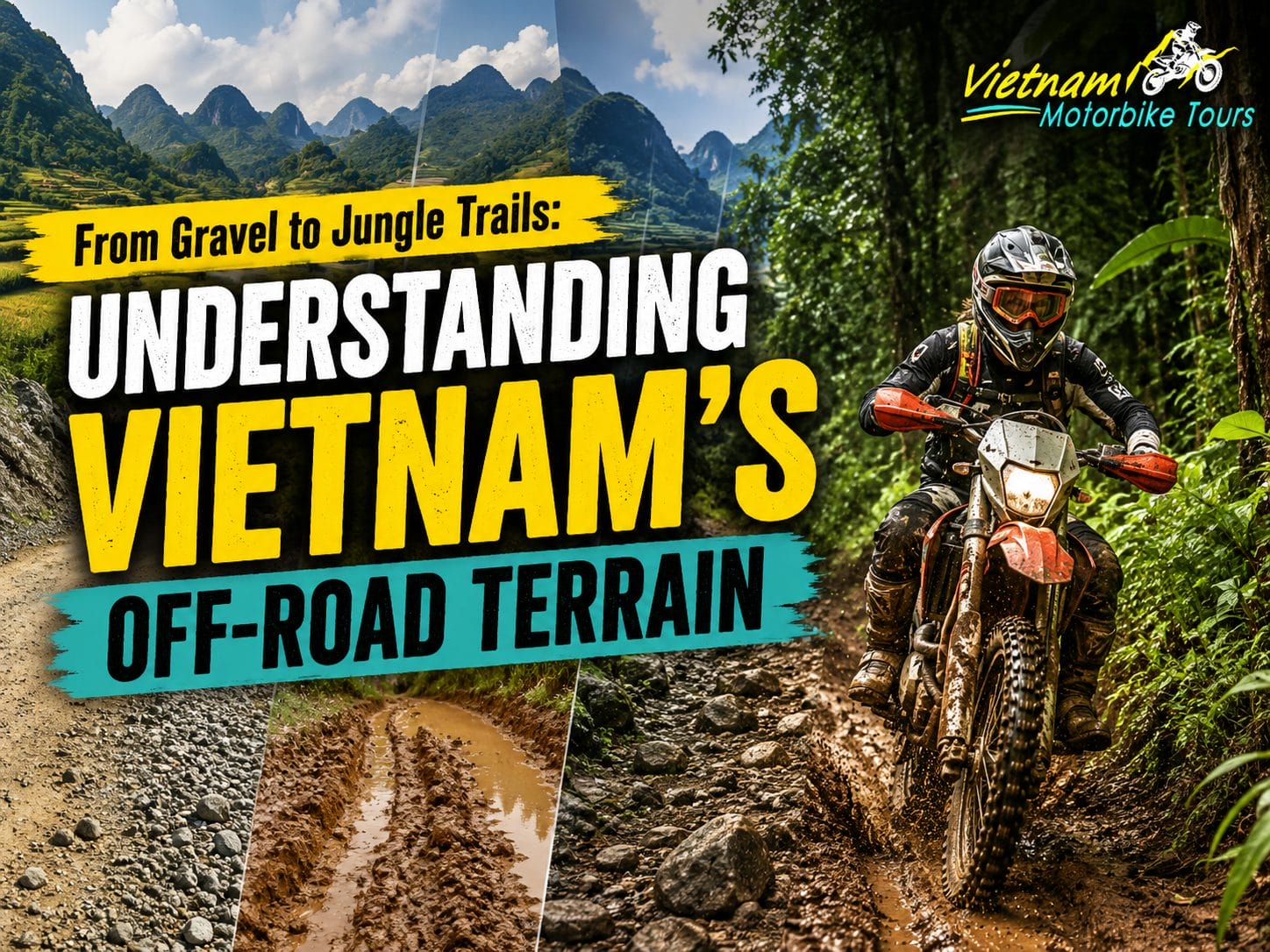
A practical rider’s field guide to the surfaces, challenges and real-world conditions behind a Vietnam off-road motorcycle adventure
There is a particular sound that every dirt-bike rider remembers from Vietnam.
It is not the engine.
It is the moment the tyres leave smooth asphalt and begin crunching over gravel.
One minute you are carving through a sequence of sharp mountain curves. The next, the road narrows, the surface breaks apart, and the landscape suddenly feels closer. Dust rises behind the bike. A stilt house appears beside a rice terrace. Somewhere ahead, the trail disappears into bamboo and cloud.
That transition is where a Vietnam dirt bike tour begins to feel different from an ordinary motorcycle holiday.
But the word “terrain” can be misleading. Riders often imagine one consistent off-road surface: perhaps a wide dirt road, perhaps a muddy jungle trail. In reality, Northern Vietnam can change character several times within a single riding hour.
You may encounter hard-packed dirt, loose gravel, broken concrete, wet clay, embedded rocks, river stones, farm tracks, mountain switchbacks, forest roads, narrow single trails and freshly repaired construction sections — sometimes all before lunch.
That variety is one of the reasons Vietnam is such an extraordinary adventure ride. It is also why the question “Is this tour difficult?” cannot be answered properly without first asking: “What kind of terrain will we actually ride?”
In Vietnam, terrain is not simply what lies beneath your tyres. It is what shapes the rhythm, difficulty and personality of the entire ride.
Why Terrain Matters More Than Distance
International riders often judge a riding day by kilometres. In Vietnam, that can be deceptive.
A 200-kilometre day on flowing asphalt can feel relaxed. Eighty kilometres of wet dirt, rocks and steep mountain tracks may feel like a full expedition.
Terrain determines how much concentration you need, how much energy you use, how quickly the group moves and how often the route must adapt to weather or local conditions.
This is why a serious offroad motorcycle tour should describe more than daily distance. Riders need to understand the surface beneath the wheels.
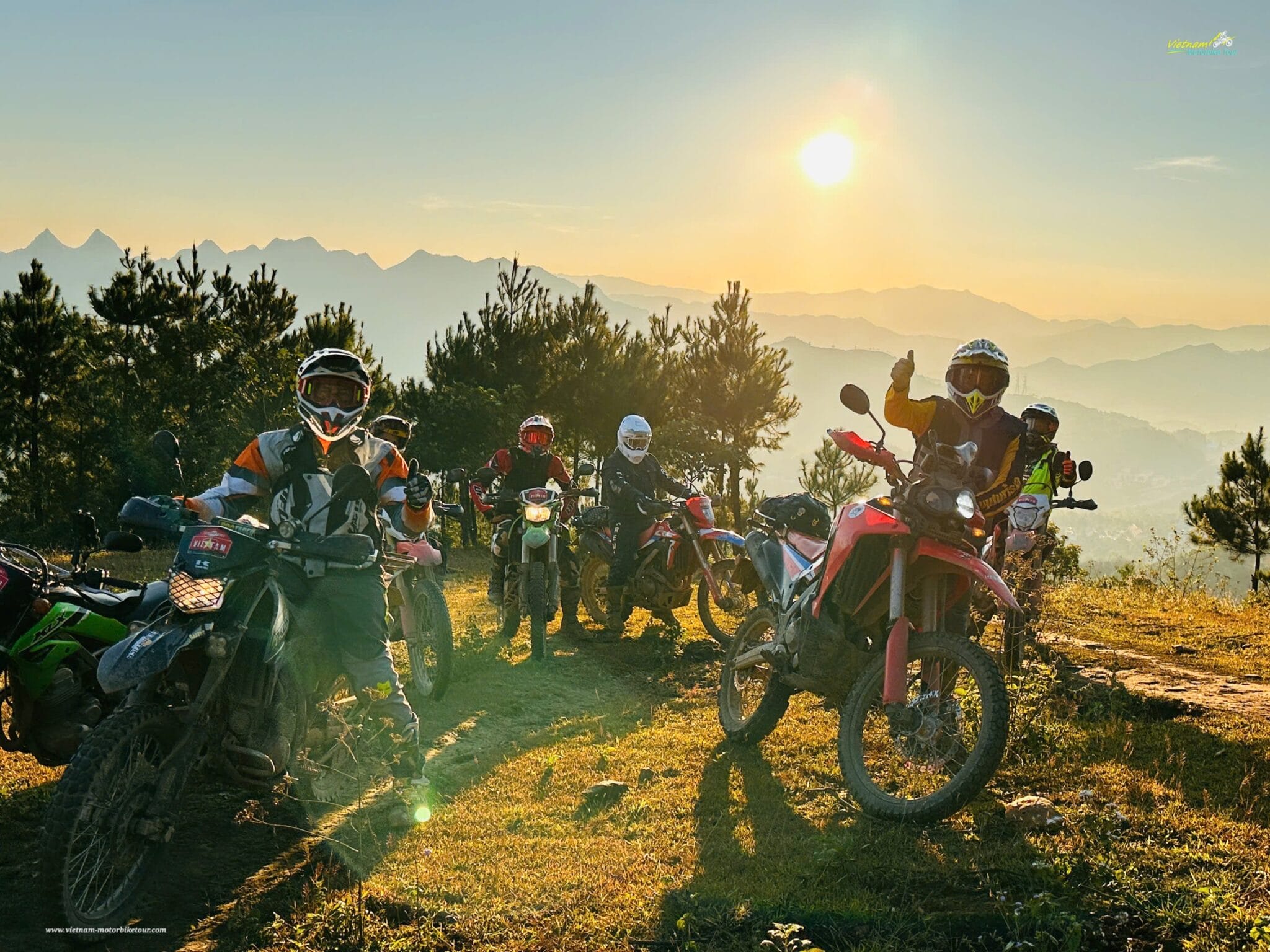
The main variables include:
🧭 surface type and grip
🧭 gradient and camber
🧭 width of the track
🧭 exposure and drop-offs
🧭 weather and drainage
🧭 traffic or village activity
🧭 motorcycle weight
🧭 rider skill and fatigue
The same road can move from “easy” to “technical” because of only one changed variable: rain.
1. Gravel Roads — The Gateway to Vietnam Off-Road Riding
For many international riders, gravel is the first real taste of Vietnam off-road riding.
Gravel roads appear everywhere in the mountains: linking villages, climbing towards new passes, following river valleys or cutting across areas where roads are being upgraded.
In dry conditions, a wide gravel road can be pure pleasure. The motorcycle moves slightly beneath you, the front tyre searches across loose stones, and the rear wheel feels alive under throttle. Once you stop trying to force the bike into an asphalt-style line, the ride begins to flow.
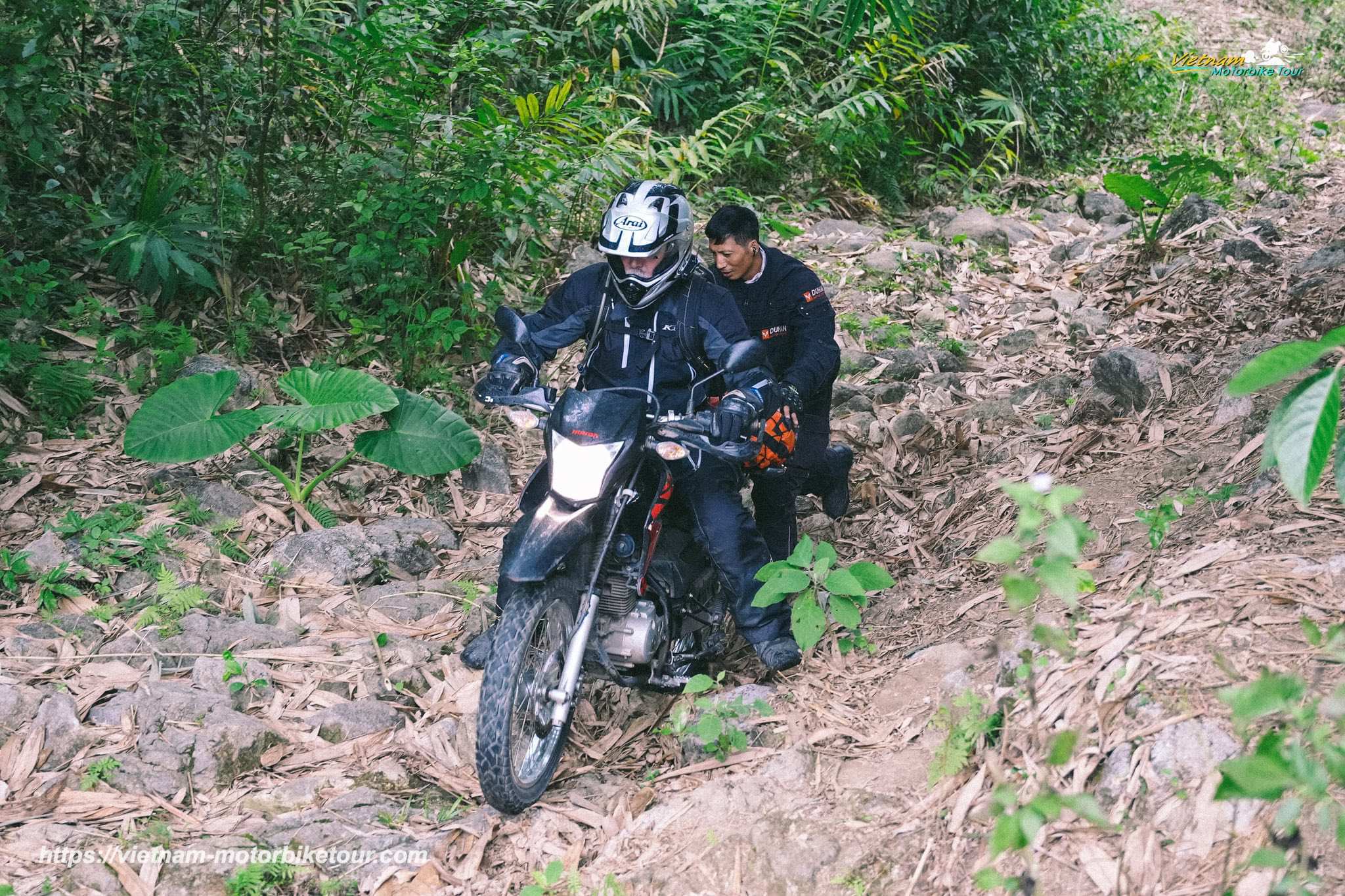
What Gravel Usually Feels Like
🪨 loose stones over a hard base
🪨 dusty surfaces in dry weather
🪨 corrugations or small washboard sections
🪨 occasional potholes
🪨 changes between packed and loose gravel
🪨 steeper gradients near mountain passes
For a competent road rider, gravel is usually the best place to begin learning dirt technique.
The key is relaxation. A rigid rider fights every small movement. A relaxed rider lets the motorcycle find its own balance.
On a lightweight dirt bike such as a Honda CRF250L or CRF300L, gravel becomes far less intimidating than many riders expect.
When Gravel Becomes Difficult
Gravel becomes more demanding when it combines with gradient, corners or deep loose material.
A steep descent covered in marbles of loose stone demands smooth braking. A tight uphill hairpin may require momentum and careful throttle control. Heavy rain can wash channels through the road and expose larger stones underneath.
Gravel itself is rarely the enemy. Speed, tension and poor line choice are usually the bigger problems.
2. Hard-Packed Dirt Tracks — Fast, Flowing and Addictive
These are the trails that make many riders fall in love with Vietnam.
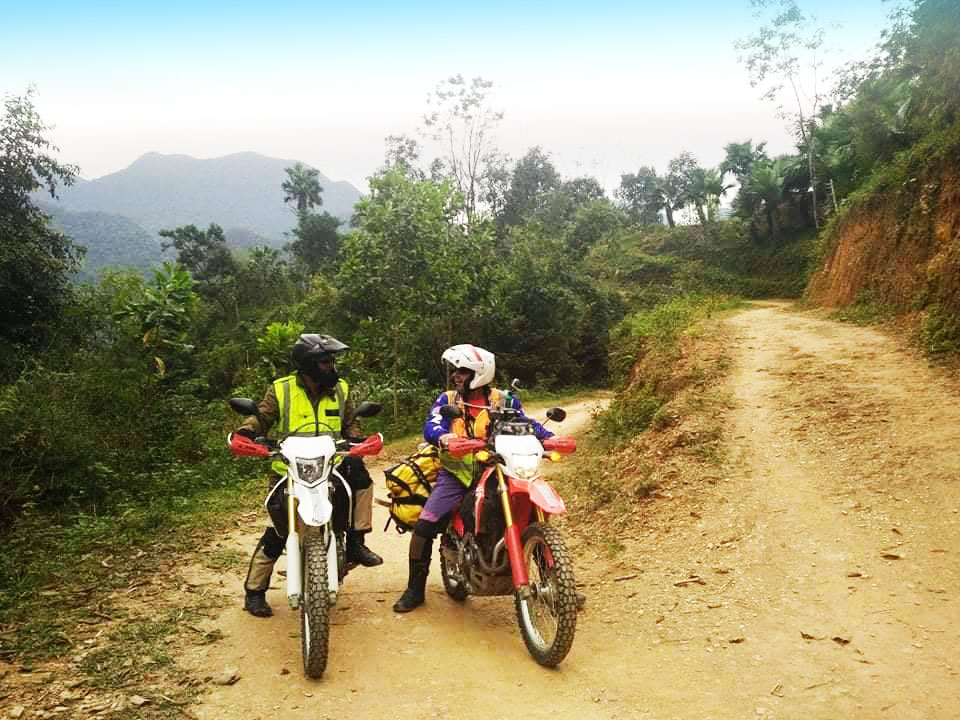
A dry hard-packed dirt road can run for kilometres across a mountain ridge or through farming valleys. The surface is firm enough to build confidence, but loose enough to remind you that you are truly off the asphalt.
In the right conditions, these tracks are where an EPIC RIDE develops its rhythm: stand on the pegs, look far ahead, breathe, and let the motorcycle move.
Typical Features
🏍️ red or brown compacted earth
🏍️ shallow ruts
🏍️ dust in dry months
🏍️ occasional loose edges
🏍️ farm traffic and animals
🏍️ short rocky or muddy interruptions
The Hidden Risk: Confidence Can Rise Faster Than Skill
Hard dirt often feels easy after the first hour, and that can encourage riders to increase speed too quickly.
But a Vietnam dirt track can change without warning. A smooth corner may hide a washout. A shaded section may still be wet. A village entrance may have children, livestock or a tractor around the bend.
The best riding style is not “fast.” It is smooth, observant and controlled.
3. Muddy Roads — Where Technique and Patience Matter
Mud is where almost every rider discovers whether they truly enjoy dirt riding.
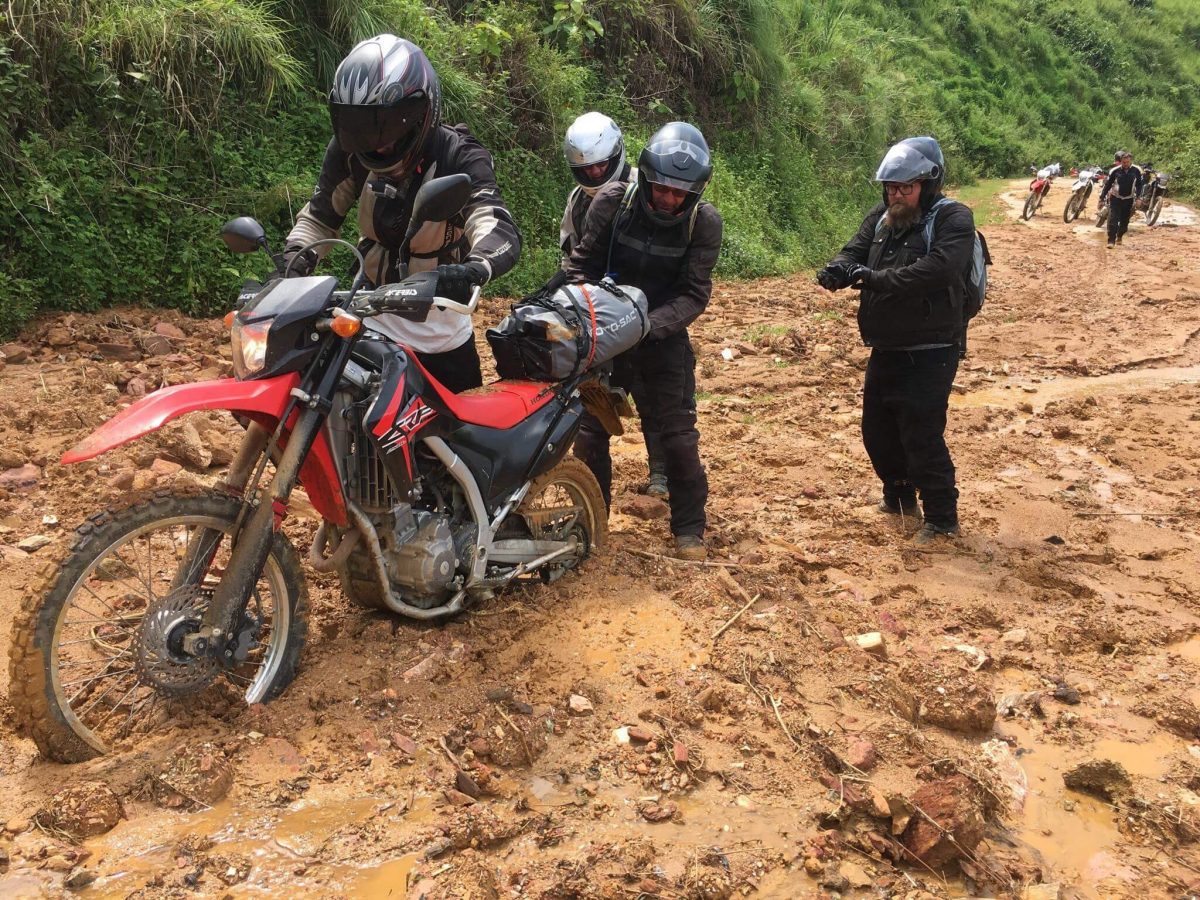
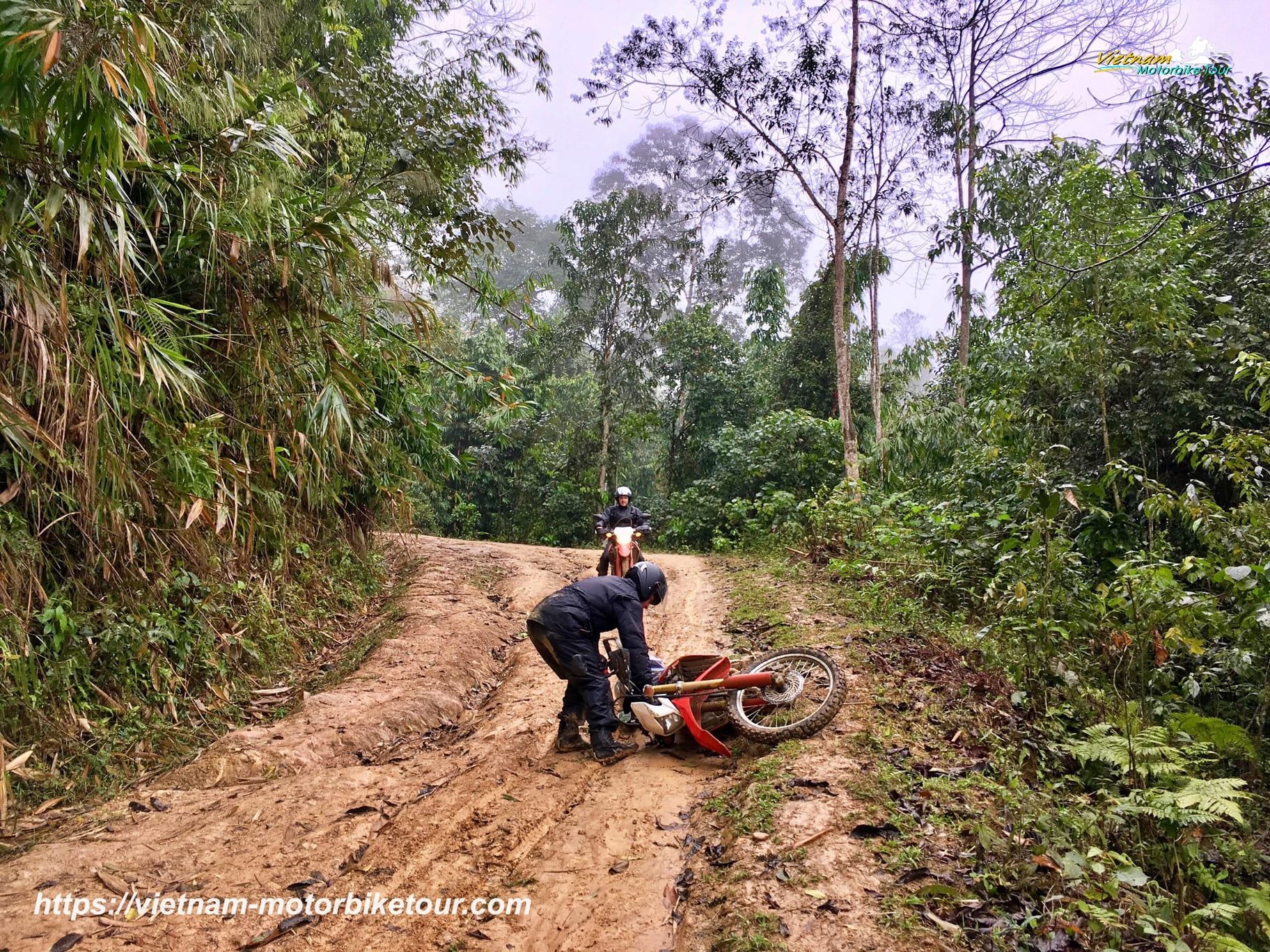
Northern Vietnam is a mountainous tropical environment. When heavy rain reaches dirt roads, the surface can change dramatically. A track that was firm in the morning may become slick, rutted and physically demanding by afternoon.
For some riders, MUDDY ROADS are the highlight of the trip. For others, they are the moment when the adventure becomes serious.
Not All Mud Is the Same
🌧️ thin slippery clay over hard ground
🌧️ deep soft mud that slows momentum
🌧️ water-filled wheel ruts
🌧️ mud mixed with rocks
🌧️ mud on steep climbs
🌧️ mud on off-camber mountain tracks
Each behaves differently. Thin clay can feel more treacherous than deep mud because there may be almost no warning before the front tyre loses grip.
What Helps in Mud
💡 keep your body relaxed
💡 use smooth throttle rather than sudden power
💡 look where you want to go
💡 avoid staring at the deepest rut
💡 stand when appropriate to let the bike move beneath you
💡 keep enough momentum without rushing
Mud is also where lightweight motorcycles make sense. Picking up a 140-kilogram dirt bike after a slow-speed fall is very different from wrestling with a heavily loaded 250-kilogram adventure motorcycle on a slippery slope.
And sometimes the smartest solution is simply to stop, study the section and let the guide choose the best line.
4. Rocky Tracks — Vietnam’s Natural Skills Test
Rocky terrain comes in several forms across Northern Vietnam.
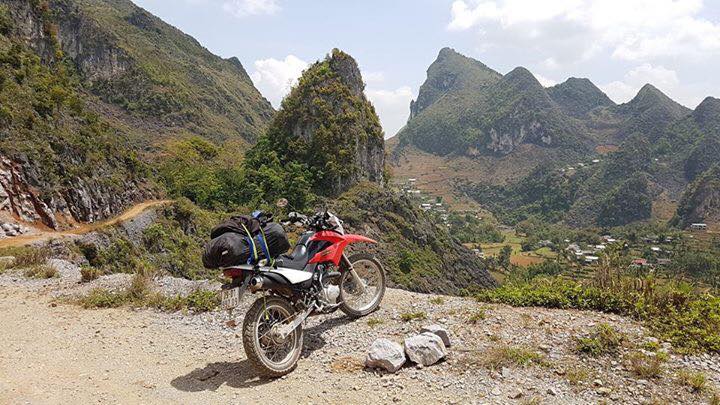
You may find loose fist-sized stones on a mountain descent, embedded rocks on an old track, river pebbles near a crossing, or rough limestone sections where the trail seems carved directly from the mountainside.
Rocks demand accuracy, but they also punish tension.
Loose Rocks vs Embedded Rocks
⚙️ Loose rocks move beneath the tyre and can redirect the front wheel.
⚙️ Embedded rocks create sharp edges and steps that require deliberate line choice.
⚙️ Wet rocks become significantly more slippery.
⚙️ Rocky descents increase braking and concentration demands.
For experienced dirt riders, rocky sections can be hugely satisfying because they reward balance and precision.
For newer off-road riders, the important lesson is not to look at every rock. Look through the section. Choose a general line. Let the suspension do its work.
A motorcycle is often more capable than the rider believes — provided the rider does not fight it.
5. Jungle Trails — The Romantic Image, and the Real Challenge
Few words sell adventure as effectively as JUNGLE TRAILS.
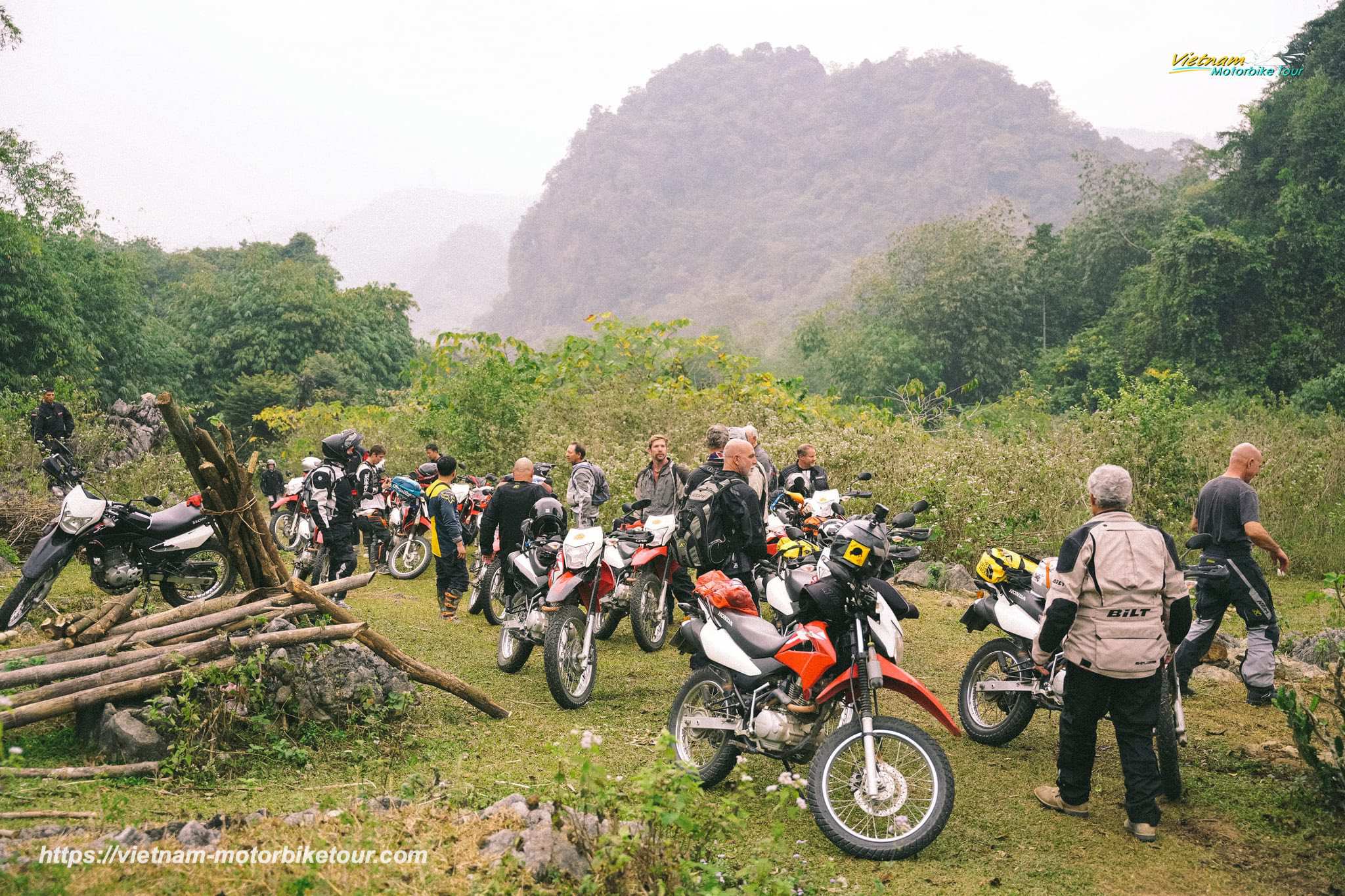
And Vietnam can deliver them: shaded paths beneath bamboo, narrow forest roads, damp earth, roots crossing the trail, streams running over the track and vegetation closing in around the rider.
They can be unforgettable.
But jungle riding is not automatically extreme enduro. Some forest tracks are wide and flowing. Others become technical single trails where every metre demands attention.
Why Jungle Terrain Changes So Quickly
🌿 shade keeps surfaces wet longer
🌿 tree roots cross the trail
🌿 fallen leaves hide rocks or holes
🌿 water drainage creates ruts
🌿 vegetation reduces visibility
🌿 rain can turn compact soil into slippery clay
This is one reason local knowledge matters. A trail that was perfect last week may be completely different after three nights of rain.
Cultural Respect Matters Here Too
Many so-called “wild tracks” are not recreational trails at all. They are working paths connecting farms, forest plots and rural communities.
You may meet people carrying crops, children walking home, buffalo moving between fields or small local motorcycles travelling in the opposite direction.
Adventure riding should never mean treating a village road like a race course.
6. Mountain Tracks — The Signature of Northern Vietnam
If one terrain category defines Northern Vietnam, it is the mountain track.
The north is characterised by dramatic ranges, terraced agriculture and culturally diverse highland communities. Regions such as Ha Giang, Sapa, Mu Cang Chai, Hoang Su Phi and Mai Chau are landscapes where roads and tracks follow the shape of the mountains rather than cutting through them.
That creates an extraordinary type of motorcycle experience: long climbs, exposed ridges, twisted or winding roads, steep descents and narrow tracks linking valleys that feel worlds apart.
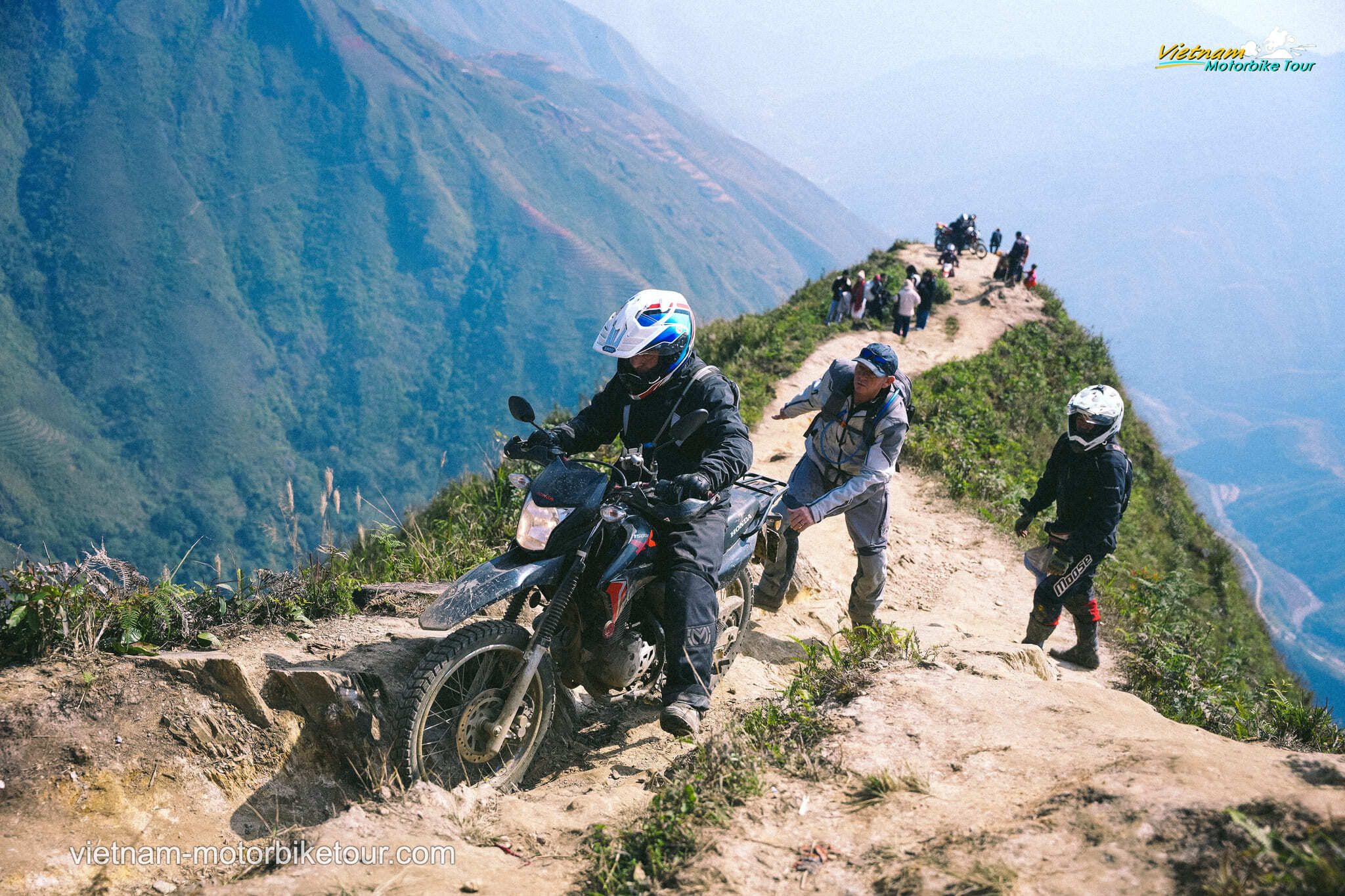
Mountain Tracks Can Combine Every Surface
🏔️ asphalt on the lower climb
🏔️ broken concrete through villages
🏔️ gravel near construction zones
🏔️ dirt across ridgelines
🏔️ mud in shaded sections
🏔️ rocks near washed-out corners
🏔️ single trail shortcuts between communities
This constant variation is exactly what makes a Northern Vietnam motorbike tour so difficult to summarise using a single percentage of “off-road.”
Exposure Changes Perceived Difficulty
A narrow track on flat ground may feel easy. Put the same track on a mountainside with a steep drop and it suddenly feels much more serious.
Technically, nothing about the surface changed. Psychologically, everything changed.
Experienced guides recognise this. Riders who are confident in mud may dislike exposure. Others love heights but dislike loose rocks. Difficulty is personal.
7. Single Trails — Narrow, Precise and Often Unforgettable
Single trails are the point where “adventure touring” begins to overlap with more technical dirt riding.
A single trail may be only wide enough for one motorcycle. It may cross a hillside, run between rice terraces, enter bamboo forest or climb towards an isolated settlement.
The surface itself can be easy. The difficulty comes from lack of space, tight turns and limited line choice.
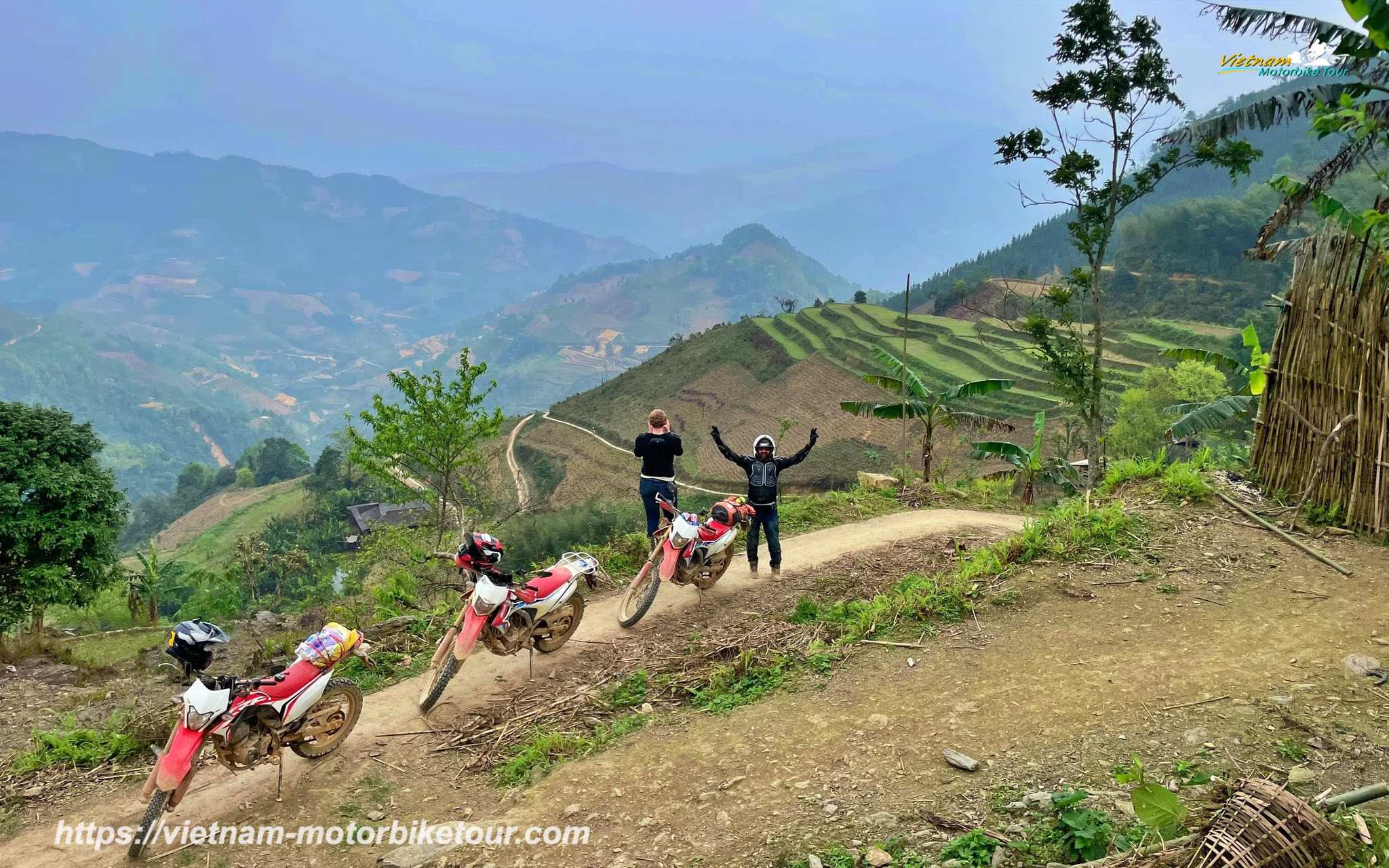
Typical Single-Trail Challenges
🔥 narrow width
🔥 tight switchbacks
🔥 roots
🔥 small steps
🔥 ruts
🔥 off-camber surfaces
🔥 little room to recover from a poor line
These trails should be used selectively. They are excellent for experienced riders, but should not be forced on road riders merely because the tour has been marketed as “off-road.”
8. River Crossings and Water Sections
River crossings appear less predictably than gravel or dirt, but they are one of the most memorable parts of a genuine adventure ride.
Some are little more than shallow streams over concrete. Others involve loose stones, moving water and uncertain depth.
The challenge is not just water. It is what the water hides.
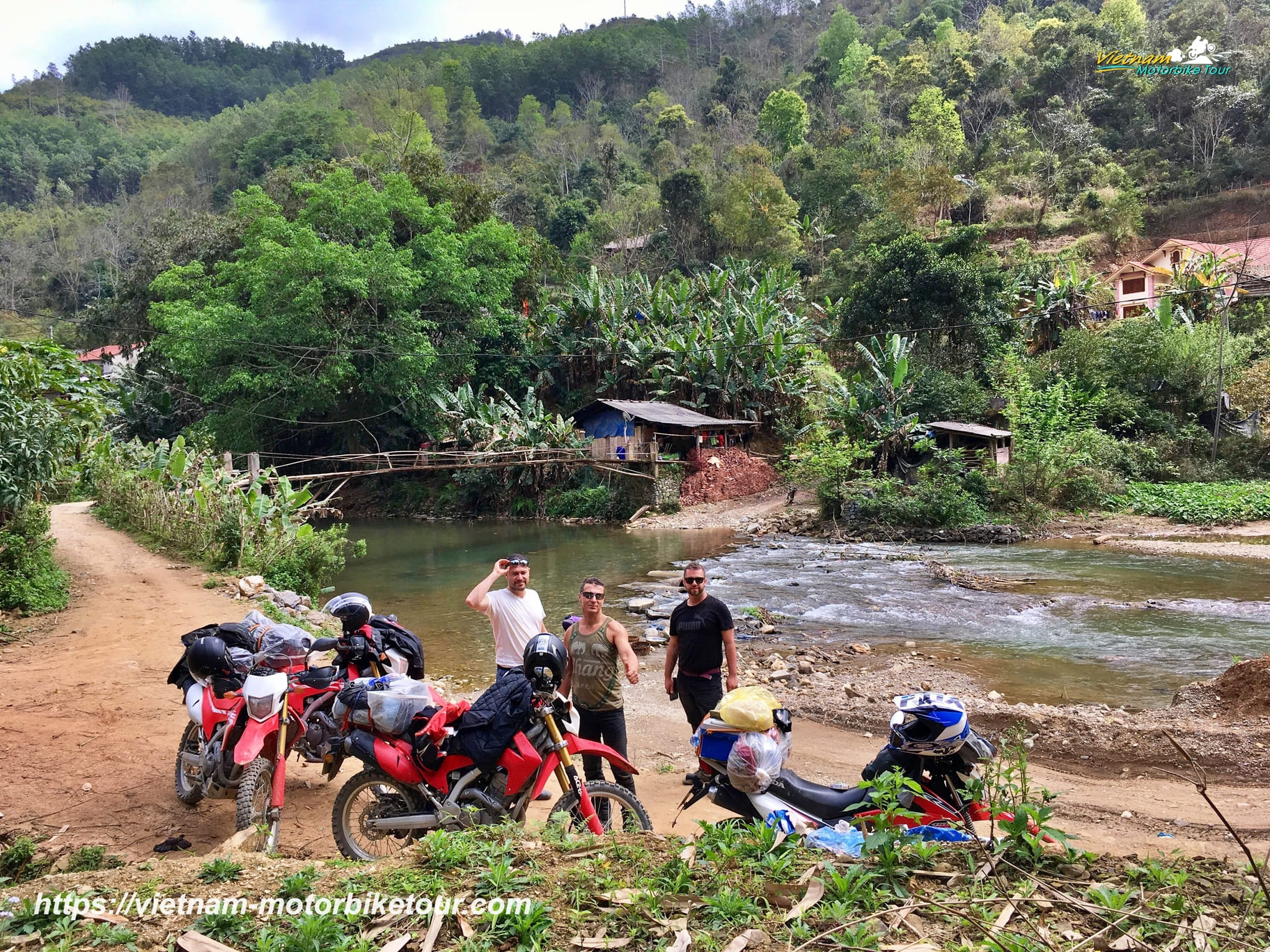
What Riders Need to Consider
💧 water depth
💧 current strength
💧 rock size
💧 entry and exit points
💧 traction on submerged stones
💧 whether the route remains safe after rainfall
A professional guide should inspect uncertain crossings and choose alternatives when conditions are unsafe.
There is no prize for drowning a motorcycle in the name of adventure.
9. Broken Concrete, Construction Roads and “Almost Roads”
One of the most uniquely Vietnamese forms of adventure terrain is the road that is technically a road — but does not behave like one.
Mountain infrastructure is constantly changing. Roads may be widened, repaired, resurfaced or damaged by rain. Riders can encounter sections of broken concrete, unfinished road base, wet construction mud, potholes and temporary diversions.
These sections rarely look glamorous in promotional photographs, yet they are an authentic part of travelling through developing mountain regions.
Why These Sections Can Catch Riders Out
🚧 they appear suddenly after good asphalt
🚧 traffic may still use both directions
🚧 heavy vehicles create deep ruts
🚧 construction dust reduces visibility
🚧 wet roadworks become extremely slippery
The correct approach is patience. Slow down, leave space and let local traffic dictate the rhythm.
Terrain Changes with the Seasons
Vietnam does not have one universal riding season. Conditions differ by region, altitude and month.
But from an off-road perspective, the most important seasonal change is simple: water changes grip.
Dry periods often produce dust, loose gravel and harder surfaces. Wetter periods bring lush green landscapes, fuller rivers, slippery clay and more unpredictable trail conditions.
Dry-Season Character
☀️ more predictable dirt surfaces
☀️ dust on group rides
☀️ loose gravel
☀️ cooler conditions in some northern months
☀️ better visibility on many days
Wet/Green-Season Character
🌦️ deep green rice landscapes
🌦️ stronger waterfalls and streams
🌦️ more mud
🌦️ greater chance of route changes
🌦️ more physically demanding off-road sections
Neither is objectively “better.” They create different adventures.
How Terrain Feels Different on Different Motorcycles
Terrain difficulty is partly a motorcycle problem.
Lightweight Dual-Sport Bikes
Bikes such as the Honda CRF250L and CRF300L are popular in Vietnam because they offer a practical balance between road comfort and off-road control.
On gravel, mud and narrow trails, their manageable weight gives riders confidence. On mountain roads, they have enough performance for the pace that the terrain realistically allows.
Big Adventure Bikes
BMW GS, Tenere, Africa Twin and similar motorcycles can be excellent on paved mountain roads and wide gravel.
But when terrain becomes narrow, muddy or technical, weight becomes much more noticeable. Picking a line matters more, slow-speed mistakes cost more energy, and recovery after a fall is harder.
The Lesson
The best bike is not the biggest bike. It is the bike that matches the terrain, the rider and the purpose of the journey.
What Terrain Is Best for Different Rider Levels?
Road Riders New to Dirt
✅ mountain tarmac
✅ easy gravel
✅ broken rural roads
✅ hard-packed dirt
✅ short optional muddy sections
This mix provides adventure without overwhelming the rider.
Intermediate Adventure Riders
💘 longer gravel sectors
💘 dirt tracks
💘 moderate mud
💘 rocky climbs
💘 easy single trails
💘 mixed mountain tracks
This is the sweet spot for many multi-day Vietnam dirt bike tours.
Experienced Dirt / Enduro Riders
🔥 technical single trail
🔥 steep dirt climbs
🔥 deep mud
🔥 rocky descents
🔥 jungle tracks
🔥 challenging river crossings
These riders usually want the route deliberately adjusted towards the wildest terrain available.
The Terrain Difficulty Matrix
The following is a practical way to think about terrain — not as a fixed grade, but as a combination of conditions.
|
Terrain |
Typical Difficulty |
Best Suited To |
|
Wide dry gravel |
Easy–Moderate |
Road riders with guidance |
|
Loose steep gravel |
Moderate |
Intermediate |
|
Dry hard-packed dirt |
Easy–Moderate |
Road riders / Intermediate |
|
Wet clay / mud |
Moderate–Hard |
Intermediate+ |
|
Rocky mountain track |
Moderate–Hard |
Intermediate+ |
|
Wide jungle road |
Moderate |
Intermediate |
|
Narrow single trail |
Hard |
Experienced dirt rider |
|
Technical muddy single trail |
Very Hard |
Advanced / Enduro |
What Makes the Same Terrain Harder?
⚠️ rain
⚠️ fatigue late in the day
⚠️ a heavier motorcycle
⚠️ poor tyres
⚠️ carrying too much luggage
⚠️ riding too fast
⚠️ low confidence
⚠️ mixed-ability group pressure
⚠️ fog or poor visibility
This explains why terrain grading must remain flexible. A professional guide assesses not only the track, but also the riders arriving at that track.
How Good Guides Read Terrain Before the Riders Do
A local motorcycle guide does more than lead from point A to point B.
He reads the landscape.
Cloud over a particular ridge may suggest rain ahead. Fresh mud on local bikes coming the opposite way tells a story. A farmer may explain that a landslide has blocked the usual track. Construction workers may open or close a road unexpectedly.
This type of information rarely appears on navigation apps.
Local knowledge is therefore part of the safety system.
A Good Guide Is Constantly Asking
🧠 Is this surface still suitable for today’s group?
🧠 Has the weather changed the track?
🧠 Is the alternative route better?
🧠 Are riders becoming tired?
🧠 Does the next section add enjoyment — or only risk?
Terrain Is Also Culture
The most meaningful dirt tracks in Vietnam often exist because people live along them.
Northern Vietnam is a landscape of mountain communities, terraced agriculture and villages linked by roads that follow rivers, ridgelines and valleys. In places such as Mu Cang Chai, Hoang Su Phi, Sapa and Mai Chau, the road is inseparable from farming life and local culture.
A track beside rice terraces is not simply a beautiful riding surface. It may be the route farmers use to carry rice home. A forest road may connect a small hamlet to a market. A steep concrete lane may be the road children take to school.
The best off-road rider in Vietnam is not the one who rides fastest. It is the one who understands where he is riding.
Slow down near villages.
Respect animals and pedestrians.
Do not spin tyres unnecessarily beside homes.
Ask before photographing people.
Remember that adventure for you may be someone else’s everyday road.
What Should Be Included in a Proper Vietnam Dirt Bike Tour?
A terrain-focused tour should provide more than a motorcycle and a route.
Suitable Motorcycle
✅ A well-maintained dirt or dual-sport bike matched to the rider and expected terrain.
Experienced Motorcycle Guide
✅ Someone who understands both local geography and off-road riding technique.
Route Flexibility
✅ Alternative tracks for weather, landslides, skill differences or rider fatigue.
Mechanical Support
✅ Tools, puncture repair capability and practical knowledge for minor breakdowns.
Protective Riding Gear
✅ Clear information on helmets, boots, armour, gloves and what riders should bring themselves.
Fuel
✅ Included or clearly explained in advance.
Meals and Accommodation
✅ Especially important in remote mountain areas where options can be limited.
Support Vehicle Where Appropriate
✅ Useful for larger groups, long expeditions or riders wanting luggage and recovery support.
Daily Briefing
✅ A practical explanation of the expected terrain before the group enters it.
What Riders Should Ask Before Booking
❓ What percentage is paved, gravel, dirt and technical trail?
❓ Are single trails compulsory or optional?
❓ How much mud should we expect in this season?
❓ Are river crossings included?
❓ What happens after heavy rain?
❓ What bike do you recommend for my experience?
❓ Can the route be adjusted for mixed rider levels?
❓ How many hours per day are actually spent riding?
❓ What support exists if a bike or rider cannot continue?
❓ Can you show recent terrain photos or videos from the route?
These questions are more useful than asking only, “How much off-road is there?”
A Day in the Dirt: What the Experience Actually Feels Like
Morning begins on cool mountain tarmac. The road twists above a valley as mist lifts from the terraces.
An hour later, the guide turns left onto a narrow concrete road. The concrete breaks. Gravel begins. Everyone stands on the pegs.
The track climbs. Loose stones ping from the tyres. At the top, there is no traffic, only wind and a few houses beneath the ridge.
After coffee in a village, the road becomes dirt. The sun has dried most of it, but shaded corners remain wet. A short muddy climb creates the first real challenge of the day.
Nobody races.
One rider chooses a clean outside line. Another slips gently into a rut, laughs, picks the bike up and continues.
Later, the route enters bamboo forest. Roots cross the track. A shallow stream runs over stones. The group emerges into an open valley where rice terraces descend towards a river.
By late afternoon, everyone is dusty, tired and completely awake.
That is what “mixed terrain” really means in Vietnam.
Not one obstacle after another.
A constantly changing journey.
So, Which Terrain Is the “Best”?
There is no single answer.
Gravel gives flow.
Mud gives challenge.
Rocks demand precision.
Jungle trails create immersion.
Mountain tracks deliver scale and drama.
Single trails create intensity.
And smooth winding roads between them give the body time to recover while the scenery takes over.
The best Vietnam dirt bike tour does not maximise one type of terrain. It combines terrain intelligently so the ride has rhythm.
Frequently Asked Questions About Vietnam Dirt Bike Terrain
1. Is Vietnam mostly muddy when riding off-road?
No. Mud is seasonal and highly localised. Many routes combine dry dirt, gravel, rocky surfaces and paved sections. Rain can quickly change a dirt track, so flexible routing is important.
2. Do I need enduro experience for jungle trails?
Not always. Some jungle roads are wide and non-technical. Narrow single trails with roots, mud and steep gradients are better suited to experienced dirt riders.
3. Are rocky tracks dangerous?
They demand concentration but are manageable when ridden at an appropriate pace. Loose descents and wet rocks increase difficulty significantly.
4. What is the easiest off-road terrain for a road rider?
Wide gravel and dry hard-packed dirt are usually the easiest transition from asphalt.
5. What is the hardest terrain in Vietnam?
For most riders, steep muddy single trails, technical rocky climbs and narrow exposed tracks are among the most demanding.
6. Are river crossings common?
They appear on some adventure routes but are not present every day. Their difficulty varies greatly with weather and water levels.
7. Does Northern Vietnam have real single trails?
Yes, especially when guides deliberately choose remote farm, forest or mountain tracks. However, these should be matched carefully to rider skill.
8. Is a CRF300L suitable for all these terrain types?
It is a very versatile choice for mixed Vietnam terrain because of its manageable weight, suspension and usable power. Very technical enduro riding may call for more specialised setups.
9. What happens if heavy rain makes a trail too difficult?
A responsible guide should change, shorten or bypass the route when conditions are no longer appropriate for the group.
10. How can I know what terrain a tour really includes before booking?
Ask for a detailed terrain breakdown and recent photos or videos. Terms such as “off-road” or “adventure” alone are too broad to tell you what the riding will actually be like.
11. Are mountain tracks suitable for riders over 50 or 60?
Age is less important than fitness, motorcycle experience and terrain choice. Many older riders are highly capable when routes are matched correctly.
12. Does the dry season mean easy riding?
Not necessarily. Dry terrain can still include loose gravel, dust, rocks and steep gradients. It is simply different from wet-season mud.
Final Thought: Terrain Is the Story of the Ride
When riders return home, they rarely describe Vietnam in kilometres.
They remember surfaces.
The gravel pass where the clouds opened.
The muddy climb everyone helped each other through.
The rocky descent that demanded complete focus.
The JUNGLE trail where bamboo brushed the handlebars.
The WILD TRACK that ended at a tiny village no tour bus could ever reach.
The mountain road twisting towards a horizon of terraces and limestone peaks.
That is why terrain matters.
It does not simply make the tour harder or easier.
It creates the emotion of the journey.
In Vietnam, the road surface is never just the road surface. It is part of the adventure, part of the culture and part of the story you will tell when the ride is over.
And somewhere beyond the next sharp curve, another kind of terrain is waiting.