
A rider-focused guide to gravel, dirt tracks, single trails, mud, jungle routes and technical off-road riding in Vietnam
You have probably seen the photographs.
A Honda CRF disappears around a green mountainside. A rider stands on the pegs, rear tyre throwing red earth into the air. Then comes a narrow trail above rice terraces, a muddy climb and a caption promising an “ultimate Vietnam off-road motorcycle adventure.”
It looks wild. It looks exciting. But there is one important question:
What does “off-road” actually mean?
Is it a few kilometres of gravel between long stretches of asphalt? A genuine dirt bike tour with steep climbs and muddy single trails? Or an adventure ride suitable for an experienced road rider?
Those differences can completely change the character of your holiday.
And because the words “off-road,” “offroad,” “dirt bike,” “adventure,” and even “enduro” are often used very loosely in travel marketing, two tours with almost identical names can deliver completely different riding experiences.
That is why the best question is not simply:
“What percentage of the tour is off-road?”
A better question is:
“What kind of off-road will I actually ride, in what conditions, and at what difficulty level?”
This guide is written for riders who want an honest answer.
Not brochure language. Not heroic promises. Just a practical explanation of what “off-road” really means on a Vietnam motorbike tour, how different surfaces feel from the saddle, how weather changes everything, and how to choose a route that gives you exactly the kind of EPIC RIDE you came to Southeast Asia to experience.
“Off-Road” in Vietnam Is a Spectrum, Not a Single Type of Riding
The first thing to understand is that a Vietnam off-road motorcycle tour rarely stays on one surface for an entire day.
That is one of its greatest attractions.
You might leave a mountain town on smooth tarmac just after breakfast, climb a spectacular pass filled with sharp curves, turn onto broken concrete near a village, cross a section of loose gravel, follow a red dirt road along a ridge and finally drop onto a narrow farm track through rice terraces.
After lunch, rain may turn the final dirt section into MUDDY ROADS.
By late afternoon you may be back on sealed roads, carving through winding valleys towards a small hotel or homestay.
One day. Six surfaces. One motorcycle.
This constant change is what makes riding Vietnam so different from simply taking a dirt bike to a purpose-built trail park.
The ride is part expedition, part cultural journey and part technical challenge.
So when a tour operator says “60% off-road,” the number alone tells you surprisingly little.
Sixty percent could mean wide, hard-packed rural dirt roads that a confident road rider can manage.
Or it could mean narrow single trails, loose rocky climbs, wet clay and river crossings that demand substantial dirt-riding experience.
The percentage is useful.
The terrain description is essential.
The Seven Main Types of “Off-Road” You May Encounter in Vietnam
To understand a tour properly, it helps to break “off-road” into real-world riding categories.
1. Broken Backroads and Rural Concrete
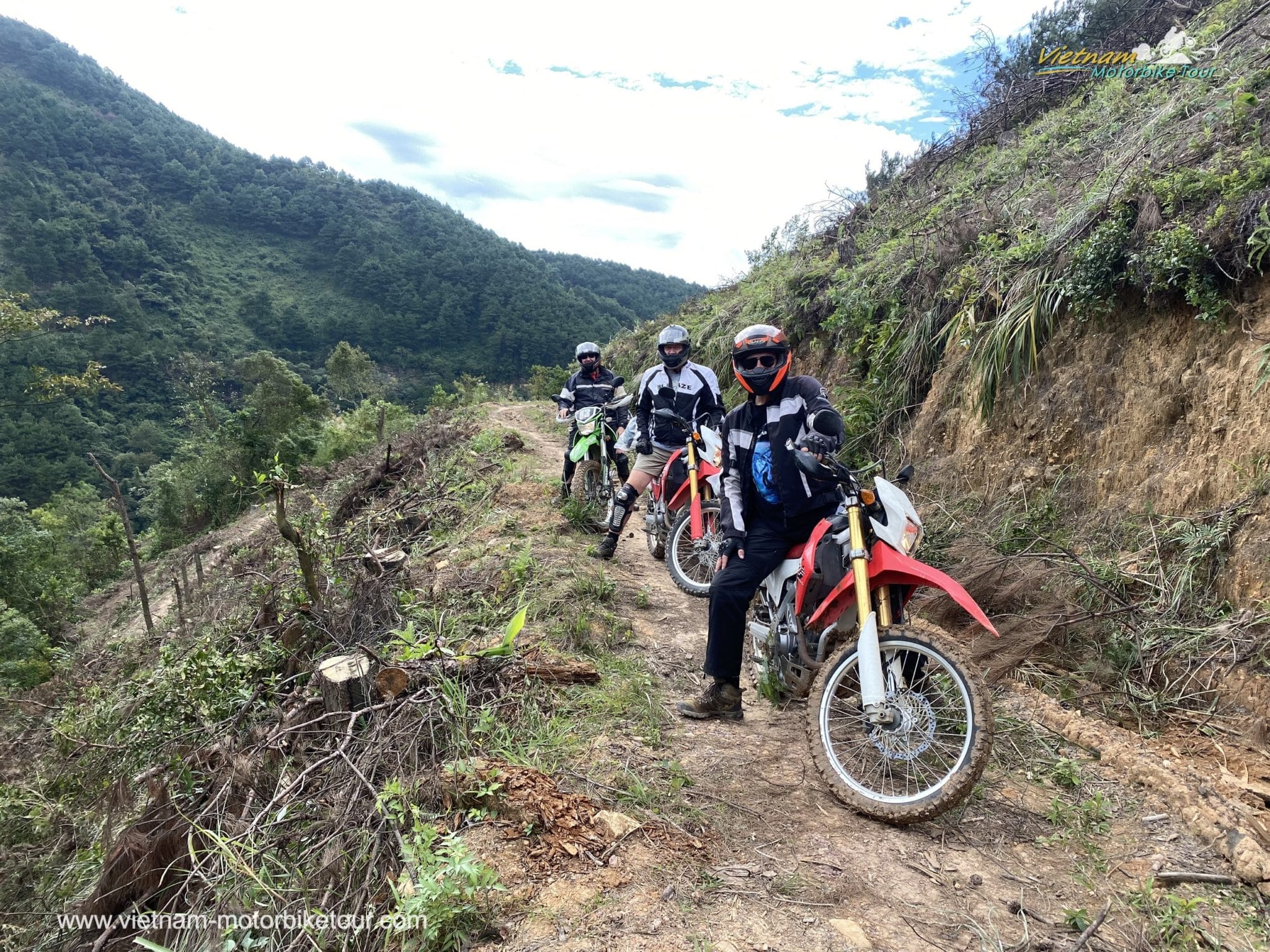
This is often the gateway into adventure riding in Vietnam.
The road is technically still a road, but it may contain:
🛣️ cracked concrete
🛣️ potholes
🛣️ repaired sections
🛣️ loose stones
🛣️ broken edges
🛣️ shallow washouts
🛣️ roadworks
🛣️ occasional landslide debris
For experienced riders, these sections are rarely difficult.
But they immediately teach you something important about Vietnam: never assume the surface will remain consistent around the next corner.
A perfect ribbon of mountain tarmac can become construction gravel without warning. A village lane may narrow dramatically. Water may run across a road after rain. Buffalo, dogs, schoolchildren, farm machinery and local motorbikes are all part of the riding environment.
This is why even “easy” adventure routes require attention.
The challenge is not necessarily technical skill. It is adaptability.
For riders with decades of road experience but little dirt experience, broken backroads are an excellent introduction because they encourage slower speeds, better surface reading and smoother control without immediately demanding advanced off-road technique.
2. Gravel Roads
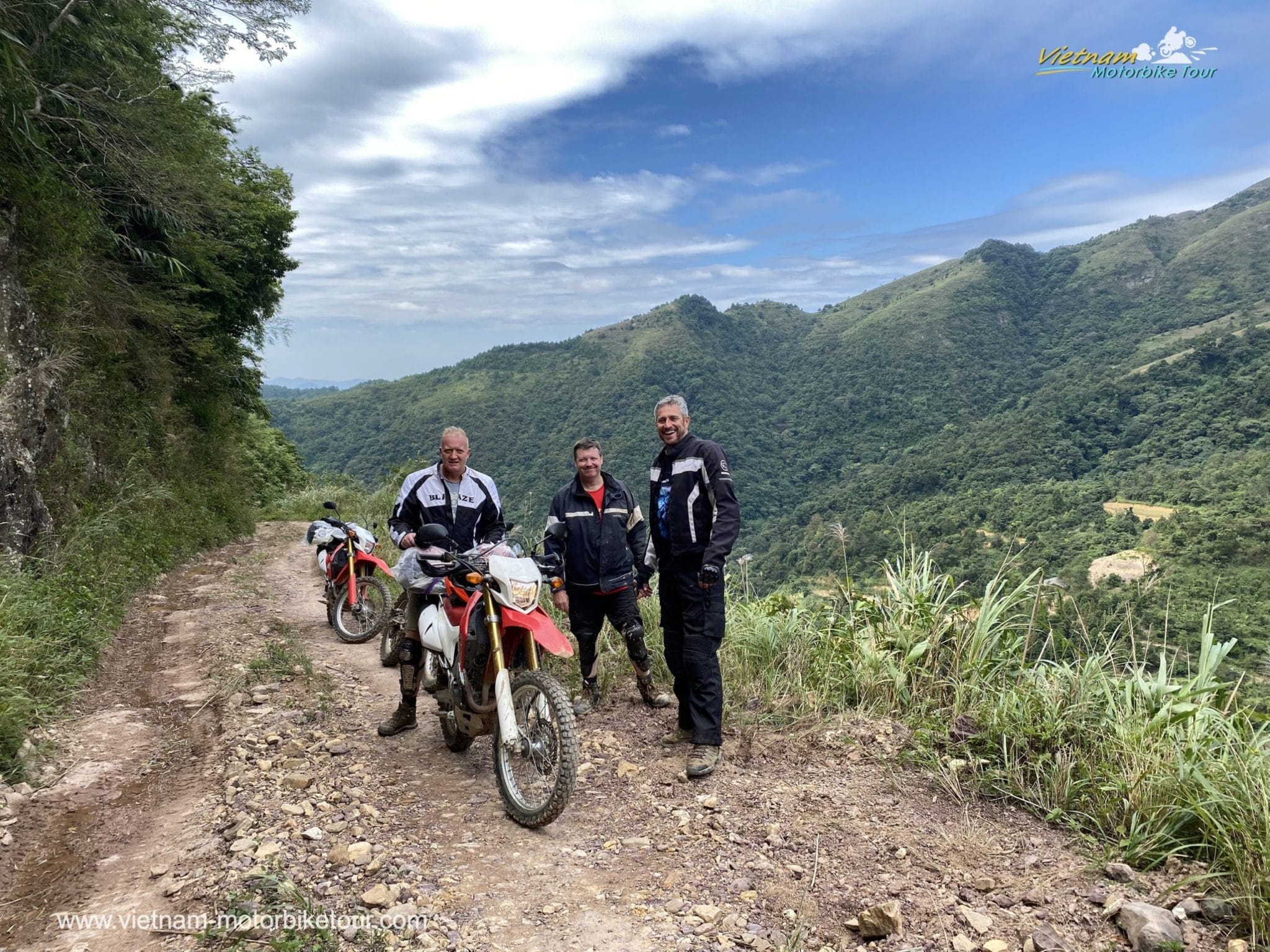
Gravel is where many road riders begin to feel that the real adventure has started.
Vietnam has everything from compacted gravel roads to loose mountain surfaces covered in small stones.
On wide, relatively flat gravel, a dual-sport bike such as a Honda CRF250L or CRF300L can feel wonderfully natural.
You relax your arms.
You allow the bike to move slightly beneath you.
You stop fighting every little movement of the tyres.
Then the terrain starts climbing.
Loose gravel on a steep ascent requires momentum and throttle control. On the way down, braking technique and line choice become much more important.
Gravel therefore ranges from beginner-friendly to genuinely challenging depending on gradient, looseness, corners and exposure.
A tour described only as “gravel riding” may still vary enormously in difficulty.
3. Hard-Packed Dirt Tracks
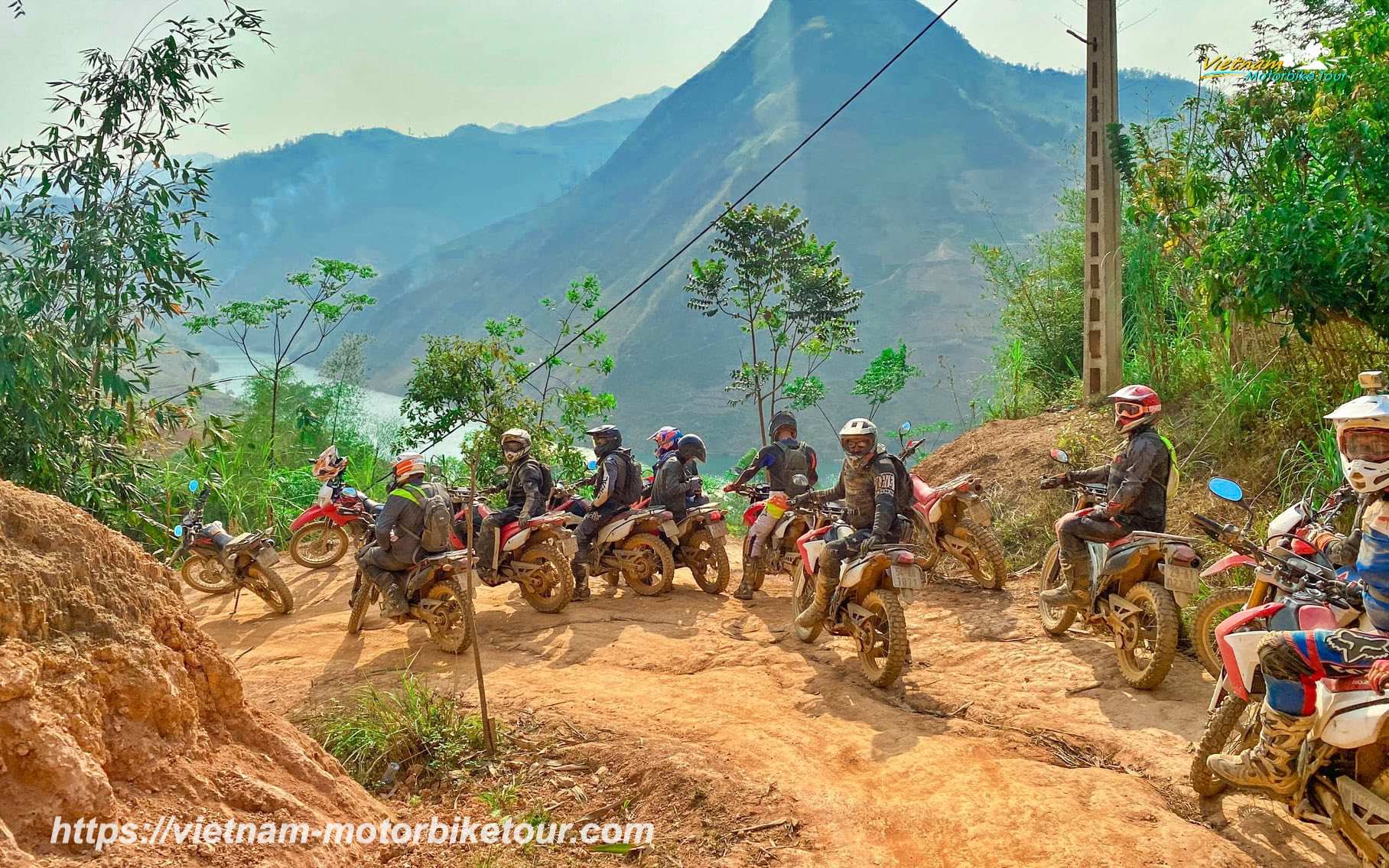
For many international riders, this is the perfect Vietnam adventure terrain.
Hard-packed dirt tracks can run through valleys, farmland, tea plantations, forests and mountain villages. In dry conditions they often offer excellent traction and enough room to choose comfortable lines.
This is the terrain that makes riders grin inside their helmets.
The route feels remote.
Dust rises behind the group.
The scenery opens into mountains and terraces.
There are no tour buses, no souvenir shops and often no other foreign travellers.
You are not simply riding to an attraction.
The road itself has become the attraction.
For competent road riders with a little gravel experience, these dirt tracks can be an ideal introduction to a true offroad motorcycle tour.
But remember one rule that appears again and again in Vietnam:
Dry dirt and wet dirt are two different worlds.
4. Farm Tracks and Village Connectors
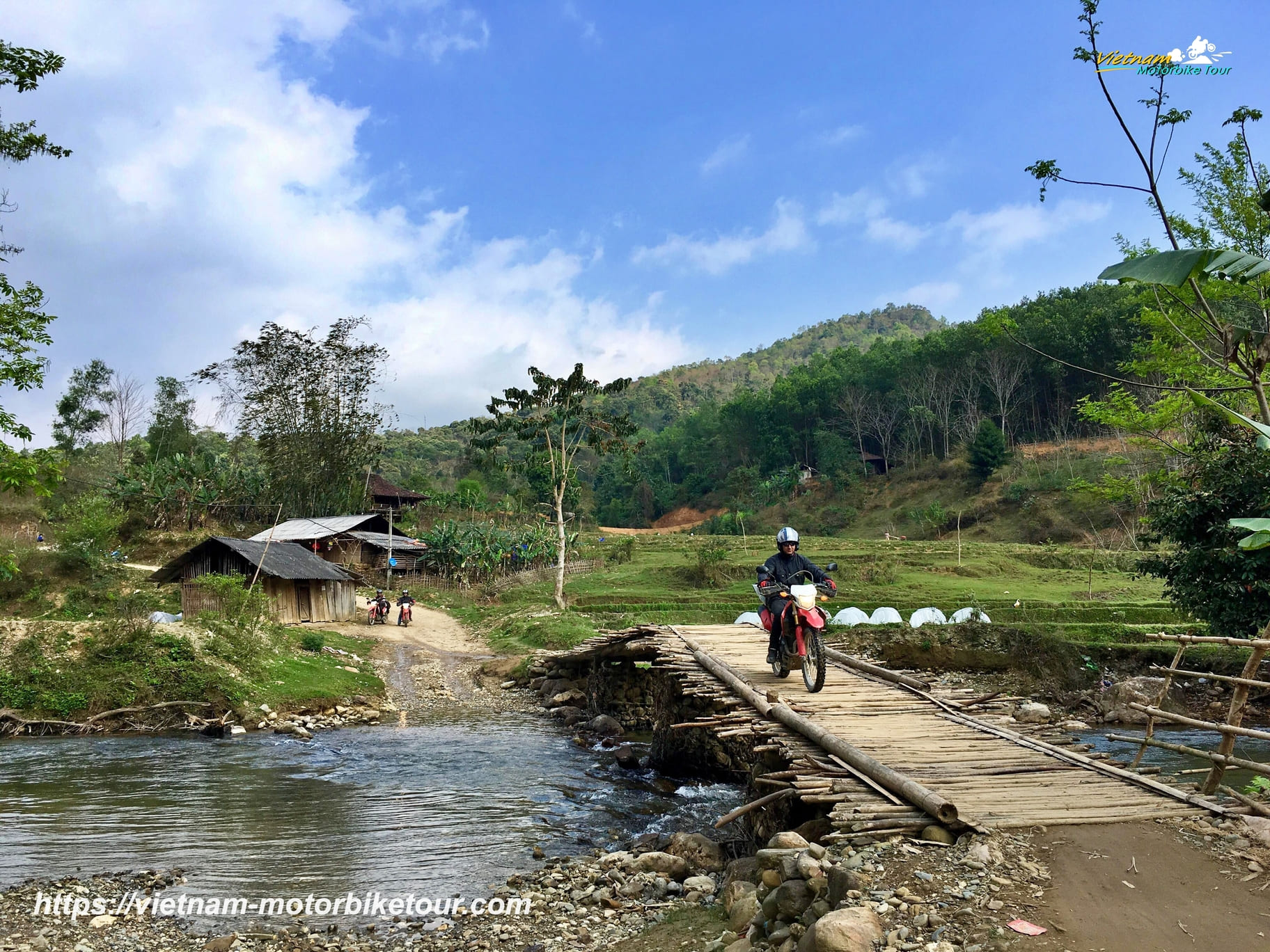
Some of the most memorable routes are not roads designed for tourism at all.
They are local connectors used by farmers, families and villagers to reach fields, markets and neighbouring communities.
They may pass between rice terraces, corn fields, tea plantations, orchards or bamboo groves.
Typical conditions can include:
🌾 narrow concrete strips
🌾 hard dirt
🌾 grass in the centre
🌾 shallow ruts
🌾 small water crossings
🌾 loose stones
🌾 livestock
🌾 very tight village corners
These routes are usually more about precision and awareness than speed.
And culturally, they deserve respect.
A farm track is not our private playground.
It may be a child’s route to school, a family’s access to their home or a farmer’s path to the field.
Slow down near houses. Give animals space. Reduce dust around people. Do not treat local communities as obstacles in an adventure video.
One of the privileges of a Vietnam motorcycle journey is that the route often brings you into landscapes where daily life is happening all around you.
Ride accordingly.
5. Single Trails
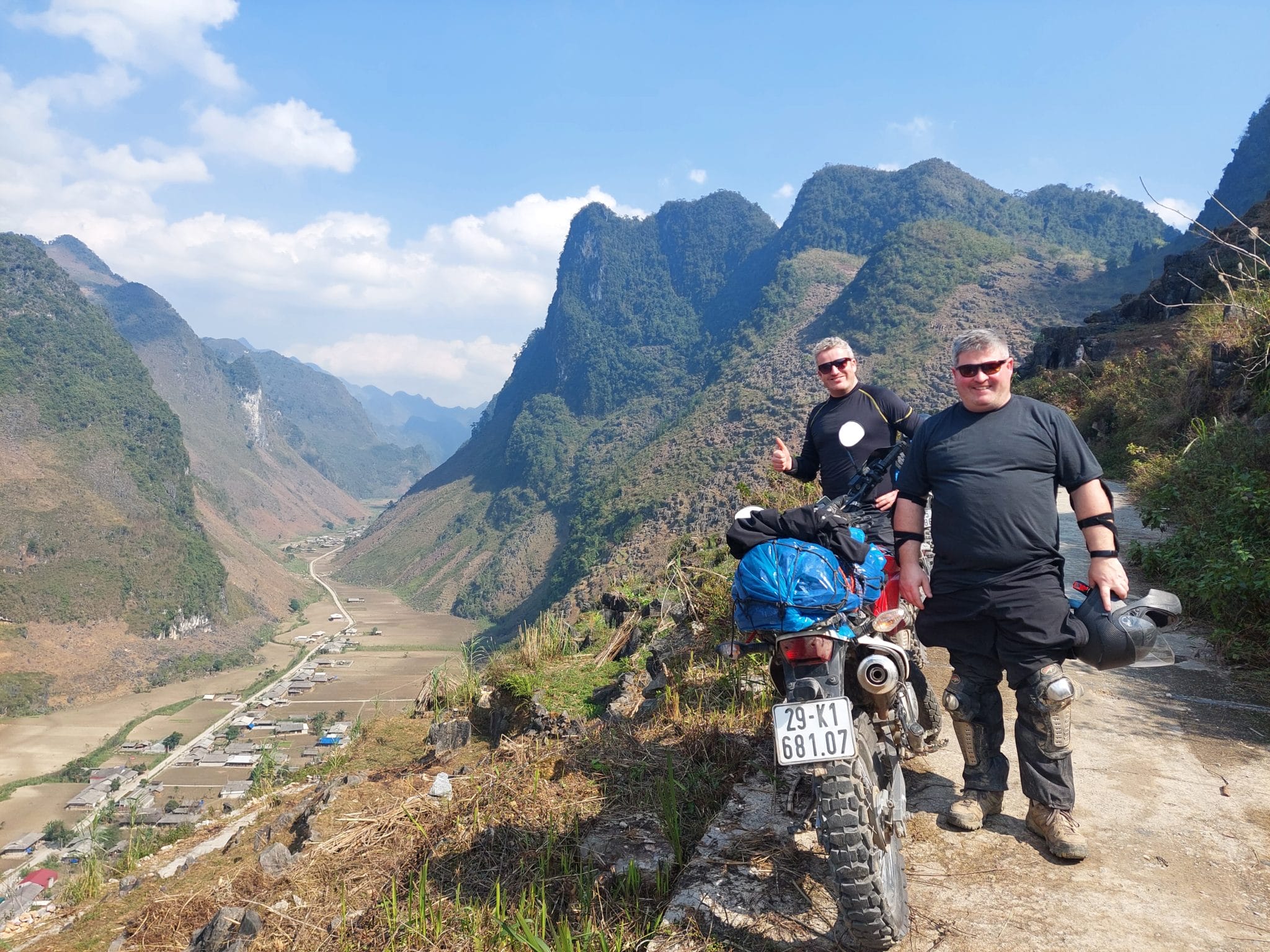
Now the definition of “off-road” becomes more serious.
A single trail is usually narrow enough that a motorcycle has little room to change line.
It may climb a hillside, cut through bamboo, follow the edge of rice terraces or disappear into forest.
Single trails can include:
🌿 exposed roots
🌿 loose rocks
🌿 narrow ruts
🌿 steep drops
🌿 sharp switchbacks
🌿 muddy hollows
🌿 small wooden or concrete bridges
🌿 very limited passing space
For an experienced dirt rider, this can be the highlight of the trip.
For a rider who has spent thirty years exclusively on asphalt, it can feel very different.
The problem is not always extreme terrain.
It is lack of space.
On a broad gravel road, you can adjust your line. On a single trail, the trail often decides the line for you.
Balance, low-speed control, body position and confidence become much more important.
A tour that contains significant single trail should therefore state clearly what level of riding experience is expected.
6. Jungle Trails and Wild Tracks
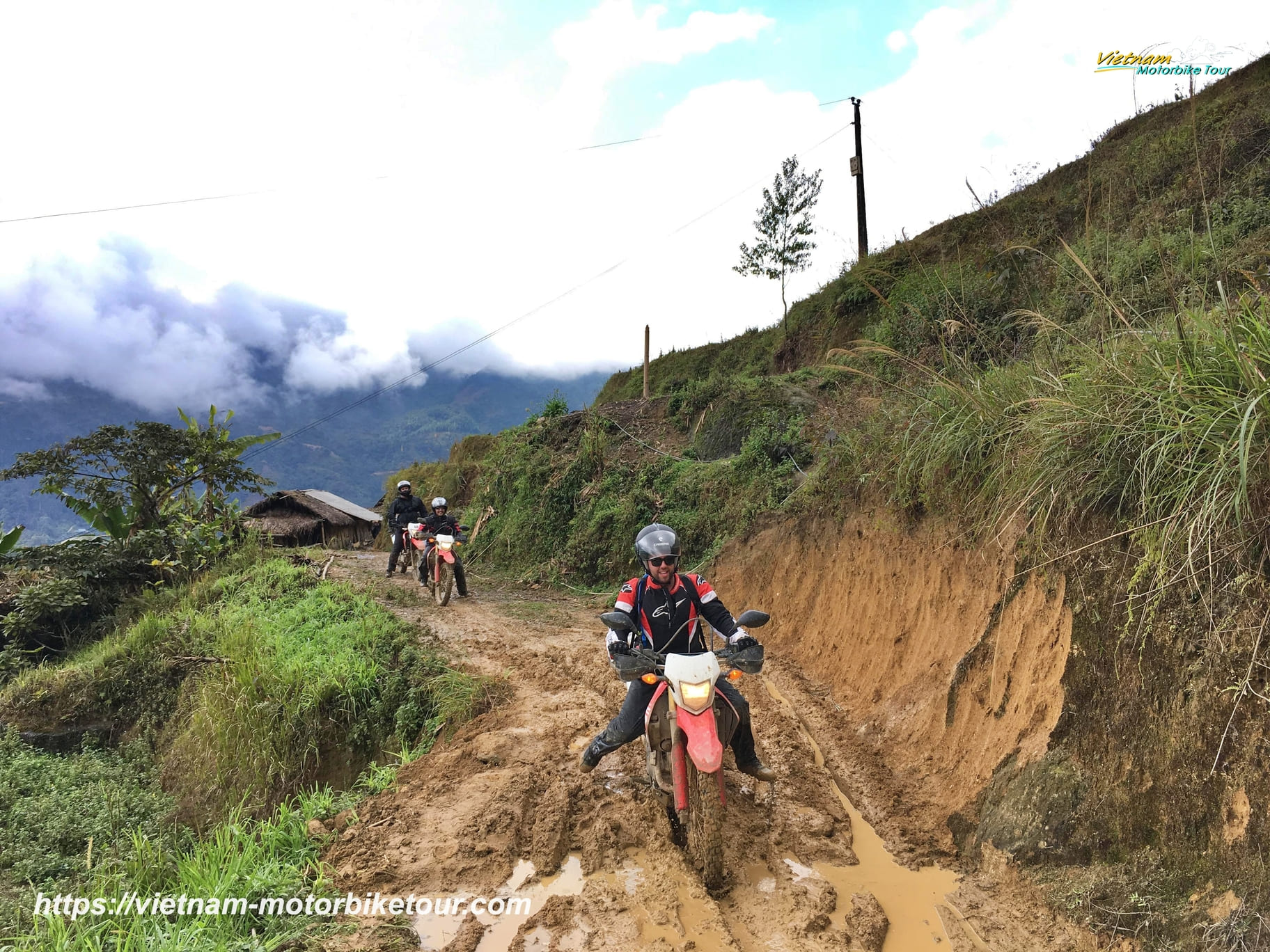
“Jungle” is one of those words that appears frequently in motorcycle marketing, so it is worth being precise.
In Vietnam, a JUNGLE trail may mean a forest track through bamboo, tropical vegetation or mountain woodland. Some are broad enough for agricultural vehicles. Others are narrow WILD TRACKS where branches close overhead and wet ground makes traction unpredictable.
These sections can be extraordinary.
The air becomes cooler beneath the trees.
The sound of engines changes.
Sunlight breaks through leaves in narrow shafts.
There may be stream crossings, roots, wet stones and sections where vegetation makes it difficult to see what is coming next.
This is where an adventure ride begins to feel like an expedition.
But again, “jungle trail” does not automatically mean hard enduro.
Some forest tracks are flowing and relatively easy.
Others are technical.
The difference comes down to gradient, surface, width, weather and obstacles.
7. Technical Dirt, Mud and River Crossings
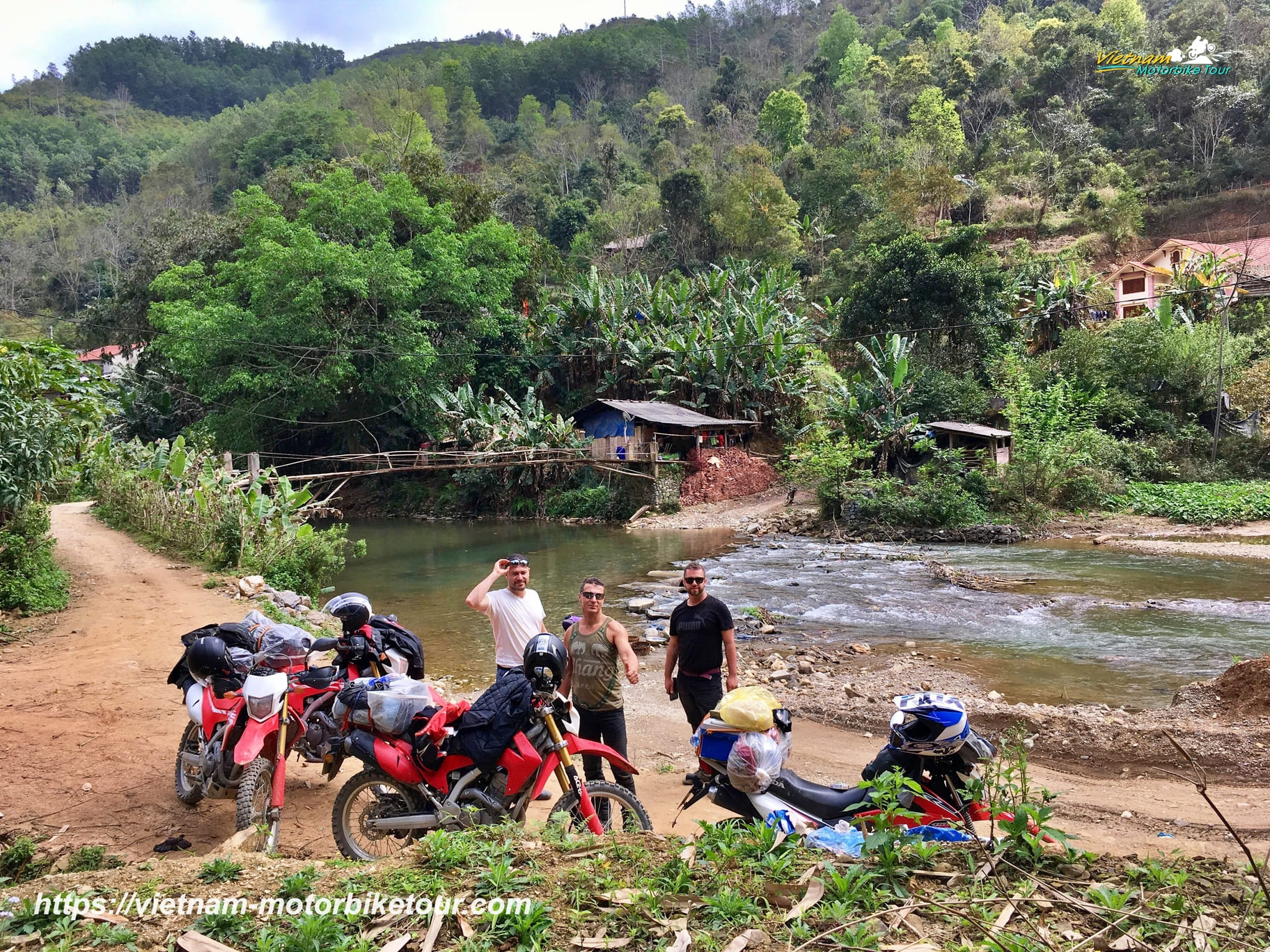
This is the category that should never be hidden behind vague marketing language.
Technical off-road may involve:
🔥 steep dirt climbs
🔥 loose rocky descents
🔥 deep ruts
🔥 slick clay
🔥 sustained MUDDY ROADS
🔥 difficult single trails
🔥 river crossings
🔥 washed-out tracks
🔥 fallen trees or natural obstacles
🔥 sections requiring careful line selection
This is not simply “a little dirt.”
It may demand real off-road skills, physical fitness and the ability to remain calm when the motorcycle starts sliding, spinning or moving beneath you.
For experienced enduro riders, these sections can create the EPIC RIDE they travelled to Vietnam to find.
For somebody with no dirt experience, they can turn a holiday into an exhausting struggle.
A professional operator must know the difference and recommend accordingly.
The Most Important Variable Is Not the Surface — It Is the Weather
If there is one fact every rider should understand before booking a Vietnam dirt bike tour, it is this:
The same trail can have completely different difficulty levels on different days.
Imagine a red-earth mountain track in dry weather.
The surface is firm.
Traction is predictable.
The climb is enjoyable.
You stand on the pegs and let the CRF work beneath you.
Then heavy rain arrives overnight.
The next morning the hard surface has become slick clay.
Ruts contain water.
Loose sections have washed away.
Rocks are polished and slippery.
The climb that felt like Level 2 yesterday may suddenly feel like Level 3 or Level 4.
That is why fixed labels such as “easy,” “moderate,” and “hard” should always be understood in context.
What Rain Can Change
🌧️ traction
🌧️ braking distance
🌧️ visibility
🌧️ depth of ruts
🌧️ river levels
🌧️ landslide risk
🌧️ rider fatigue
🌧️ average speed
🌧️ route accessibility
This is also why local guides are so valuable.
The best guide is not the person who insists on following yesterday’s GPS track regardless of conditions.
The best guide is the person who knows when to continue, when to change the line, when to use an alternative track and when to say, “That route is not worth it today.”
Adventure requires flexibility.
Stubbornness is not the same thing as courage.
Is “More Off-Road” Always Better?
No. An itinerary advertised as 80% off-road is not automatically better than one with 40% off-road. It is simply a different kind of holiday.
For some riders, 30–40% dirt mixed with spectacular mountain roads, cultural stops and easier gravel is perfect. For others, 50–70% off-road provides the ideal balance between challenge and recovery. Experienced enduro riders may deliberately seek 70–90% dirt, single trail and technical terrain.
The best percentage is the one that matches the experience you actually want. A high off-road number should describe the ride — not sell an ego.
What Does “Off-Road” Mean in Ha Giang?
Ha Giang creates an interesting misunderstanding because many travellers know the famous Ha Giang Loop.
The iconic loop itself includes spectacular paved mountain roads, huge limestone landscapes and extraordinary passes.
You can have an unforgettable motorcycle journey in Ha Giang without riding hardcore dirt at all.
But experienced local guides can also move away from the main loop onto backroads, remote village connectors, gravel, dirt and more challenging tracks.
So “Ha Giang off-road” could mean two very different things:
🧭 a scenic Ha Giang journey with selected easy dirt sections
or
🔥 a serious off-road route using remote tracks beyond the standard tourist loop
Always ask which one you are booking.
What Does “Off-Road” Mean in the Northwest?
For riders searching for stronger dirt content, Northwest Vietnam can become a different world.
Areas around Ta Xua, Mu Cang Chai, Ngoc Chien and more remote mountain districts can offer combinations of:
🏔️ high passes
🏔️ red dirt tracks
🏔️ rice-terrace trails
🏔️ rough mountain connectors
🏔️ bamboo and forest sections
🏔️ mud after rain
🏔️ steep climbs and descents
The visual reward is enormous.
Rice terraces wrap around mountains. Small villages appear on distant slopes. Clouds rise from deep valleys. On quiet tracks, the sound of your motorcycle may be the only engine you hear for long stretches.
But the Northwest also demonstrates perfectly why local conditions matter.
A dry mountain trail can be playful and flowing.
The same trail after rain can become a technical test.
Single Trail vs Dirt Road: Why the Difference Matters
Tour descriptions often use these expressions as if they were interchangeable.
They are not.
A dirt road may be wide enough for a vehicle, provide multiple lines and allow riders to stop or turn around relatively easily.
A single trail may be much narrower, physically tighter and more exposed.
Dirt Road Usually Means
✅ more space
✅ easier line choice
✅ easier overtaking or regrouping
✅ more suitable for intermediate riders
✅ potentially faster average speed
Single Trail Often Means
⚠️ limited space
⚠️ tighter turns
⚠️ more balance work
⚠️ fewer line choices
⚠️ slower average speed
⚠️ potentially greater consequence for mistakes
This is why an itinerary saying “50% dirt” is incomplete.
Ask:
“How much of that dirt is wide track, and how much is single trail?”
That one question can tell you more about difficulty than the marketing headline.
Does Off-Road Mean You Will Fall?
Possibly.
Motorcycles occasionally end up on their side during genuine dirt riding.
A low-speed fall in a muddy rut is very different from a high-speed road accident, but it still reminds us why protective equipment, sensible speed and good technique matter.
The objective is not to celebrate crashing as proof of adventure.
The objective is to manage the environment well enough that small mistakes stay small.
Good dirt riders know that ego creates more problems than mud.
If you are tired, stop.
If you do not like a line, reset.
If a section is beyond your confidence level, say so.
If another rider is faster, let them be faster.
The mountains do not award medals.
The Motorcycle Changes the Meaning of “Difficult”
A track is not objectively easy or difficult without considering the motorcycle.
Put an experienced rider on a lightweight CRF300L and a narrow mountain trail may feel playful.
Put the same rider on a heavily loaded 250-kilogram adventure bike and the same trail can become far more physical.
For mixed-surface Vietnam riding, lightweight dual-sport motorcycles are popular for good reasons.
They offer:
⚙️ manageable weight
⚙️ useful suspension
⚙️ predictable power
⚙️ good ground clearance
⚙️ easier recovery after a low-speed fall
⚙️ better manoeuvrability on narrow tracks
This does not mean large adventure motorcycles have no place in Vietnam.
They can be excellent on longer overland routes, sealed mountain roads and broad gravel.
But if the itinerary contains technical single trail, deep mud or tight WILD TRACKS, lighter often means easier — and frequently more fun.
How Should Off-Road Difficulty Be Matched to Rider Level?
A responsible operator should never ask only one question:
“How many years have you ridden?”
Years alone are misleading.
A person may have ridden road motorcycles for thirty years but never stood on the pegs on loose gravel.
Another rider may have only six years of experience but ride enduro every weekend.
Their off-road ability will be completely different.
A useful pre-tour conversation should include:
📝 current motorcycle
📝 years of riding
📝 road experience
📝 gravel experience
📝 dirt-bike or enduro experience
📝 experience in mud
📝 confidence on steep climbs
📝 confidence on loose descents
📝 multi-day riding experience
📝 preferred pace
📝 fitness and any practical limitations relevant to riding
Then the route can be matched properly.
Beginner-Friendly Adventure Off-Road
Suitable for competent motorcyclists with little dirt experience.
Typical mix:
💚 sealed mountain roads
💚 broken backroads
💚 easy gravel
💚 hard-packed dirt
💚 minimal technical terrain
The objective is confidence and discovery.
Intermediate Off-Road Adventure
Suitable for riders comfortable on loose surfaces and standing on the pegs.
Typical mix:
🟠 longer dirt sections
🟠 gravel climbs and descents
🟠 rough rural tracks
🟠 occasional mud
🟠 manageable single trails
This is often the perfect balance for an adventure rider who wants a real challenge without turning the entire holiday into an enduro event.
Advanced / Technical Off-Road
Suitable for experienced dirt riders.
Typical mix:
🔥 steep climbs
🔥 rocky tracks
🔥 substantial mud
🔥 river crossings
🔥 technical single trails
🔥 jungle tracks
🔥 difficult descents
Here, rider skill becomes central to the itinerary.
Why Paved Sections Are Not “Wasted” Kilometres
Some riders see a tour labelled off-road and assume every paved kilometre is a disappointment.
That misses the point of Vietnam.
Northern Vietnam contains some extraordinary mountain tarmac.
Sharp curves climb through limestone peaks. Winding roads cross high passes. Valleys open unexpectedly below. Fog moves across ridges. A stretch of sealed road can be every bit as thrilling as dirt, just in a different way.
Paved sections also provide valuable recovery.
After two hours of standing on the pegs through rough terrain, twenty or thirty kilometres of flowing tarmac allows your body to relax.
It lets the group cover distance.
It connects one remote trail network to another.
It creates rhythm.
A truly good Vietnam motorcycle itinerary is not obsessed with keeping the tyres on dirt every minute.
It combines surfaces intelligently.
What Should Be Included in a Professional Vietnam Off-Road Motorbike Tour?
“Off-road” should describe more than the road surface. It should also imply that the operator is prepared for the realities of remote riding.
Typical inclusions or support elements should be stated clearly.
Appropriate Motorcycle
✅ A well-maintained dual-sport or dirt-oriented motorcycle suited to the route and rider.
Experienced Motorcycle Guide
✅ A guide who understands riding technique, terrain, local tracks, weather, group management and alternative routes — not simply a sightseeing guide on a motorcycle.
Fuel
✅ Fuel arrangements should be clear, especially on remote itineraries where stations may be less frequent.
Accommodation
✅ Hotels, guesthouses, lodges or homestays selected according to the route and the realistic standards available in each region.
Meals
✅ Meals or meal arrangements suitable for multi-day riding, including remote areas where choices may be limited.
Riding Gear
✅ Clear information about helmets, armour, gloves, boots and protective clothing. Riders who have preferred personal equipment may choose to bring their own.
Mechanical Support
✅ Tools, puncture support and enough mechanical knowledge to solve common trail-side problems.
Support Vehicle Where Appropriate
✅ Particularly valuable for larger groups, longer expeditions, luggage support or riders who want an additional safety margin.
Flexible Route Planning
✅ Perhaps the most important inclusion. Weather, roadworks, landslides, fatigue and group ability can all affect the best route on a given day.
Ten Questions to Ask Before Booking an “Off-Road” Tour
Before paying a deposit, ask the operator these questions.
❓ 1. What percentage is paved, gravel, dirt and technical trail?
❓ 2. How much genuine single trail is included?
❓ 3. Are the most technical sections compulsory?
❓ 4. How does the route change after heavy rain?
❓ 5. What rider level is the itinerary designed for?
❓ 6. Which motorcycles are used, and why are they suitable?
❓ 7. How many riding hours should I expect each day?
❓ 8. Can the guide reduce or increase the off-road difficulty?
❓ 9. What mechanical and emergency support is available?
❓ 10. Can you recommend another itinerary if my skill level does not match this one?
The quality of the answers will tell you a great deal about the quality of the operator.
A serious company should not be offended by these questions.
They should welcome them.
Off-Road Is About Access to the Real Vietnam, Not Just Difficulty
The lasting value of off-road riding is not only the technical challenge. It is where the track takes you.
A remote village. A tea stop with a family. Children waving beside a farm track. Rice terraces dropping into a cloud-filled valley. A market town waking up at dawn. A tiny bridge over a mountain stream.
Off-road riding creates access to places that conventional sightseeing rarely reaches. It changes your relationship with distance and turns the journey itself into the experience.
That is why the best offroad motorcycle tour is not necessarily the one with the deepest mud. It is the one that uses the motorcycle to connect terrain, people, culture and landscape into one continuous journey.
So, What Does “Off-Road” Really Mean on a Vietnam Motorbike Tour?
It means variety.
It may mean gravel in the morning and red dirt after lunch.
It may mean a village track where you slow to walking pace behind a farmer.
It may mean standing on the pegs through a rocky climb.
It may mean MUDDY ROADS after a summer storm.
It may mean a JUNGLE trail beneath bamboo.
It may mean a technical single trail that challenges every skill you have.
And sometimes it simply means turning away from the main road and discovering a part of Vietnam that most travellers never see.
That is the definition worth remembering.
Off-road is not a competition to avoid asphalt.
It is not a percentage designed to make one tour sound tougher than another.
And it does not have to mean extreme enduro.
The right off-road experience is the one matched to your ability, your motorcycle and the kind of adventure you want.
For one rider, that means 30% easy dirt and three unforgettable mountain passes.
For another, it means 80% WILD TRACKS, steep climbs and mud from breakfast to sunset.
Both can be authentic.
Both can be an EPIC RIDE.
What matters is knowing which one you are booking before the helmet goes on.
Frequently Asked Questions About Vietnam Off-Road Motorbike Tours
1. Does “off-road” in Vietnam mean hardcore enduro?
No. Off-road can range from easy gravel and hard-packed dirt to highly technical single trail. Always ask for a detailed terrain description rather than relying on the tour name.
2. How much off-road should a good Vietnam motorcycle tour include?
There is no ideal percentage. The right amount depends on your skill level and travel style. Some riders prefer 30–40% dirt with scenic paved roads, while experienced dirt riders may actively seek 70–90% off-road.
3. Can an experienced road rider join an off-road tour?
Yes, if the route is selected appropriately. Competent road riders often adapt well to gravel and easy dirt, but technical mud, steep climbs and narrow single trails require different skills.
4. Is gravel considered off-road?
Usually yes in motorcycle-tour descriptions, but gravel can vary from compact and easy to steep, loose and demanding. Ask about gradient and surface condition.
5. What is a single trail?
A single trail is a narrow track with limited space for line choice. It may include roots, rocks, ruts, sharp bends or steep sections and generally requires more balance and low-speed control than a broad dirt road.
6. Does rain make off-road riding much harder?
It can. Red soil and clay can become extremely slippery, ruts may fill with water and river crossings can change. A good guide should adapt the route to current conditions.
7. Are technical sections compulsory?
They should not automatically be compulsory on a mixed-ability adventure tour. Ask whether bypasses or alternative routes are available before booking.
8. What motorcycle is best for Vietnam off-road riding?
Lightweight dual-sport motorcycles around the 250–300cc class are highly practical for mixed mountain riding because they combine manageable weight, suspension, ground clearance and usable power. The ideal bike still depends on rider size and route.
9. Are paved roads still part of a genuine off-road tour?
Absolutely. Paved sections connect trail systems, give riders physical recovery and often include spectacular mountain riding. A good mixed-surface itinerary uses them intelligently rather than treating them as wasted kilometres.
10. How can I tell whether an advertised off-road tour is genuine?
Ask for terrain percentages, descriptions of single trail versus wide dirt roads, representative riding photos or videos, daily riding hours, bike details and required skill level. Specific answers are more valuable than dramatic adjectives.
Final Thought: The Best Off-Road Tour Is the One That Fits the Rider
There is something irresistible about the words “off-road.” They suggest freedom, a turn away from the obvious route and a journey where the mountain ahead matters more than the map. Vietnam delivers that feeling beautifully.
But the real magic is not proving how difficult a trail you can survive.
It is finding the right balance between challenge and discovery.
Enough dirt to make the day feel adventurous.
Enough technical riding to keep you focused.
Enough winding mountain roads to make the journey flow.
Enough time to stop in villages, drink tea, photograph the valleys and understand something about the country you are riding through.
So before booking, do not simply ask:
“How much off-road is there?”
Ask:
“What kind of off-road experience will I have?”
That question leads to a much better motorcycle tour.
Because in Vietnam, off-road is not simply where the asphalt ends.
It is where another kind of journey begins.