
An honest rider-focused guide to terrain, skill level, weather, bikes, fatigue and real-world adventure riding in Vietnam
There is a moment on almost every serious Vietnam off-road motorcycle tour when the question disappears.
Before the trip, riders ask:
❓ How difficult is it?
❓ Will I be experienced enough?
❓ Is this proper off-road riding or mostly paved roads?
❓ What happens if it rains?
❓ Can I handle a Honda CRF300L through the mountains for eight days?
Then, somewhere far beyond Hanoi, the road narrows.
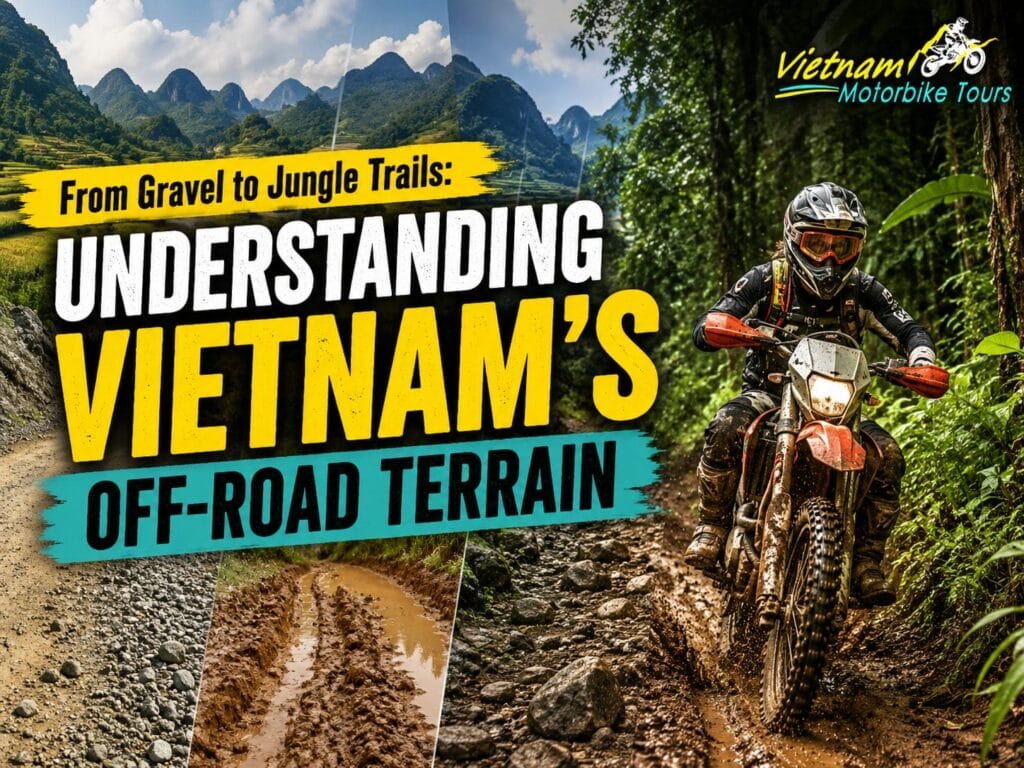
The smooth tarmac gives way to broken concrete. The concrete becomes gravel. The gravel becomes a red dirt track curling around a mountainside. Ahead, a thin trail disappears into bamboo forest. Somewhere below, rice terraces fall away towards a river valley. A farmer passes slowly on an old motorbike carrying vegetables, firewood or perhaps half a dozen chickens.
Your guide stops.
He looks back.
“Okay?”
You look at the muddy road, the sharp climb ahead and the cloud drifting across the mountain.
And suddenly the question is no longer:
“How difficult is riding in Vietnam?”
It becomes:
“How much fun am I about to have?”
That is the strange beauty of riding Vietnam.
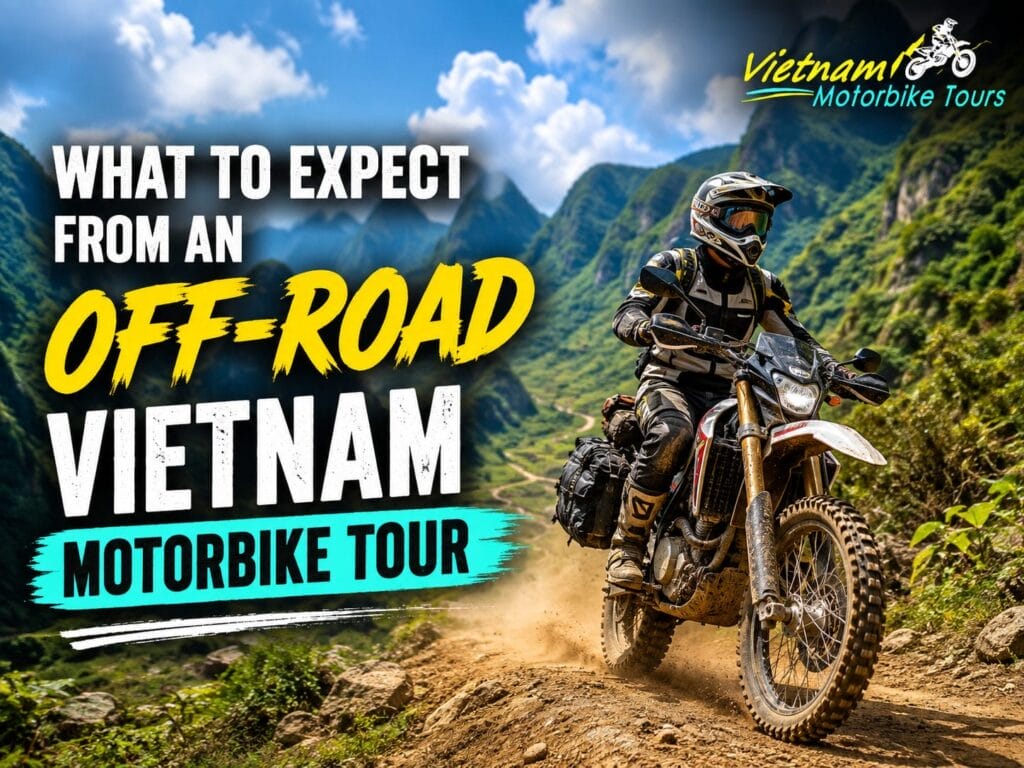
A genuine offroad motorcycle tour in Vietnam can be challenging, unpredictable and occasionally exhausting. There can be dirt tracks, rocky climbs, steep passes, sharp curves, twisted mountain roads, muddy sections, river crossings, jungle trails and wild tracks that barely resemble roads at all.
But that does not mean every Vietnam motorcycle tour is suitable only for expert enduro riders.
Far from it.
The real answer is more interesting:
Vietnam can offer an adventure ride for almost every competent motorcyclist — provided the route, motorcycle, riding pace and terrain are matched honestly to the rider’s experience.
And that is exactly what this guide is about.
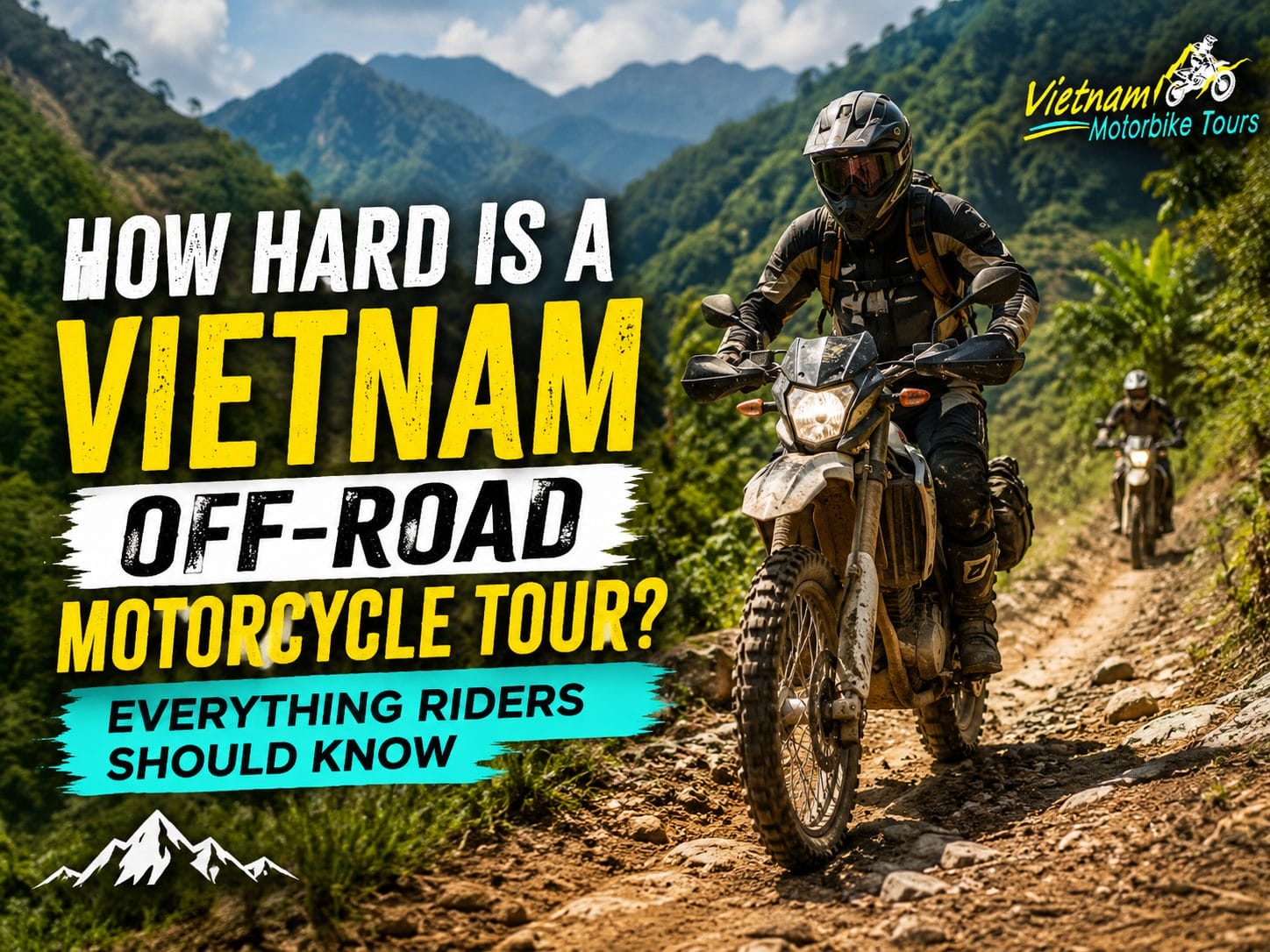
So, How Difficult Is a Vietnam Off-Road Motorcycle Tour?
If we had to answer in one sentence:
It can range from relaxed adventure riding to seriously technical off-road riding.
That distinction is important.
The phrase “off-road motorcycle tour” is used very loosely online.
One company may describe a trip containing 20% gravel roads as “off-road.”
Another may take riders through:
🏍️ steep dirt climbs
🏍️ wet clay
🏍️ rocky mountain trails
🏍️ deeply rutted tracks
🏍️ forest paths
🏍️ bamboo trails
🏍️ river crossings
🏍️ loose gravel descents
🏍️ mud after tropical rain
🏍️ narrow single trails between rice terraces
Those are two completely different holidays.
Before choosing any Vietnam dirt bike tour, therefore, never judge difficulty from the tour title alone.
Ask what the terrain actually looks like.
Ask how much is paved.
Ask how much is genuine off-road.
Ask whether the difficult sections are compulsory.
Most importantly, tell the operator honestly about your riding background.
A properly designed motorcycle adventure should challenge you enough to create memories — not push you beyond your safe riding ability simply because an itinerary says you must follow a particular trail.
What Does “Off-Road” Actually Mean in Vietnam?
Vietnam rarely offers one single type of terrain for an entire day.
That is exactly why riding here is so addictive.
Within 150 kilometres, you might experience four or five completely different riding environments.
You may leave a mountain town on smooth asphalt, climb a winding road through limestone peaks, turn onto broken rural concrete, follow a gravel track into a valley and eventually find yourself standing on the pegs as your front wheel searches for grip on a wet dirt climb.
Twenty minutes later, you may be sitting beside a village house drinking hot green tea.
That constant transition is part of the adventure.
1. Mountain Tarmac — Easy Riding, But Never Boring
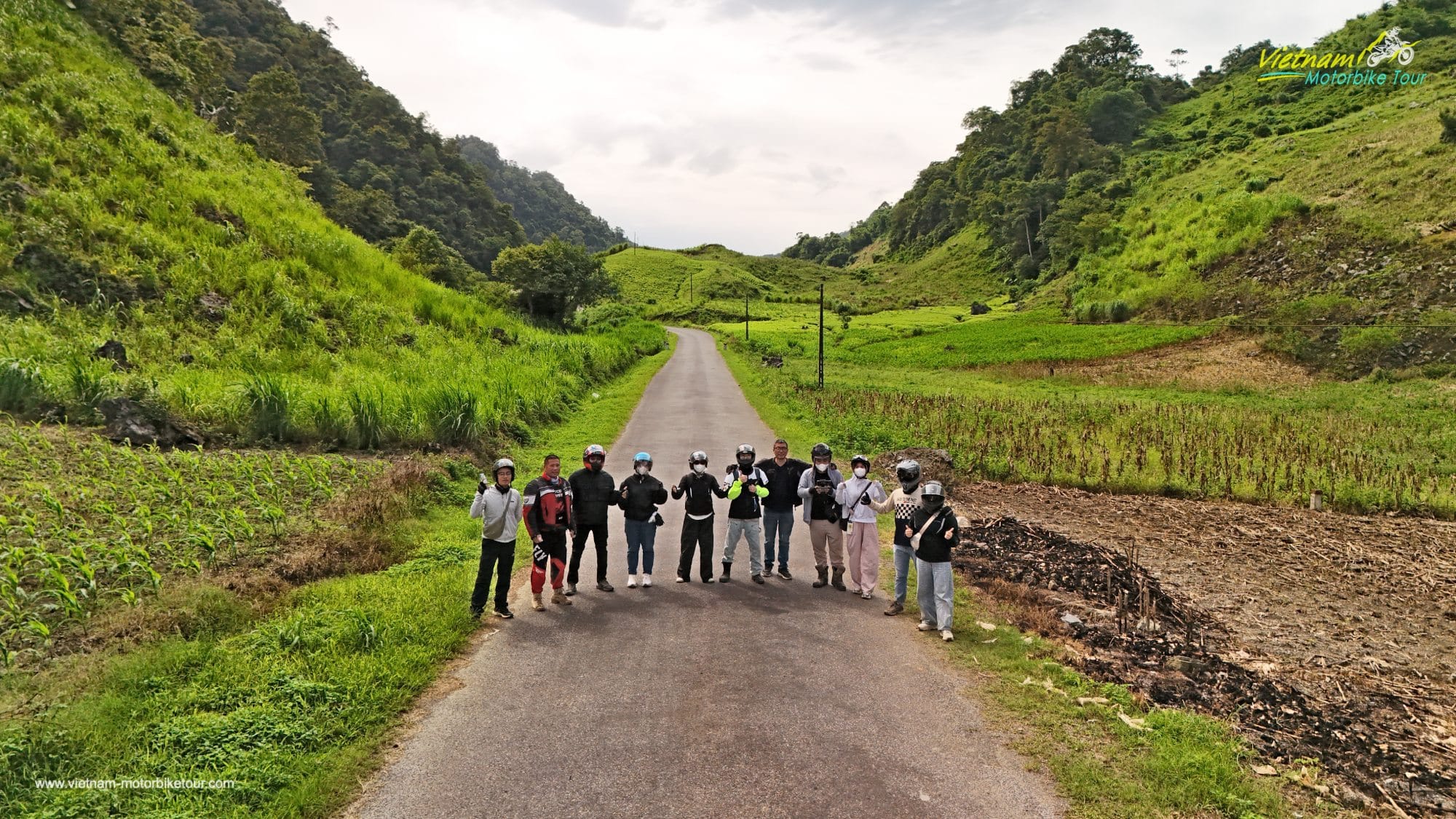
Do not assume paved roads in Northern Vietnam are automatically easy.
The mountains are filled with:
🛣️ sharp curves
🛣️ blind bends
🛣️ steep passes
🛣️ changing road surfaces
🛣️ narrow roads
🛣️ livestock
🛣️ village traffic
🛣️ buses and trucks
🛣️ occasional rockfall
🛣️ fog and low cloud
For experienced road riders, this can be some of the most enjoyable riding in the country.
Imagine climbing towards a high mountain pass early in the morning.
Below you are valleys filled with mist. Above, limestone ridges disappear into cloud. The road twists across the mountainside in a seemingly endless sequence of curves.
This is not necessarily technically difficult.
But it demands concentration.
On these roads, smooth riding beats aggressive riding.
There is little value in entering corners fast.
Vietnam rewards riders who relax, read the road ahead and enjoy the rhythm of the mountain.
2. Broken Rural Roads — Where the Adventure Begins
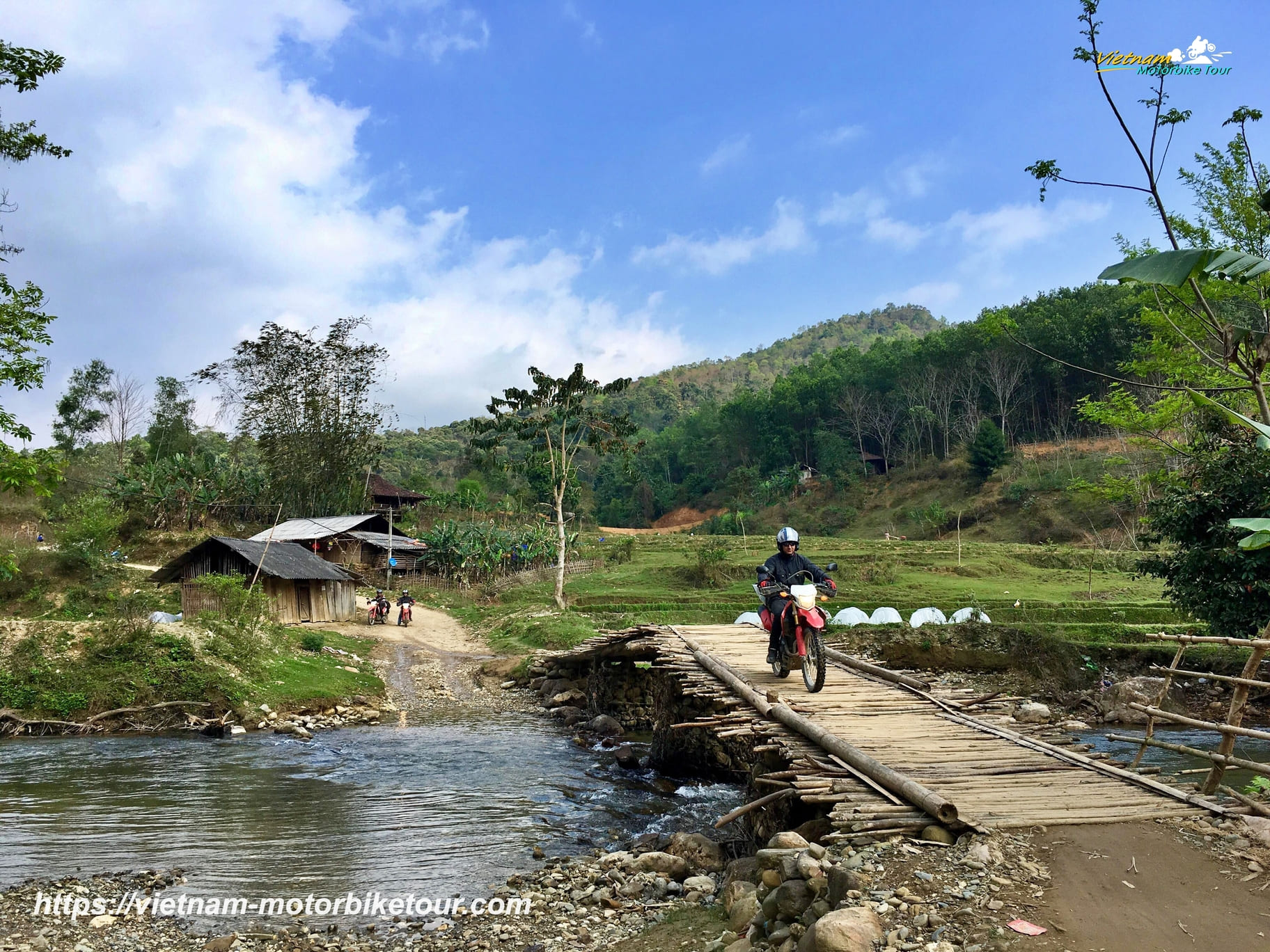
Leave the main provincial roads and conditions quickly become more interesting.
You may encounter:
🪨 cracked concrete
🪨 potholes
🪨 loose stones
🪨 broken asphalt
🪨 small landslides
🪨 construction sections
🪨 shallow water crossings
For riders accustomed only to perfectly maintained European or Australian roads, this may initially feel unusual.
After a day or two, most riders adapt.
You start reading surfaces differently.
You stop expecting the road to remain consistent.
And that mental adjustment is one of the most important skills for riding in Vietnam:
Expect the surface to change.
A beautiful stretch of asphalt can become gravel around the next corner.
A dry track can become wet where water runs down the mountain.
A previously easy village road can become broken after heavy rain.
Adaptability matters more than speed.
3. Gravel Roads — Usually Fun for Adventure Riders
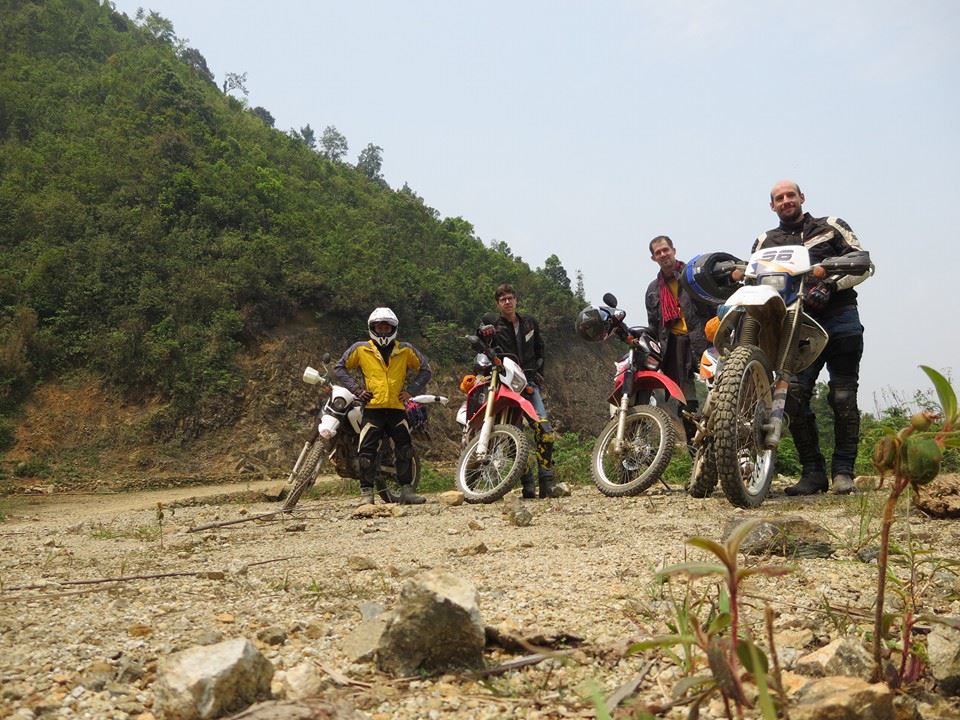
For many riders, gravel is where a Vietnam adventure ride truly comes alive.
Wide mountain gravel roads can be wonderfully flowing.
Stand up.
Relax your arms.
Look through the corner.
Allow the motorcycle to move underneath you.
This terrain is often ideal for intermediate adventure riders because it feels genuinely adventurous without becoming extremely technical.
But gradients matter.
A flat gravel road is one thing.
A steep gravel descent with loose stones is another.
This is where good throttle control, braking technique and body position become important.
4. Dirt Tracks — The Heart of the Vietnam Off-Road Experience
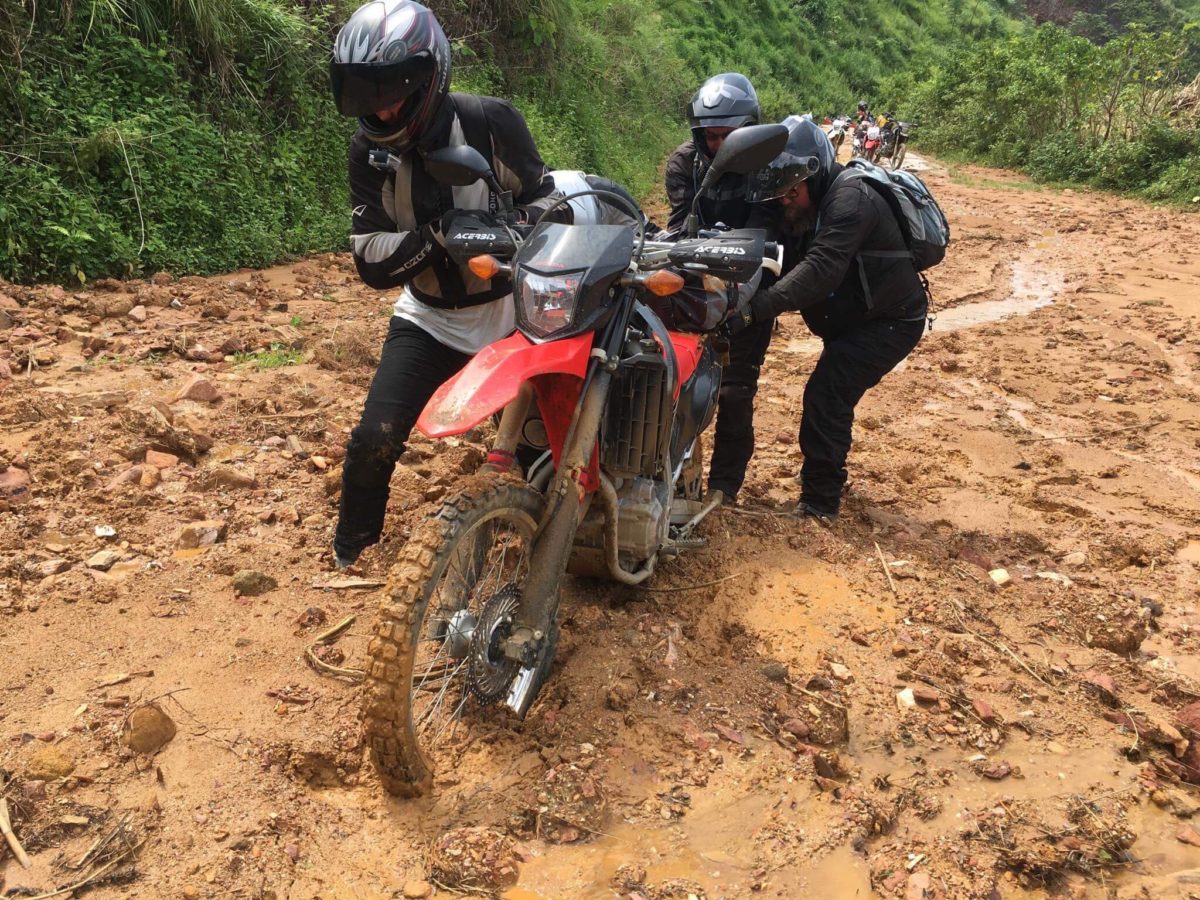
Then come the roads many riders travelled halfway around the world to find.
Dirt tracks.
Some are wide enough for a small truck.
Others wind through farmland.
Others climb towards isolated communities where very few foreign travellers ever arrive.
In dry weather, these trails can be fast, dusty and beautifully rewarding.
After rain, everything changes.
Hard earth becomes slippery clay.
Tyre grooves fill with water.
The motorcycle starts moving beneath you.
The same road that was easy yesterday can require significantly more concentration today.
This is why experienced local guides rarely describe trail difficulty purely by distance.
They know:
Ten kilometres of wet mountain dirt can demand more energy than one hundred kilometres of paved road.
Mud Changes Everything
Ask any rider who has completed a proper summer Vietnam dirt bike adventure, and sooner or later the conversation reaches one subject:
MUD.
Vietnam’s tropical climate and mountainous geography mean rainfall can transform riding conditions quickly. Northern destinations have clear seasonal differences, with hotter, wetter summer periods and cooler, generally drier conditions at other times of year.
But from a rider’s perspective, weather statistics only tell half the story.
Rain changes the trail.
Dry Dirt vs Muddy Roads
A dry red dirt climb may require little more than momentum and sensible throttle control.
Add twenty minutes of tropical rain and suddenly:
🌧️ your rear tyre spins
🌧️ the front tyre searches for grip
🌧️ ruts become slippery
🌧️ rocks become polished
🌧️ goggles become wet
🌧️ gradients feel twice as steep
This is why MUDDY ROADS are one of the great dividing lines between moderate adventure riding and technical riding.
For an experienced dirt rider?
Brilliant fun.
For someone who has spent twenty years riding only road motorcycles?
Potentially intimidating.
Neither reaction is wrong.
They are simply different experience levels.
Should You Avoid Vietnam During the Wet Season?
Not necessarily.
Some of our most memorable EPIC RIDES happen when the mountains are intensely green, waterfalls are full, clouds hang between the peaks and the dirt tracks become more adventurous.
The landscape feels alive.
Rice terraces shimmer with water.
Farmers work in bright green valleys.
Water buffalo stand beside the trail.
But riders need realistic expectations.
Wet-season riding may mean:
🌦️ slower progress
🌦️ more physical effort
🌦️ route changes
🌦️ additional mud
🌦️ occasional landslides
🌦️ sections becoming temporarily inaccessible
A professional tour should therefore retain flexibility.
The objective is not to conquer one particular track at any cost.
The objective is to create the best possible ride for the conditions that actually exist that day.
What About Single Trails and Wild Tracks?
Now we enter a different category.
A single trail may be barely wider than the motorcycle.
It might pass between:
🌿 bamboo
🌿 rice paddies
🌿 forest
🌿 steep hillsides
🌿 village fields
🌿 mountain vegetation
These trails can be magical.
You ride deeper into rural Vietnam, away from highways and sightseeing buses.
The landscape becomes quieter.
Villages become smaller.
Children stop and wave.
Farmers look up from the fields.
This is the Vietnam most travellers never experience.
But single trails demand additional confidence.
Why Single Trails Feel More Difficult
The challenge is not always the surface itself.
It is the lack of space.
On a wide road, you can choose different lines.
On a narrow track, your options are limited.
Add:
⚠️ mud
⚠️ steep drops
⚠️ exposed roots
⚠️ rocks
⚠️ tight corners
⚠️ narrow bridges
and the level increases quickly.
Riders should be comfortable controlling a motorcycle at low speed and maintaining balance without relying on momentum alone.
Do All Vietnam Off-Road Tours Include Technical Single Track?
No.
And they should not.
A quality operator should have alternative routes.
If a group consists of experienced enduro riders, guides can deliberately choose more technical JUNGLE trails and WILD TRACKS.
If the group consists mainly of experienced road riders who want adventure without hardcore enduro, the tour can focus more on:
🧭 scenic mountain roads
🧭 gravel
🧭 easier dirt tracks
🧭 broken backroads
🧭 non-technical off-road
This flexibility is one of the biggest advantages of travelling with an experienced local riding team.
The Biggest Mistake: Confusing Road-Riding Experience with Off-Road Experience
We regularly meet riders who say:
“I’ve been riding motorcycles for thirty years.”
That tells us something.
But not everything.
A rider may have 300,000 kilometres of road experience yet almost no experience controlling a motorcycle when the wheels begin sliding.
Meanwhile, another rider may have only five years of riding experience but spend every weekend riding dirt bikes.
Who will find a muddy mountain trail easier?
Usually the dirt rider.
Experienced Road Riders
If you are confident on motorcycles but have limited dirt experience, you already bring important skills:
✅ throttle control
✅ braking awareness
✅ road reading
✅ balance
✅ mechanical sympathy
✅ traffic awareness
You are not starting from zero.
The main adaptation is learning to become comfortable when the motorcycle moves underneath you.
On asphalt, movement often feels like something has gone wrong.
On dirt?
Movement is normal.
The bike may weave slightly.
The rear tyre may slide.
The front wheel may deflect off a stone.
The solution is often to relax rather than fight the motorcycle.
Most good road riders improve surprisingly quickly once they understand this.
Adventure-Bike Riders
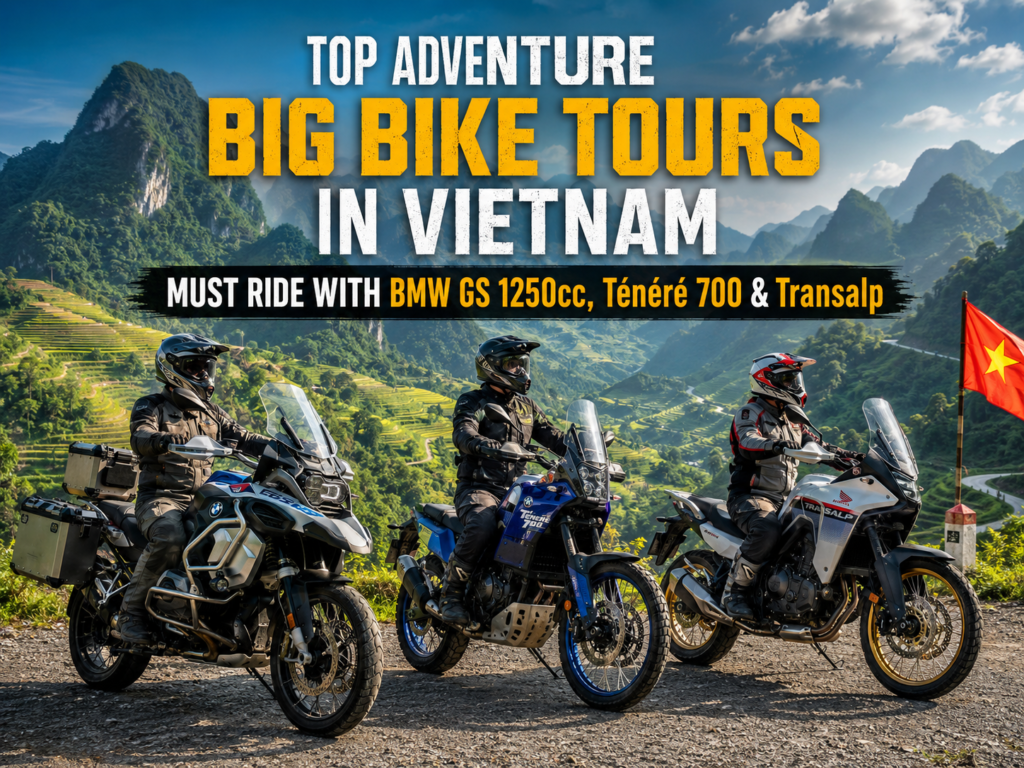
If you already ride motorcycles such as:
🏍️ BMW GS
🏍️ KTM Adventure
🏍️ Yamaha Tenere
🏍️ Honda Africa Twin
🏍️ Triumph Tiger
and regularly ride gravel or unsealed roads, Vietnam will feel more familiar.
The biggest surprise may actually be the motorcycle.
A Honda CRF250L or CRF300L feels dramatically lighter than a large adventure motorcycle.
Once terrain becomes technical, that can be liberating.
Enduro and Dirt Riders
Experienced off-road riders are generally the easiest group to accommodate.
The challenge becomes finding enough difficulty.
Vietnam can offer it.
Depending on route and season, guides can incorporate:
🔥 technical climbs
🔥 jungle trails
🔥 rocky riverbeds
🔥 mud
🔥 narrow single trails
🔥 steep descents
🔥 remote tracks
🔥 challenging mountain crossings
For these riders, the trip becomes less about surviving the terrain and more about exploring just how deep into rural Vietnam a motorcycle can take them.
A Simple Vietnam Off-Road Difficulty Scale
Before booking, it helps to think about tours in levels.
Level 1 — Scenic Adventure
Best for:
Competent road riders with little or no off-road experience.
Typical terrain:
🧩 mostly paved mountain roads
🧩 secondary roads
🧩 easy gravel
🧩 broken rural roads
🧩 occasional easy dirt
Physical demand:
Low to moderate.
This is ideal for riders who want the scenery and culture of a motorcycle adventure without technical trails.
You still experience Vietnam from the saddle.
You still cross spectacular mountain passes.
You still reach remote villages.
But the emphasis is journey rather than technical challenge.
Level 2 — Adventure Off-Road
Best for:
Experienced road riders with some gravel experience or intermediate adventure riders.
Typical terrain:
🧩 mountain tarmac
🧩 gravel
🧩 dirt tracks
🧩 rough rural roads
🧩 moderate climbs
🧩 occasional mud
Physical demand:
Moderate.
This is perhaps the sweet spot for many international riders.
Enough off-road to feel like a genuine adventure.
Not so technical that every day becomes an endurance test.
Level 3 — Serious Off-Road
Best for:
Confident dirt riders and experienced adventure riders.
Typical terrain:
🧩 rocky tracks
🧩 steep dirt climbs
🧩 muddy sections
🧩 narrow trails
🧩 river crossings
🧩 ruts
🧩 loose descents
🧩 difficult rural tracks
Physical demand:
Moderate to high.
Expect to stand on the pegs frequently.
Expect occasional falls.
Expect sweat.
Expect muddy boots.
Expect enormous smiles at the end of the day.
Level 4 — Technical / Enduro Style
Best for:
Experienced off-road or enduro riders.
Typical terrain:
🧩 technical single trail
🧩 steep climbs
🧩 deep mud
🧩 rocky jungle tracks
🧩 difficult river crossings
🧩 rough mountain terrain
Physical demand:
High.
This should never be sold casually to riders simply because they say they “ride motorcycles.”
Technical riding requires specific skills.
When properly matched to the rider, however, it can produce an unforgettable EPIC RIDE.
Why 180 Kilometres in Vietnam Is Not 180 Kilometres at Home
This is another mistake riders frequently make when studying an itinerary.
They see:
Distance: 170 km
and think:
“That’s nothing. I’ll finish by lunchtime.”
Maybe.
But probably not.
A kilometre is a unit of distance.
It is not a unit of difficulty.
Consider Two Different Days
Day A: 180 km of smooth highway.
Day B: 180 km involving:
🗺️ mountain passes
🗺️ hundreds of sharp curves
🗺️ village traffic
🗺️ photo stops
🗺️ gravel
🗺️ dirt
🗺️ lunch
🗺️ waterfalls
🗺️ broken roads
🗺️ muddy sections
🗺️ cultural visits
Same distance.
Completely different riding day.
In Northern Vietnam, 150–200 kilometres can represent a satisfying full day’s adventure.
The point is not to maximise kilometres.
You did not fly to Vietnam to prove that you can travel quickly.
You came to experience the country.
Sometimes the best moment of the day happens when the motorcycles are switched off.
The Cultural Stops Are Part of the Ride
One reason a Vietnam motorcycle tour feels different from an enduro competition is that the objective is not merely to get through the terrain.
You are moving through inhabited landscapes.
These mountains are home to communities who have farmed valleys and hillsides for generations.
Depending on the region, you may travel through communities associated with Hmong, Dao, Tay, Nung, Thai and other ethnic groups whose languages, clothing, architecture and agricultural traditions form part of Northern Vietnam’s extraordinary cultural diversity.
A dirt track is not simply an obstacle.
It may be someone’s route to school.
Someone’s road to market.
Someone’s connection between a village and the outside world.
That changes how we ride.
Slow down near houses.
Respect livestock.
Give villagers space.
Do not treat rural communities as scenery.
And when someone offers tea, sometimes the most memorable decision is to stop.
Does the Motorcycle Make a Difference?
Absolutely.
Motorcycle choice can dramatically change perceived difficulty.
Lightweight Bikes Make Difficult Terrain Easier
For Northern Vietnam, motorcycles such as the Honda CRF250L and CRF300L work exceptionally well for many riders.
Not because they are the most powerful motorcycles in the world.
They are not.
But Vietnam rarely rewards maximum horsepower.
It rewards:
⚙️ manageable weight
⚙️ predictable power delivery
⚙️ suspension travel
⚙️ ground clearance
⚙️ manoeuvrability
⚙️ reliability
On a narrow muddy climb, an extra 40 horsepower rarely solves the problem.
Being able to control — or occasionally pick up — your motorcycle matters more.
“I Ride a 1200cc Adventure Bike at Home”
Excellent.
But bigger is not automatically better here.
Large ADV bikes are brilliant for long-distance touring and wide gravel roads.
On narrow WILD TRACKS, tight switchbacks or muddy mountain paths, a lighter motorcycle often becomes much easier and more enjoyable.
Many big-bike riders need only an hour or two to appreciate the difference.
How Physically Fit Do You Need to Be?
You do not need to be an athlete to enjoy most Vietnam motorcycle tours.
But genuine off-road riding is physical.
Your:
💪 arms
💪 legs
💪 shoulders
💪 back
💪 core
all work harder when standing on the pegs and managing changing terrain.
Heat and humidity add another dimension.
So does riding several consecutive days.
Fatigue Changes Riding Ability
This is extremely important.
A trail you could easily ride at 9:00 AM may feel completely different at 4:30 PM after seven hours on the motorcycle.
Fatigue affects:
🧠 concentration
🧠 reaction time
🧠 balance
🧠 decision-making
Experienced guides therefore watch riders carefully.
Sometimes the smartest route decision is not:
“Let’s find the hardest trail.”
It is:
“Everyone has had a brilliant day. Let’s take the easier road into tonight’s hotel.”
That is not weakness.
That is professional adventure-tour management.
What Happens If the Trail Is Too Difficult?
This question matters enormously to riders considering their first Vietnam off-road tour.
A professionally designed itinerary should never feel like an examination you must pass.
If terrain becomes inappropriate, several options may be possible:
🔄 choose an easier parallel route
🔄 bypass a technical section
🔄 reduce the percentage of off-road riding
🔄 take more breaks
🔄 allow the guide to assist through a short difficult section
🔄 change the day’s route because of weather
Terrain is not fixed forever.
Rain, construction and landslides can change conditions.
A route that was ideal last month may not be ideal today.
Local knowledge matters.
How Difficult Are the Famous Riding Regions?
Ha Giang
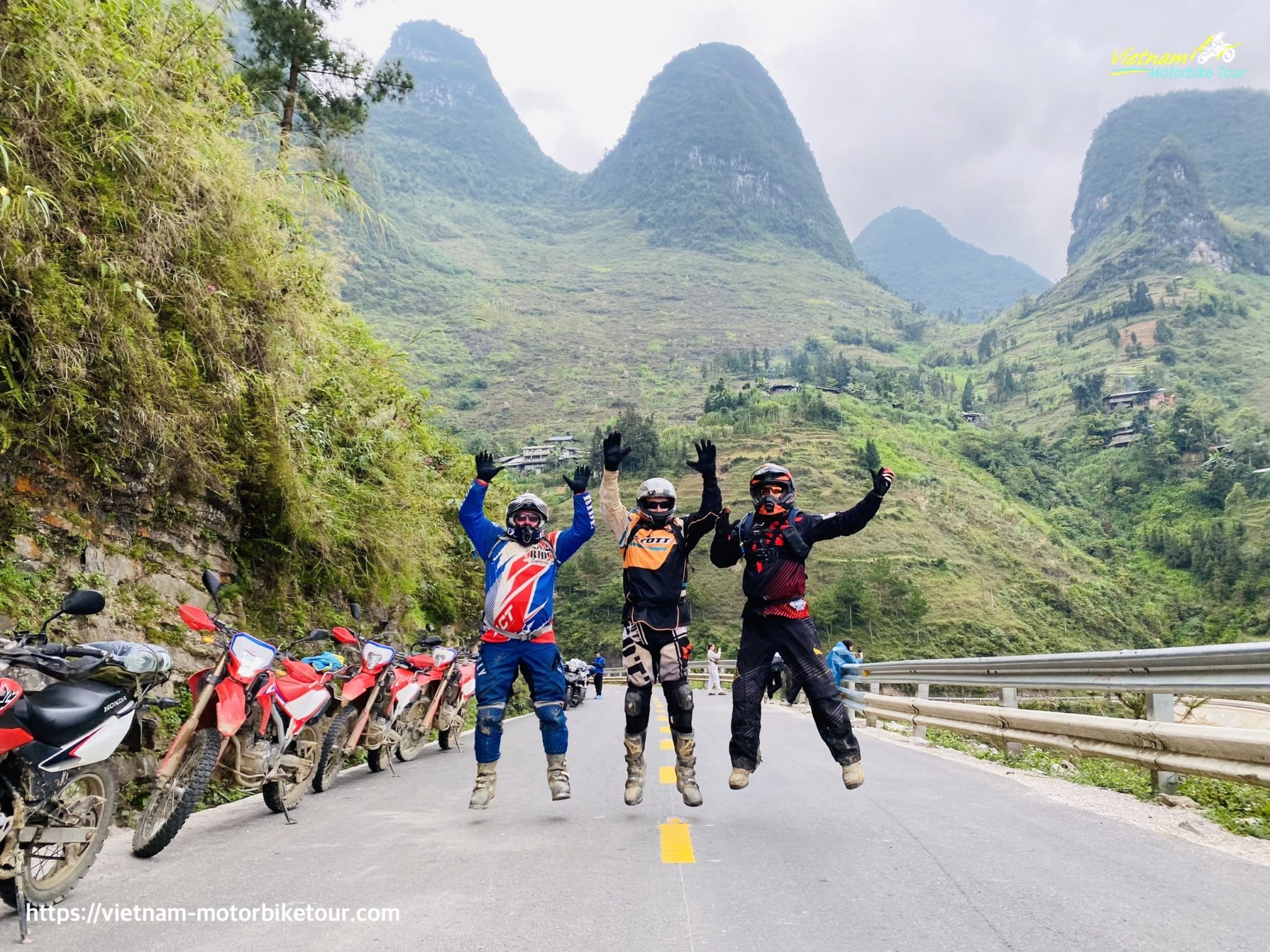
Ha Giang is famous for dramatic limestone mountains, spectacular passes and twisted or winding roads.
Much of the famous loop can be enjoyed on paved roads.
However, experienced guides can take riders beyond the obvious loop onto quieter backroads, dirt tracks and more adventurous sections.
General character: Scenic mountain riding with optional off-road extensions.
Cao Bang
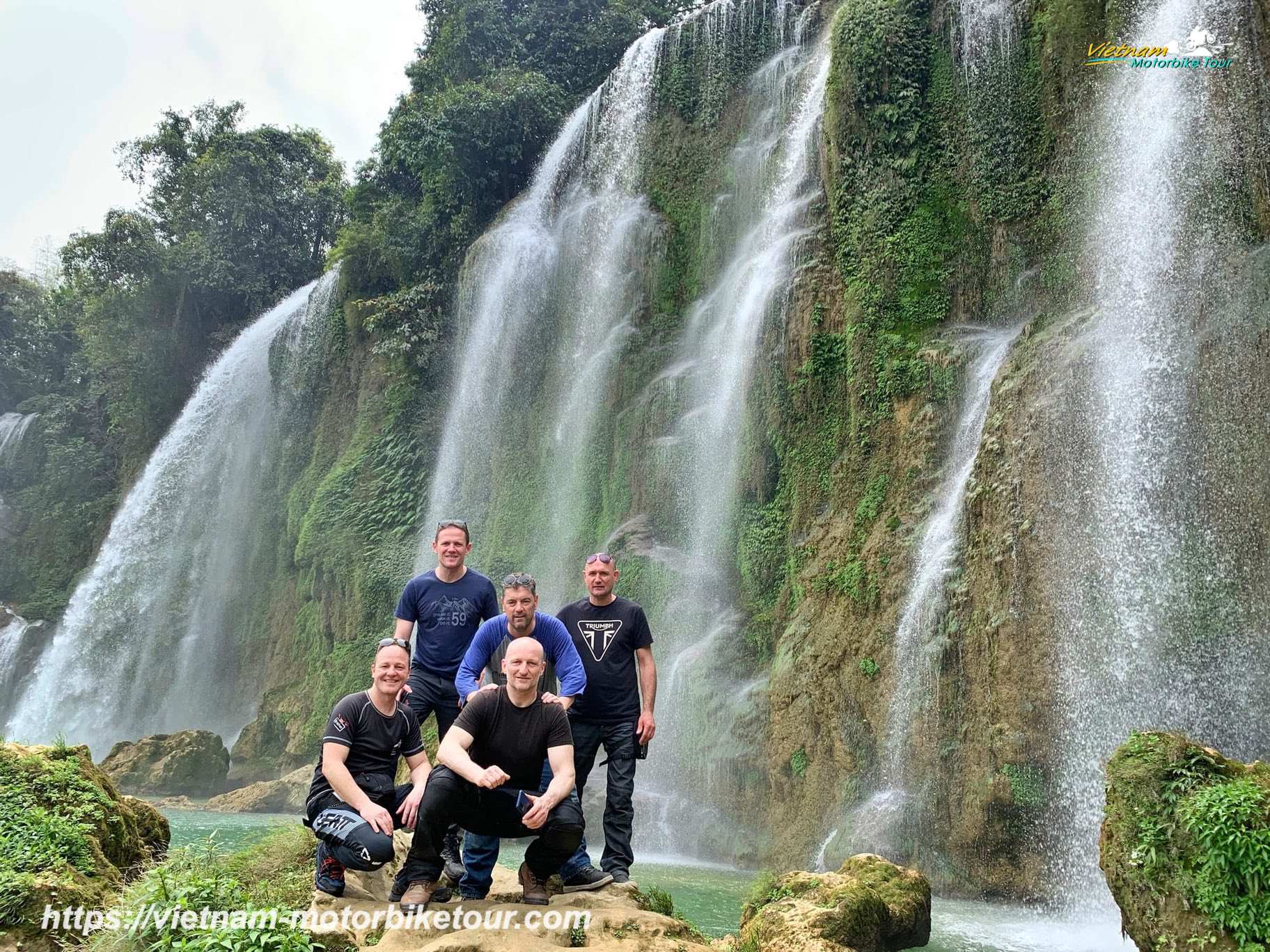
Cao Bang feels greener and, in many areas, quieter.
Expect limestone landscapes, agricultural valleys, waterfalls and a mixture of small roads and rural tracks.
General character: Flowing adventure riding with excellent remote-road possibilities.
Sapa and Northwest Vietnam
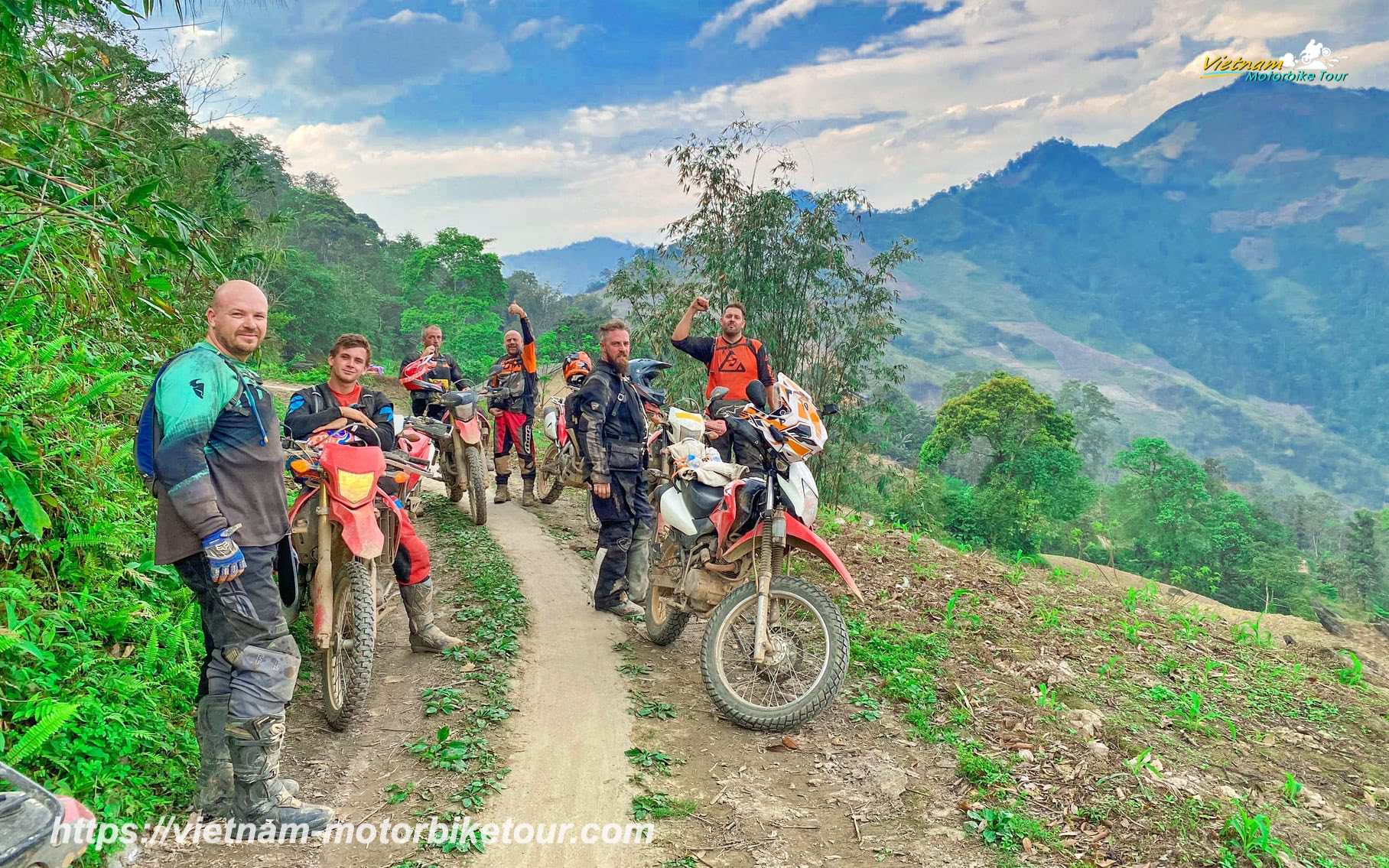
The Northwest can become substantially more challenging depending on route.
Areas around Mu Cang Chai, Ta Xua, Ngoc Chien and remote mountain districts can provide:
🏔️ steep passes
🏔️ dirt roads
🏔️ bamboo forest
🏔️ muddy trails
🏔️ mountain tracks
🏔️ isolated valleys
General character: Possibly some of Vietnam’s most rewarding riding for riders wanting scenery plus genuine adventure terrain.
Ho Chi Minh Trail
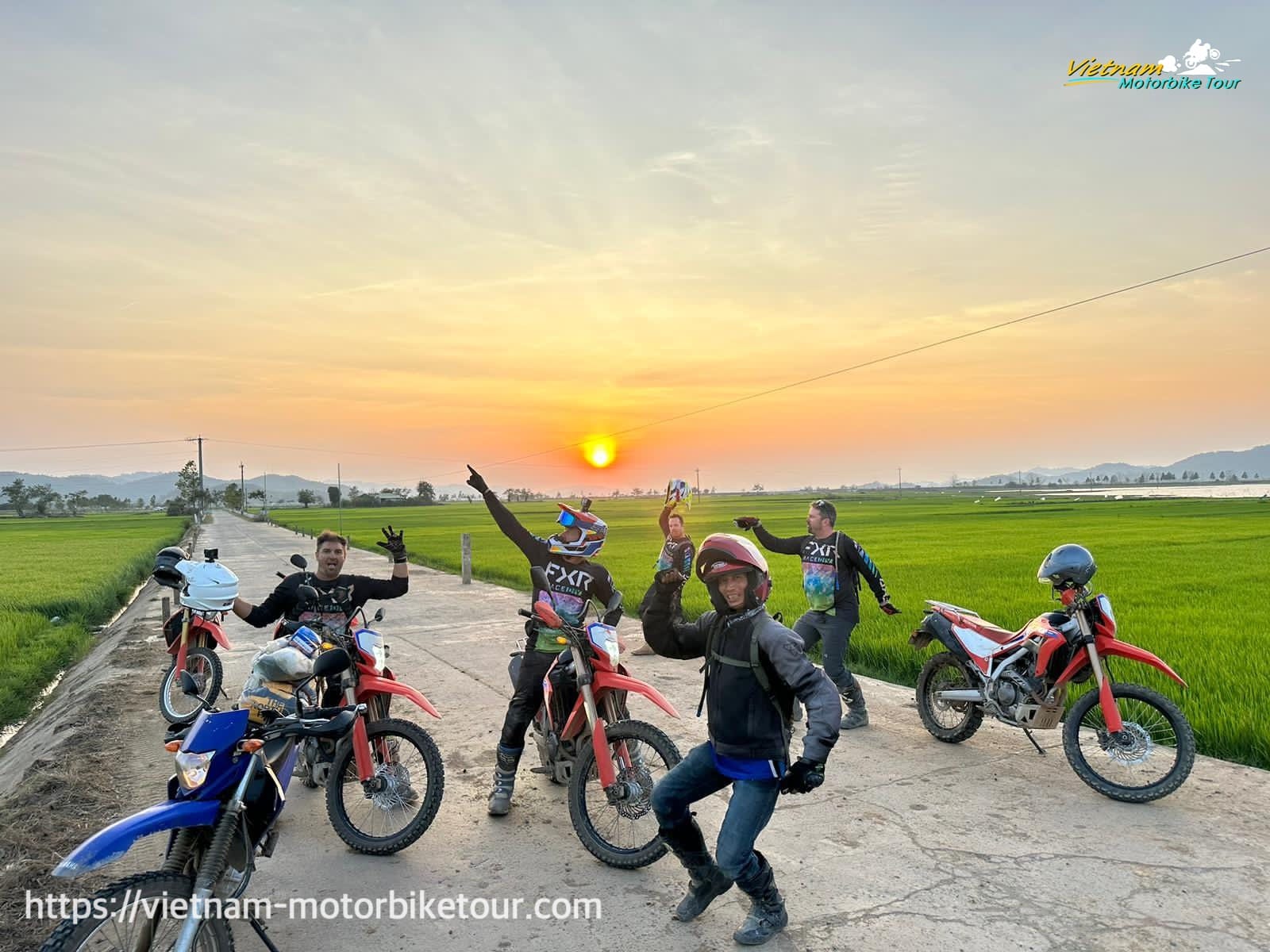
The Ho Chi Minh Trail offers a different type of motorcycle adventure.
Rather than constant technical off-road, the attraction lies in the long journey south through mountains, forests and regions deeply connected with Vietnam’s modern history.
It is ideal for riders who appreciate:
🛤️ long-distance adventure
🛤️ history
🛤️ changing landscapes
🛤️ mountain roads
🛤️ occasional dirt and backroad exploration
General character: Less enduro, more expedition.
What Makes a Tour Difficult Besides Terrain?
This is where many online descriptions fail.
Technical terrain is only one variable.
Real difficulty is created by several factors working together.
Weather
Rain turns easy dirt into mud. Heat increases fatigue. Cold mountain fog reduces visibility.
Duration
One challenging day is different from eight consecutive riding days.
Motorcycle Weight
The heavier the motorcycle, the greater the effort required when terrain becomes technical.
Riding Pace
The same trail becomes significantly more dangerous when ridden too fast.
Group Ability
A group with wildly different abilities requires careful management.
Confidence
A tense rider tires faster. A relaxed rider allows the bike to move and usually improves more quickly.
The Golden Rule: Never Ride to Impress the Group
Motorcycle tours create camaraderie very quickly.
After a few days together, riders joke, help each other pick up bikes and share stories over dinner.
That is one of the great joys of these trips.
But there is one dangerous temptation:
trying to prove something.
Do not chase a faster rider.
Do not attempt a technical section because somebody is filming.
Do not enter a corner faster because the rider ahead did.
Your motorcycle.
Your line.
Your pace.
Your responsibility.
The best riders we know are often not the fastest.
They are smooth.
Predictable.
Calm.
They conserve energy.
They read terrain before committing.
That style works beautifully in Vietnam.
What Should Be Included in a Professionally Organised Off-Road Motorcycle Tour?
When comparing tours, look beyond the headline price.
A serious adventure operation should explain clearly what support is provided.
Typical inclusions may include:
Motorcycle
✅ A properly maintained motorcycle appropriate to the terrain and rider.
Experienced Motorcycle Guide
✅ Not merely a sightseeing guide who happens to own a motorcycle. You want someone who understands riding, terrain, group management, local roads, alternative routes and mechanical problems.
Fuel
✅ Preferably included or clearly stated so riders understand actual tour cost.
Accommodation
✅ Hotels, guesthouses, mountain lodges or carefully selected homestays depending on the route.
Meals
✅ Particularly useful in remote regions where suitable restaurants may be limited.
Riding Gear
✅ Availability varies by operator and should be confirmed in advance. Riders often prefer to bring personal helmets, boots and protection where possible.
Basic Mechanical Support
✅ Punctures and minor mechanical problems are part of adventure riding. A competent team should know how to solve common issues on the road.
Support Vehicle Where Appropriate
✅ For larger groups, longer expeditions or riders wanting additional logistical reassurance, a support truck can add considerable value.
Route Flexibility
✅ Perhaps the most underrated inclusion of all. You cannot purchase perfect weather. But you can travel with people who know what to do when weather changes the plan.
What Riding Experience Should You Tell Your Tour Operator About?
Do not simply say:
“Experienced rider.”
Give context.
Tell them:
📝 how many years you have ridden
📝 what motorcycles you ride
📝 road vs dirt experience
📝 gravel experience
📝 enduro experience
📝 whether you can stand comfortably on the pegs
📝 experience with mud
📝 experience on steep descents
📝 whether you have ridden multi-day tours
📝 your preferred pace
📝 any concerns about technical terrain
This information allows the operator to recommend the right route.
There is absolutely nothing impressive about booking a tour that is too difficult.
The impressive decision is choosing one that delivers the maximum adventure you can genuinely enjoy.
How to Know Whether You Are Ready
Here is a practical self-assessment.
You Are Probably Ready for a Scenic Adventure Tour If:
✔️ you ride confidently on public roads
✔️ you are comfortable with mountain curves
✔️ you can control a motorcycle at slow speed
✔️ you are willing to try easy gravel
✔️ you can ride several hours per day
You Are Probably Ready for an Intermediate Off-Road Tour If:
✔️ you have some gravel or dirt experience
✔️ you can ride standing on the pegs
✔️ you are comfortable when the rear tyre moves slightly
✔️ you can manage loose surfaces
✔️ you are reasonably fit
✔️ you understand that falling occasionally is part of dirt riding
You Should Choose an Advanced Tour If:
✔️ you regularly ride off-road
✔️ you enjoy mud
✔️ steep climbs do not intimidate you
✔️ rocky descents are familiar
✔️ you actively want technical terrain
✔️ single trails sound exciting rather than terrifying
Is Vietnam a Good Place to Learn Off-Road Riding?
For a competent road rider, Vietnam can be an extraordinary place to develop adventure skills — if the tour is designed progressively.
Day one should not begin with the hardest jungle track available.
A better progression is:
🏍️ Day 1: Get familiar with the motorcycle.
🏍️ Day 2: Introduce gravel and easy dirt.
🏍️ Day 3: Add longer off-road sections.
🏍️ Day 4 onwards: Increase difficulty according to rider confidence.
This allows the rider to learn the motorcycle and terrain naturally.
By the middle of the tour, someone who hesitated on gravel during the first morning may be standing confidently on the pegs through mountain dirt.
Watching that transformation is one of the most satisfying parts of guiding motorcycle tours.
What a Great Vietnam Off-Road Tour Should Feel Like
A great tour should not feel like surviving from breakfast until dinner.
It should have rhythm.
There should be mornings when you simply enjoy sharp curves and winding roads through the mountains.
There should be dirt sections that demand complete concentration.
There should be viewpoints where nobody speaks because the landscape says enough.
There should be village lunches.
Coffee stops.
Dust.
Perhaps rain.
Probably a muddy boot or two.
There should be moments when everyone helps one rider through a difficult section.
And evenings when the motorcycles are parked outside, helmets finally off, cold drinks on the table and everybody begins telling the same stories from the day — each from a slightly different perspective.
That is an adventure ride.
Difficulty is part of it.
But difficulty is not the purpose.
Experience is the purpose.
So — How Difficult Are Vietnam Off-Road Motorcycle Tours Really?
The most accurate answer is:
As difficult as you choose them to be.
Vietnam offers an extraordinary spectrum of motorcycle terrain.
You can spend a week riding beautiful mountain tarmac and easy gravel.
Or you can disappear into JUNGLE trails, MUDDY ROADS, steep mountain tracks and technical single trails.
You can choose a relaxed scenic adventure.
Or an EPIC RIDE that tests every off-road skill you have.
What matters is honesty.
Honesty from the rider about experience.
Honesty from the operator about terrain.
And enough local knowledge to match the two.
The best Vietnam motorcycle tour is therefore not the hardest tour.
It is not the fastest.
It is not necessarily the one with the highest number of kilometres.
It is the tour that puts you exactly on the edge between confidence and adventure.
Enough challenge to make your heart beat faster.
Enough control to keep smiling.
Enough uncertainty to make each morning exciting.
And enough unforgettable moments that, months after returning home, you still find yourself looking at your motorcycle and thinking:
“When are we going back?”
Frequently Asked Questions About Vietnam Off-Road Motorcycle Tours
1. Do I need previous off-road experience to join a Vietnam motorcycle tour?
Not for every tour. Competent road riders can join routes designed around paved mountain roads, gravel and easier dirt sections. Genuine technical off-road itineraries should be reserved for riders with appropriate dirt experience. Always discuss your riding history with the operator before booking.
2. Are Vietnam dirt bike tours suitable for beginners?
Complete motorcycle beginners should learn fundamental motorcycle control before attempting a multi-day tour. However, riders who are already confident on motorcycles but new to dirt can choose beginner-friendly adventure itineraries with progressively introduced off-road sections.
3. How much off-road riding is included?
It depends entirely on the itinerary and weather. Ask the operator for an approximate breakdown between asphalt, gravel, dirt and technical trail. Do not rely only on the phrase “off-road tour.”
4. What happens if I cannot ride a difficult section?
On professionally guided tours, difficult sections can often be bypassed, adjusted or assisted. The exact solution depends on location. The objective should always be safe enjoyment rather than forcing a rider to complete terrain beyond their ability.
5. Are Vietnam motorcycle tours dangerous?
Motorcycling carries inherent risk anywhere. Vietnam adds unfamiliar traffic, variable road surfaces, mountainous terrain and changing weather. Risk can be reduced significantly through appropriate route selection, sensible pace, quality protective equipment, maintained motorcycles and experienced local guidance.
6. What is the best motorcycle for Vietnam off-road riding?
For many Northern Vietnam routes, lightweight dual-sport motorcycles in the 250–300cc range offer an excellent balance of controllability, suspension, ground clearance and sufficient power. The Honda CRF250L and CRF300L are popular examples. The correct motorcycle nevertheless depends on rider size, experience and route.
7. Is the Honda CRF300 powerful enough?
For most Vietnamese mountain roads and off-road trails, yes. Top speed is rarely the important measurement. Controllability, weight and usable low-speed power are generally more valuable on narrow dirt tracks and technical terrain.
8. How far do riders travel each day?
Many adventure itineraries average roughly 150–220 kilometres per day, although terrain matters considerably more than distance. A 160-kilometre day involving dirt, mountain passes and village stops can easily become a complete riding day.
9. What happens when it rains?
Routes may become slower and more technical. Clay becomes slippery, ruts fill with water and previously easy dirt tracks may become challenging. Experienced guides should adjust routes where necessary.
10. What is the best season for Vietnam off-road motorcycle tours?
There is no single perfect month for every region or rider. Autumn can offer cooler, clearer riding conditions in parts of Northern Vietnam, while spring can be excellent as temperatures warm. Summer offers spectacular green scenery but brings higher heat, humidity and a greater chance of rain and mud. Choose the season according to the type of riding experience you want.
11. Am I too old for a Vietnam off-road motorcycle tour?
Age alone is a poor measure of riding ability. A fit, experienced 65-year-old motorcyclist may outperform a much younger rider with limited experience. Consider riding background, fitness, recovery, desired terrain and daily distance. Selecting the appropriate tour level matters far more than the number on your passport.
12. Should I bring my own riding gear?
Whenever practical, bringing familiar personal equipment is an excellent idea, especially helmet, gloves, boots, knee protection, riding trousers and protective jacket. Rental equipment may be available, but confirm sizes and specifications before travelling.
13. Do motorcycles often break down?
Well-maintained bikes are generally reliable, but punctures, bent levers and minor mechanical issues can occur during genuine off-road riding. This is one reason travelling with a mechanically experienced guide is valuable.
14. Guided or self-guided — which is better for off-road Vietnam?
Experienced independent travellers can enjoy self-guided riding, particularly on established paved routes. For genuine off-road exploration, local guides offer substantial advantages because trail conditions change and many excellent routes are difficult to identify using standard navigation alone.
15. What should I ask before booking an off-road motorcycle tour?
Ask what percentage of the tour is genuinely off-road; what type of terrain you will ride; what rider level is required; whether technical sections are compulsory; which motorcycles are available; what riding equipment is included; how many kilometres and hours you ride daily; what happens if weather changes trail conditions; what mechanical and emergency support is available; and whether the route can be adjusted to suit the group’s ability. A professional operator should be comfortable answering every one of them.
Final Thought: Choose the Adventure, Not the Ego
Vietnam can challenge you.
It can cover your boots in mud.
It can make your arms ache.
It can place you halfway up a mountain, staring at a dirt track disappearing into cloud and wondering exactly what is waiting around the next corner.
But that is precisely why riders come.
You do not remember the perfect highway.
You remember the trail that almost defeated you.
The village where someone invited you for tea.
The mountain pass emerging from the morning mist.
The river crossing everyone talked about that evening.
The moment the rain stopped and an entire green valley appeared beneath the clouds.
And perhaps most of all, you remember the people riding beside you.
So when choosing your Vietnam off-road motorcycle tour, do not ask only:
“How difficult is it?”
Ask instead:
“What level of adventure will make this the ride I remember for the rest of my life?”
Because somewhere beyond the asphalt, beyond the familiar and beyond the ordinary holiday…
Vietnam’s wild tracks are waiting.