
Everything Every Rider Should Know Before Setting Off on a Motorcycle Adventure Across Laos
“Luxury isn’t always measured by marble floors or five-star facilities. Sometimes, luxury is waking up to mist-covered mountains, sipping freshly brewed Lao coffee beside the Mekong River, and listening to the peaceful sounds of village life after an unforgettable day on two wheels.”
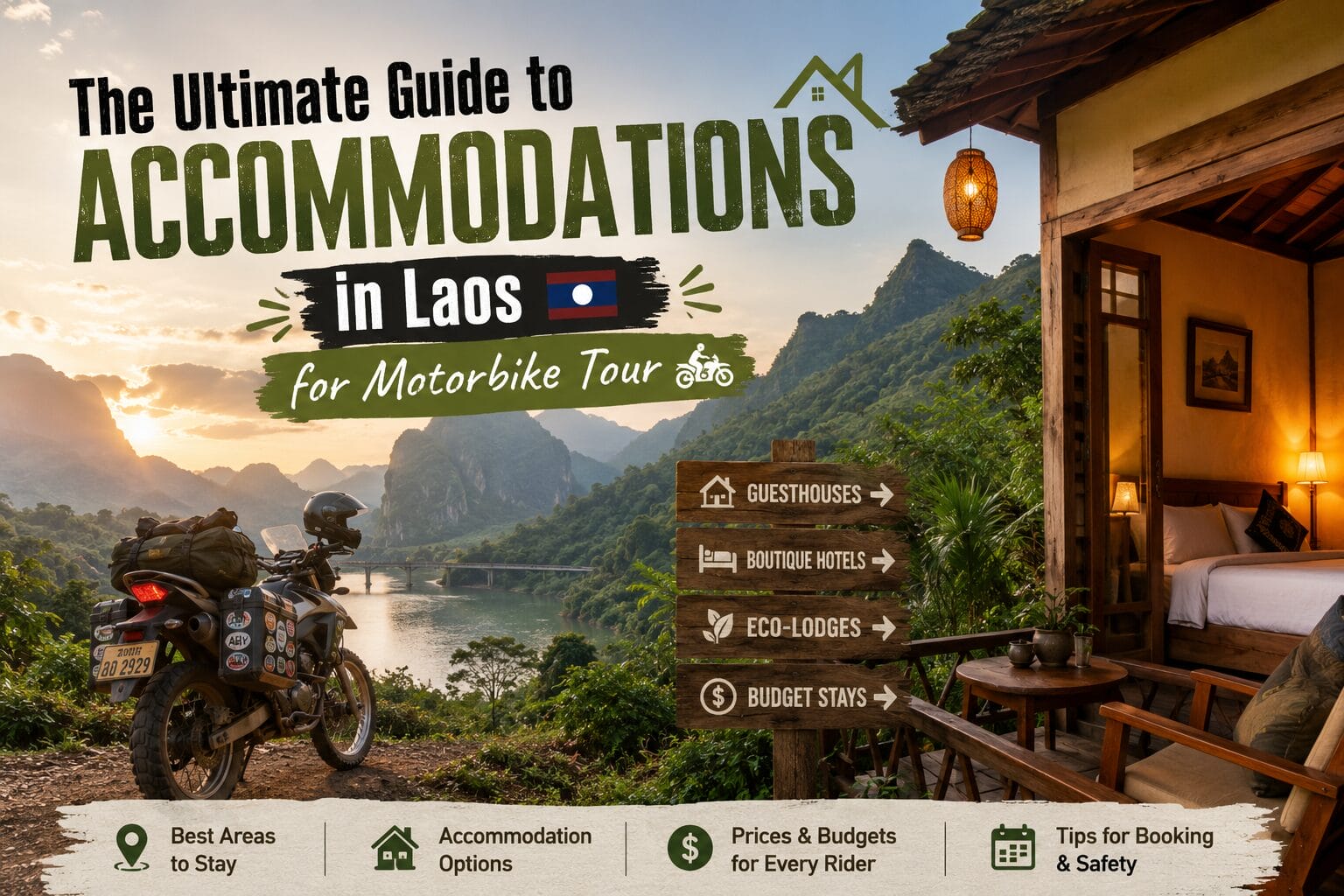
Introduction
For many travellers, planning a motorcycle adventure through Laos is all about choosing the perfect route.
Should you ride through the mountains of Northern Laos?
Should you explore the famous Thakhek Loop?
Should you follow the Mekong south towards Pakse and the Bolaven Plateau?
These are exciting questions, but there is another aspect of the journey that many riders overlook until they actually arrive:
Where will you stay each night?
Unlike neighbouring Thailand or Vietnam, Laos remains one of Southeast Asia’s least developed tourism destinations. That is exactly what makes it so special.
Instead of endless rows of international hotel chains, you’ll discover charming family-run guesthouses, peaceful riverside lodges, colonial villas, mountain homestays and small boutique hotels that still preserve the authentic spirit of Laos.
Accommodation in Laos is rarely about luxury.
It is about location, atmosphere, hospitality and becoming part of the local culture.
If you arrive expecting five-star resorts in every destination, you may be disappointed.
But if you come seeking authenticity, tranquillity and genuine local experiences, you may discover some of the most memorable places you’ve ever stayed.
This guide has been created specifically for motorcycle travellers who want to understand exactly what to expect before setting off across Laos.
Why Accommodation Becomes Part of the Adventure
One of the biggest differences between travelling by motorcycle and travelling by bus or airplane is that every evening becomes another destination.
Your accommodation is not simply a place to sleep.
It becomes part of the story.
One night you may fall asleep beside the Nam Ou River in Nong Khiaw while fishing boats quietly drift past.
The next evening you could be staying inside a traditional wooden guesthouse surrounded by rice fields in Luang Namtha.
A few days later, you might find yourself watching the sunset over the Mekong in Pakbeng after spending an entire day riding through remote mountain roads where villages are separated by dozens of kilometres.
These changing environments are one of the greatest joys of motorcycle travel.
Unlike organised coach tours that often stay in large city hotels every night, motorbike adventures allow you to experience Laos one small town at a time.
Every accommodation tells another chapter of the journey.
Understanding Accommodation Standards in Laos
Before discussing specific destinations, it is important to understand one simple reality.
Laos is developing rapidly, but tourism infrastructure remains considerably simpler than in neighbouring countries.
This is not a disadvantage.
It is simply part of travelling through an authentic destination.
You will notice that many hotels are family-owned rather than managed by international hotel groups.
Elevators are uncommon outside larger cities.
Some mountain towns still experience occasional power interruptions during heavy storms.
Wi-Fi speeds can vary dramatically depending on location.
Hot water may take longer to reach your shower.
Air-conditioning is excellent in modern hotels but more basic in remote guesthouses.
Sound insulation is generally not as effective as in international chain hotels.
Rather than viewing these as inconveniences, experienced riders quickly realise they are small trade-offs for something much more valuable:
Authenticity.
Laos has managed to preserve a slower pace of life that has disappeared from many other destinations.
Instead of crowds, you’ll find silence.
Instead of traffic noise, you’ll hear birds, rivers and temple bells.
Instead of anonymous hotel lobbies, you’ll often be welcomed by owners who personally prepare breakfast and remember your name the following morning.
What Makes Accommodation in Laos Different?
Many first-time visitors ask us:
“Will the hotels be comfortable enough?”
The answer is almost always yes.
Comfort, however, should not be confused with luxury.
A comfortable room in Laos usually means:
- A clean private bedroom
- Comfortable mattress
- Private bathroom
- Hot shower
- Air-conditioning or fan depending on altitude
- Secure parking for motorcycles
- Friendly local hosts
- Breakfast available
It may not include:
- Swimming pools
- Fitness centres
- Multiple restaurants
- 24-hour room service
- International television channels
- High-speed fibre internet
And honestly…
Most riders don’t miss any of those things.
After spending seven or eight hours riding spectacular mountain roads, sharing dinner with fellow travellers and enjoying a cold Beer Lao under a star-filled sky, very few people are thinking about hotel facilities.
Different Types of Accommodation You’ll Experience
One of the pleasures of riding through Laos is that accommodation changes naturally as the landscape changes.
Every region offers a different style of hospitality.
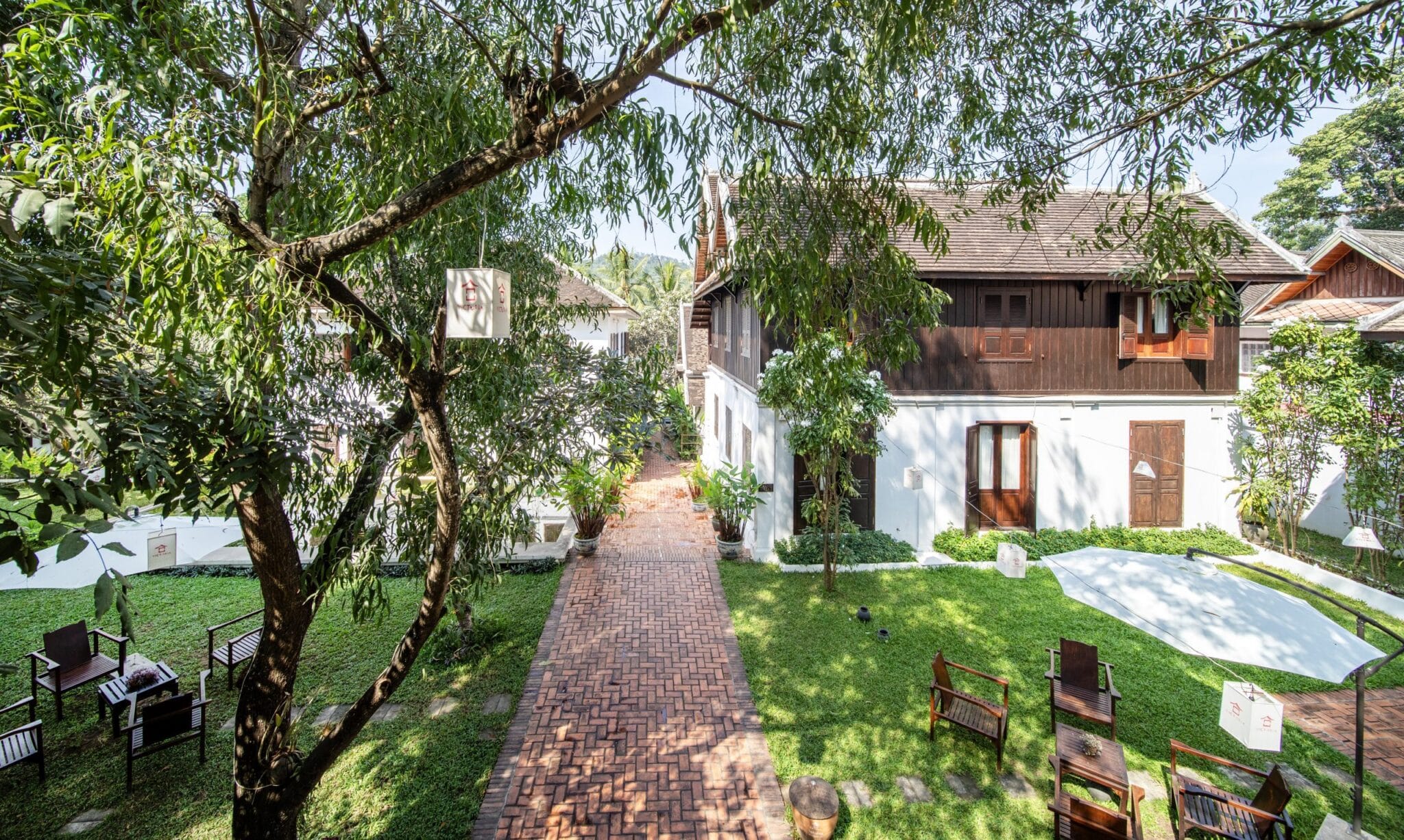
Boutique Hotels
You’ll mainly find boutique hotels in destinations such as Luang Prabang, Vang Vieng and Vientiane.
Many occupy beautifully restored French colonial buildings, blending traditional Lao architecture with modern comforts.
Expect tasteful interiors, peaceful gardens, excellent breakfasts and attentive service.
These are ideal for riders looking to relax before or after a longer expedition.
Family-Owned Guesthouses
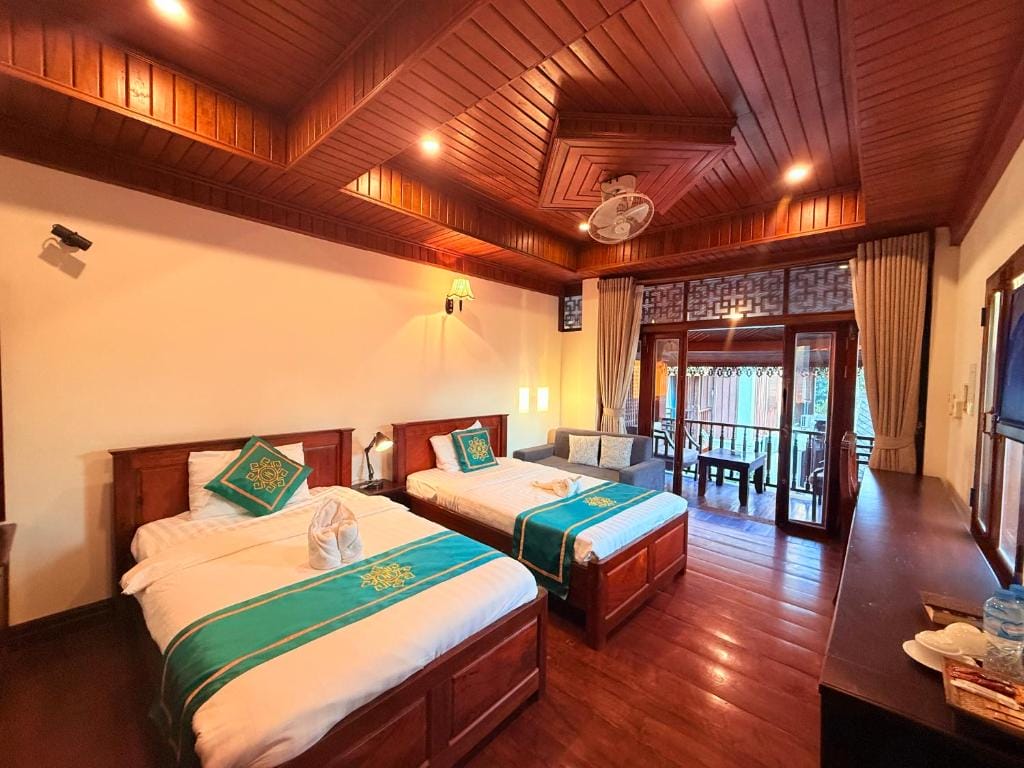
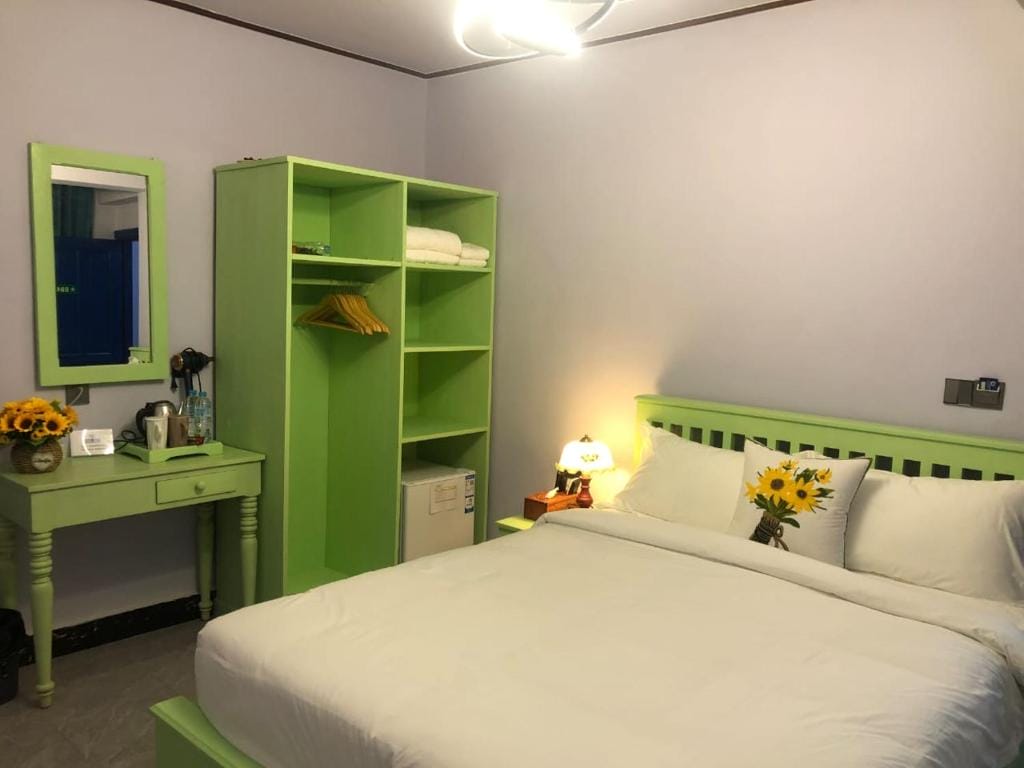
Guesthouses are the backbone of motorcycle travel throughout Laos.
Simple, clean and welcoming, they are found in almost every town across the country.
Many have been operated by the same family for generations.
The owners often live on-site, creating a warm and personal atmosphere that large hotels simply cannot replicate.
Rooms are generally modest but comfortable, making guesthouses the preferred choice for many experienced overland travellers.
Riverside Lodges
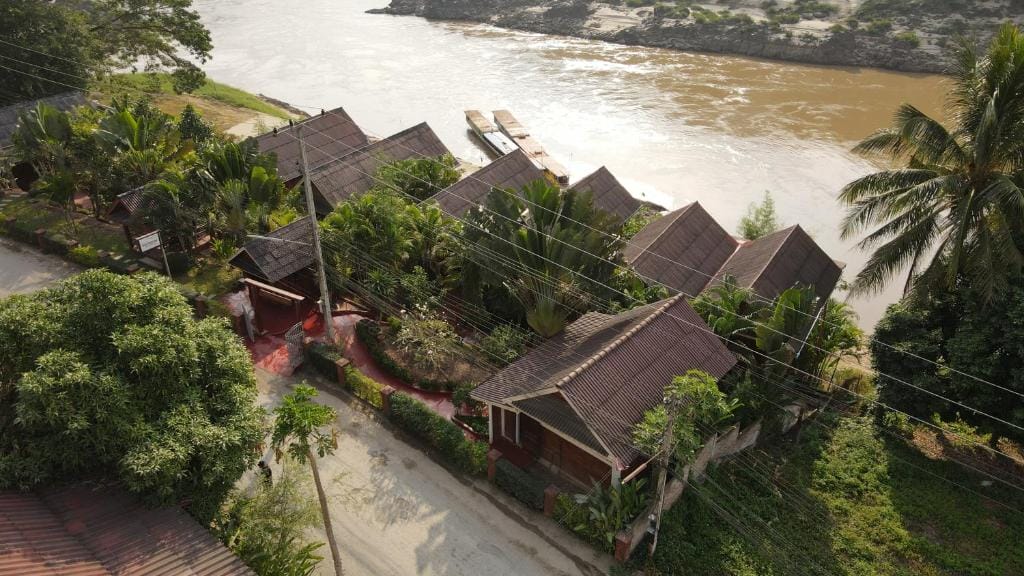
One of Laos’ greatest natural assets is its network of rivers.
Places like Nong Khiaw, Pakbeng and sections of the Mekong offer beautiful riverside accommodation where the scenery becomes part of your stay.
Watching fishermen set out at sunrise while enjoying a cup of freshly brewed Lao coffee is an experience that many guests remember long after returning home.
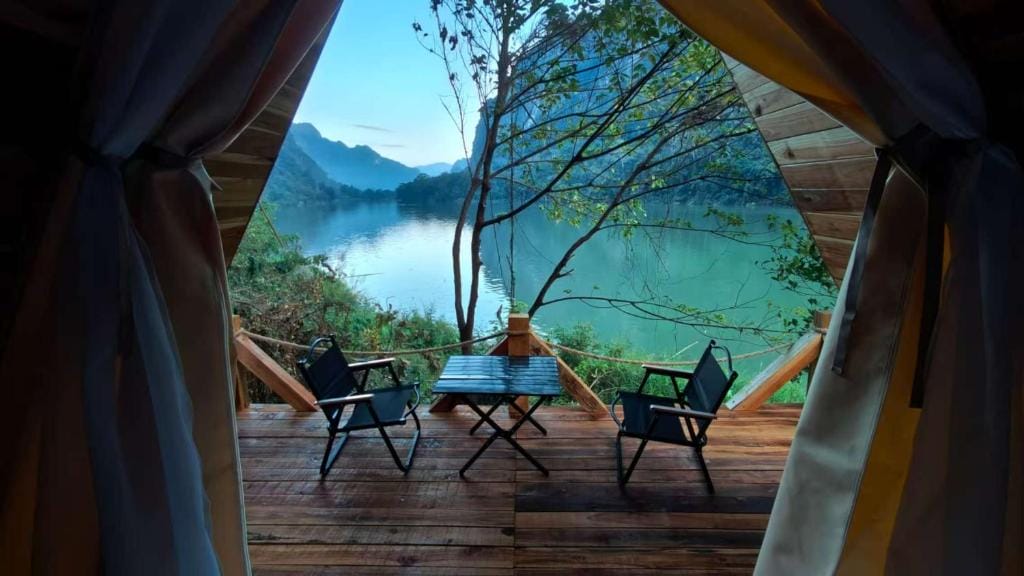
Eco Lodges
Northern Laos is increasingly known for eco-tourism.
Around Luang Namtha and protected forest areas, eco-lodges offer an opportunity to disconnect from busy modern life.
Electricity may be limited, internet access minimal and the pace wonderfully slow.
Instead of televisions, you’ll find jungle sounds.
Instead of city lights, you’ll discover brilliant star-filled skies.
These are experiences that many travellers actively seek.
Homestays
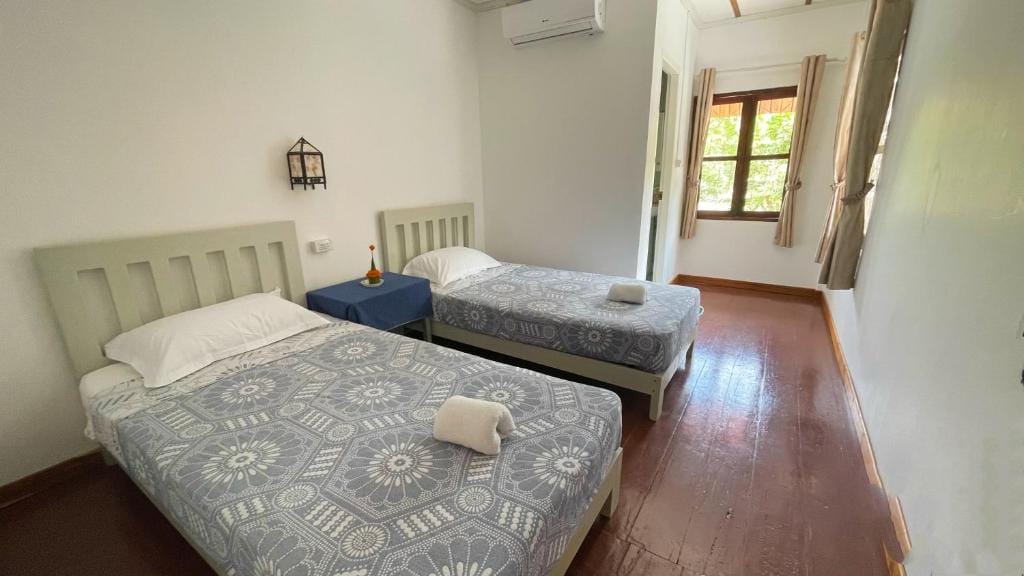
Perhaps no accommodation offers a deeper insight into Lao culture than staying with a local family.
We’ll explore homestays in greater detail later in this guide, but for many riders they become the emotional highlight of the entire journey.
Sharing meals, learning local customs and waking up inside a traditional village creates memories that no luxury hotel can ever replace.
Small Provincial Hotels
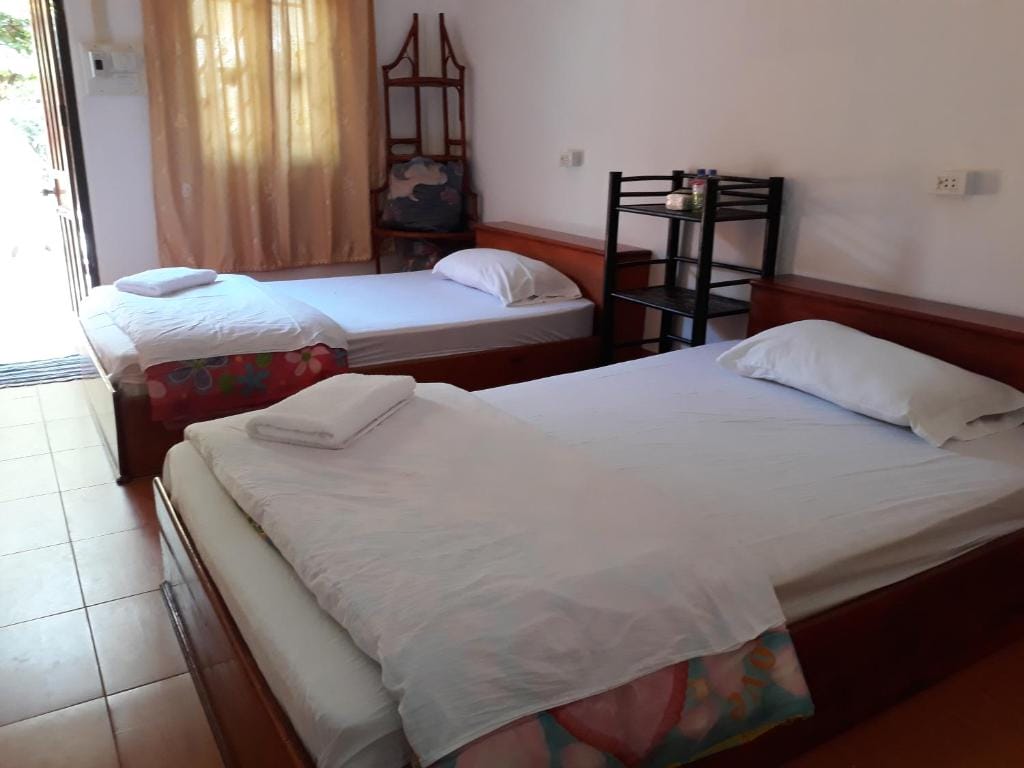
In towns such as Oudomxay, Phonsavanh and Thakhek, you’ll often stay in practical provincial hotels.
These properties focus on providing exactly what riders need:
- Comfortable beds
- Reliable showers
- Safe motorcycle parking
- Good sleep
- Friendly service
They may not appear in international travel magazines, but they consistently provide excellent value and suit the rhythm of motorcycle touring perfectly.
Part 2A: Accommodation by Destination
Where You’ll Stay During a Motorcycle Adventure Across Northern Laos
“One of the greatest joys of travelling through Laos is that no two evenings ever feel the same. Every destination offers a different atmosphere, a different landscape and a different way of welcoming travellers. Rather than staying in identical hotel rooms night after night, your accommodation becomes another unforgettable chapter of the journey.”
As you ride through Northern Laos, you’ll quickly realise that accommodation evolves naturally with the landscape.
Historic towns offer elegant colonial villas.
Remote mountain villages provide simple guesthouses filled with genuine hospitality.
Riverside communities invite you to slow down beside the Mekong or Nam Ou River.
Dense forests hide eco-lodges where the sounds of nature replace television and city traffic.
Understanding these differences before you arrive will help you appreciate every overnight stop for what it truly is, rather than comparing one destination with another.
After all, each place serves a different purpose within your adventure.
Luang Prabang
Where Heritage, Comfort and Timeless Elegance Meet
If there is one destination in Laos where accommodation reaches its highest standard, it is undoubtedly Luang Prabang.
Recognised as a UNESCO World Heritage city, Luang Prabang has spent decades welcoming travellers from around the world while carefully preserving its cultural identity.
Unlike many Asian cities that have grown rapidly with modern high-rise hotels, Luang Prabang has chosen a different path.
Most accommodations remain low-rise, blending beautifully with the city’s traditional architecture.
Walking through the old quarter feels almost like stepping back in time.
French colonial buildings stand beside ancient Buddhist temples.
Quiet cafés overlook peaceful streets lined with tropical trees.
Monks walk silently during the early morning alms ceremony as hotel guests watch respectfully from a distance.
Accommodation here reflects exactly that atmosphere.
What Types of Accommodation Can You Expect?
Luang Prabang offers the widest range of accommodation in Laos.
Depending on your travel style and budget, you’ll find:
- Luxury boutique hotels
- Beautiful colonial villas
- Riverside resorts
- Family-operated guesthouses
- Modern boutique hotels
- Backpacker hostels
- Eco-friendly boutique lodges
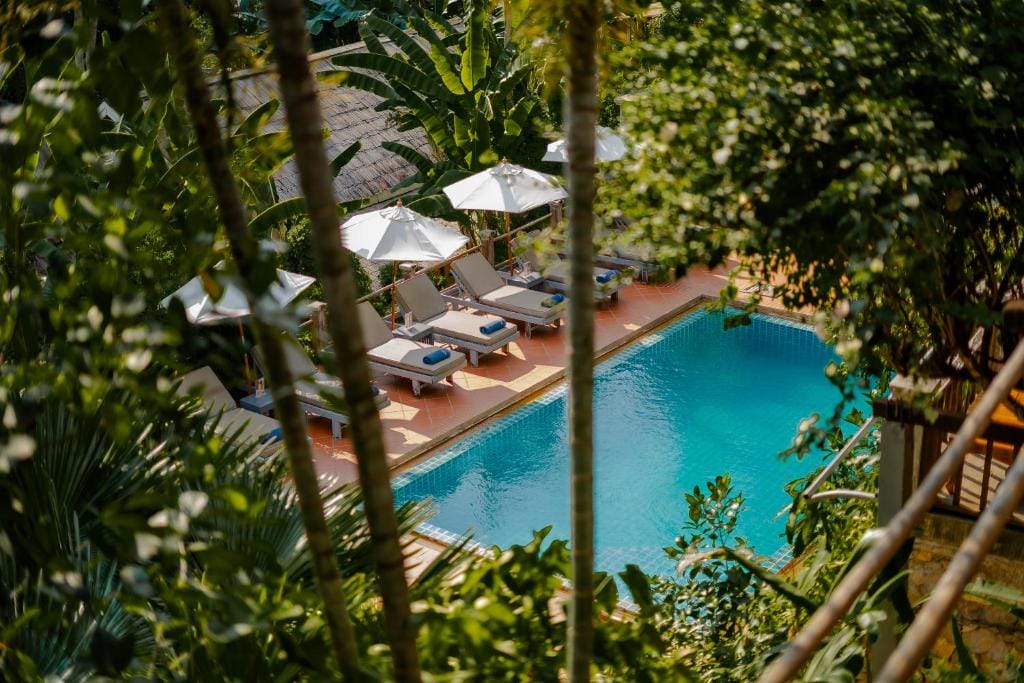
Many former French residences have been transformed into charming hotels while preserving their original architecture.
Rather than feeling like commercial hotels, they often feel like elegant private homes.
Wooden shutters.
Courtyards filled with tropical plants.
Traditional Lao textiles.
Small swimming pools hidden behind old stone walls.
These details create an atmosphere that perfectly suits the relaxed character of Luang Prabang.
Comfort Level
For riders beginning or ending a long motorcycle journey, Luang Prabang is an ideal place to enjoy a little extra comfort.
Many hotels provide:
- Excellent air-conditioning
- Strong Wi-Fi
- Comfortable bedding
- Reliable hot water
- High-quality breakfasts
- Laundry service
- Secure motorcycle parking
Some boutique hotels even provide bicycle rentals, spa treatments and riverside restaurants.
If you’ve already spent several days riding mountain roads, Luang Prabang offers the perfect opportunity to recharge before continuing your journey.
Is Luxury Available?
Yes.
But luxury in Luang Prabang is understated.
You won’t find enormous international hotel towers dominating the skyline.
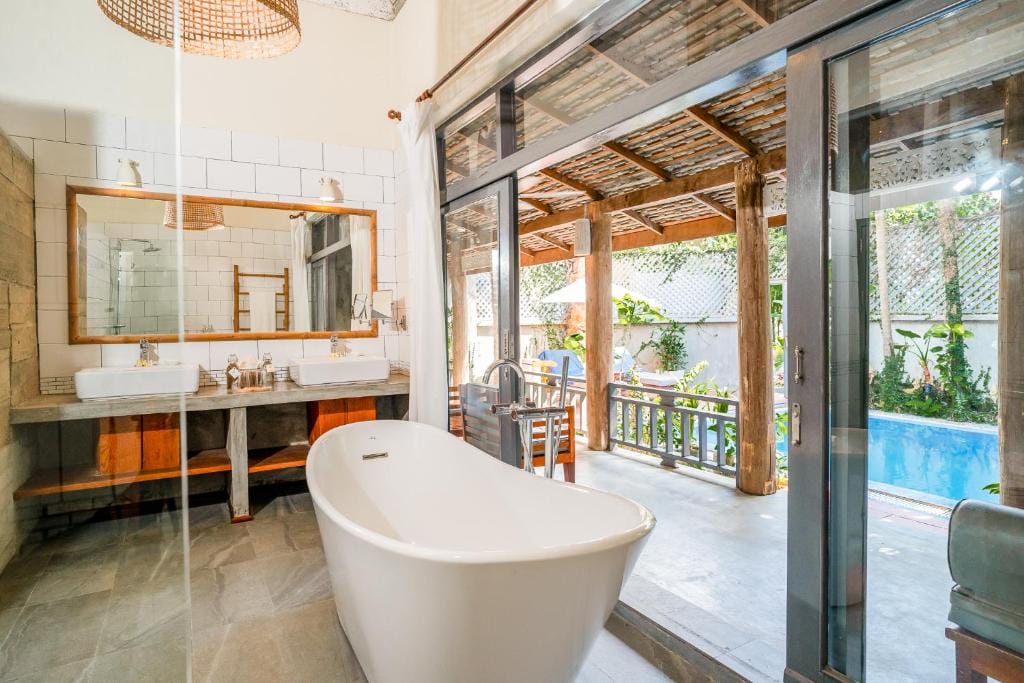
Instead, luxury here focuses on privacy, personalised service and authentic design.
Many five-star properties blend naturally into the surrounding neighbourhood rather than standing apart from it.
This is exactly why so many travellers fall in love with Luang Prabang.
Luxury never overshadows local culture.
Motorcycle Parking
One concern many riders have is whether their motorcycles can be parked safely overnight.
Fortunately, most mid-range and boutique hotels understand the needs of overland travellers.
You’ll typically find:
- Private courtyards
- Gated parking areas
- Covered parking
- CCTV in larger hotels
While Laos remains a remarkably safe country, it is still sensible to park within hotel grounds whenever possible.
Best For
Luang Prabang is perfect for:
✓ First night after arrival
✓ Mid-tour rest day
✓ Couples seeking boutique accommodation
✓ Riders wanting excellent food and coffee
✓ Cultural exploration
✓ Recovery after several long riding days
A Personal Thought
Many riders tell us they originally planned to spend only one night here.
Later, they wished they had stayed three.
Luang Prabang has a remarkable ability to slow people down.
After days of winding mountain roads, the quiet rhythm of the city feels almost therapeutic.
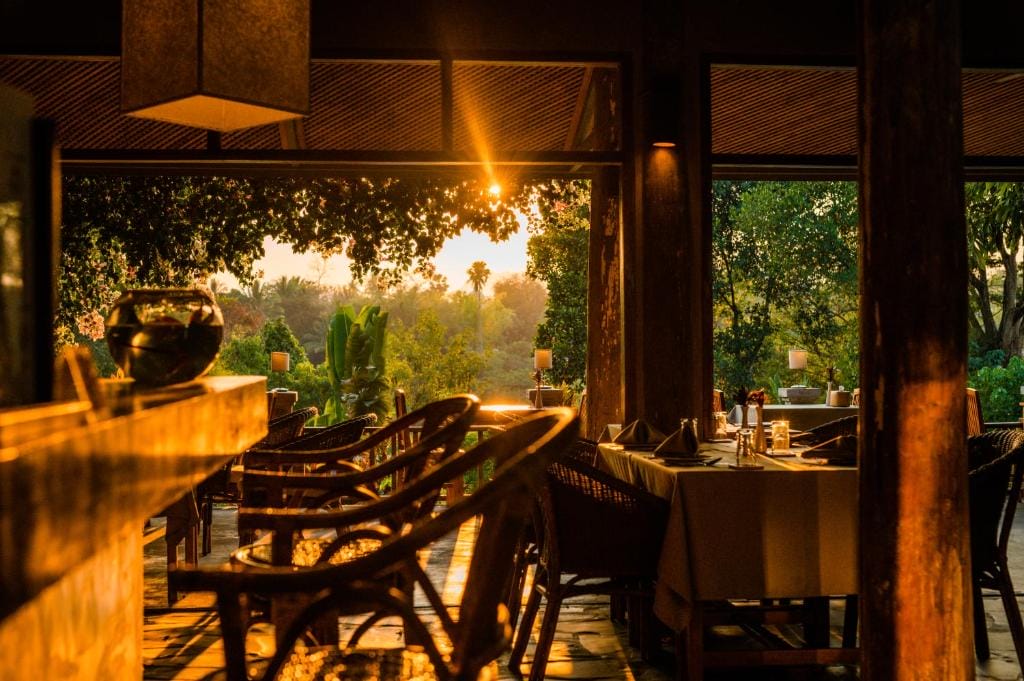
Sometimes the greatest adventure is simply sitting beside the Mekong River with a cup of Lao coffee, watching the sunset without feeling any need to be somewhere else.
Pakbeng
A Small Riverside Town That Teaches You to Slow Down
After leaving Luang Prabang or crossing from Northern Thailand via the Mekong River, many travellers spend a night in Pakbeng.
At first glance, Pakbeng may seem unremarkable.
It is a small riverside settlement whose primary role is serving as an overnight stop for slow boats travelling between Huay Xai and Luang Prabang.
Motorcycle travellers often include Pakbeng because it breaks up an otherwise very long riding day.
While it may not have famous attractions, Pakbeng possesses something equally valuable:
Peace.
Adjusting Expectations
This is perhaps the destination where expectation management matters most.
Pakbeng is not a luxury destination.
Accommodation is generally simple.
Some guesthouses have been modernised over recent years, but the town remains small and relatively quiet.
If you arrive expecting resort-style facilities, you may be disappointed.
If you arrive appreciating simplicity, you’ll likely enjoy your stay far more than expected.
Typical Accommodation
Most riders stay in:
- Family guesthouses
- Riverside lodges
- Small boutique hotels
- Mid-range provincial hotels
Rooms are usually clean and comfortable.
Bathrooms are private.
Air-conditioning is commonly available.
Hot water is generally reliable.
Wi-Fi works reasonably well in most properties, although speeds can fluctuate during busy evenings.
The Real Attraction
The accommodation itself isn’t what makes Pakbeng memorable.
The setting does.
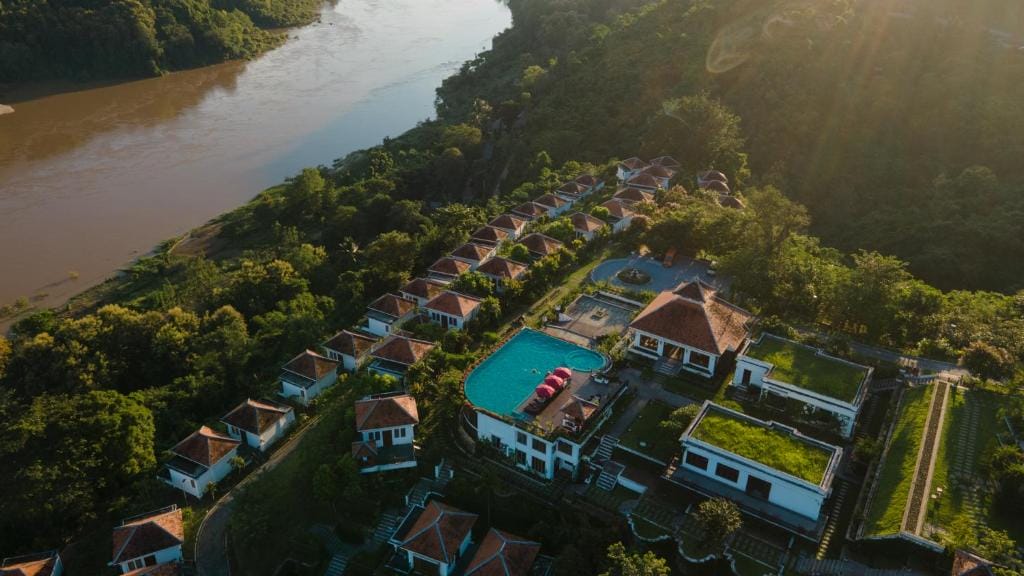
As the sun disappears behind the mountains, the Mekong River becomes incredibly peaceful.
Long-tail boats drift slowly downstream.
Children play near the riverbank.
Locals gather for dinner as travellers exchange stories after a full day on the road.
This slower rhythm reminds many visitors why they chose Laos in the first place.
Dining
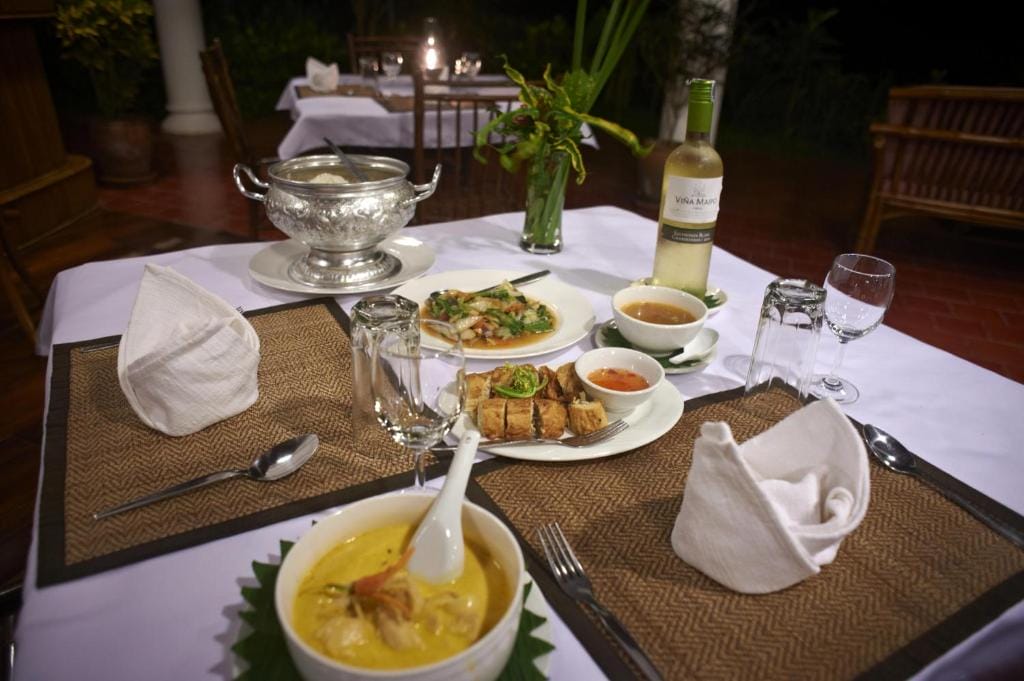
One pleasant surprise is that several guesthouses operate excellent family restaurants.
Dinner often includes:
- Fresh Mekong fish
- Sticky rice
- Lao sausages
- Local vegetables
- Traditional soups
Simple meals prepared with genuine care often become some of the most memorable of the trip.
Motorcycle Facilities
Most accommodation provides secure overnight parking either inside the property or immediately outside under owner supervision.
Owners are accustomed to motorcycle travellers and are generally happy to accommodate bikes safely.
Who Will Enjoy Pakbeng?
Travellers who appreciate:
- Quiet evenings
- Riverside sunsets
- Local hospitality
- Relaxed atmosphere
- Authentic Laos
will probably enjoy Pakbeng far more than those searching for nightlife or luxury shopping.
Luang Namtha
The Gateway to Eco-Tourism and Adventure
If Luang Prabang represents Laos’ cultural heart, Luang Namtha represents its adventurous soul.
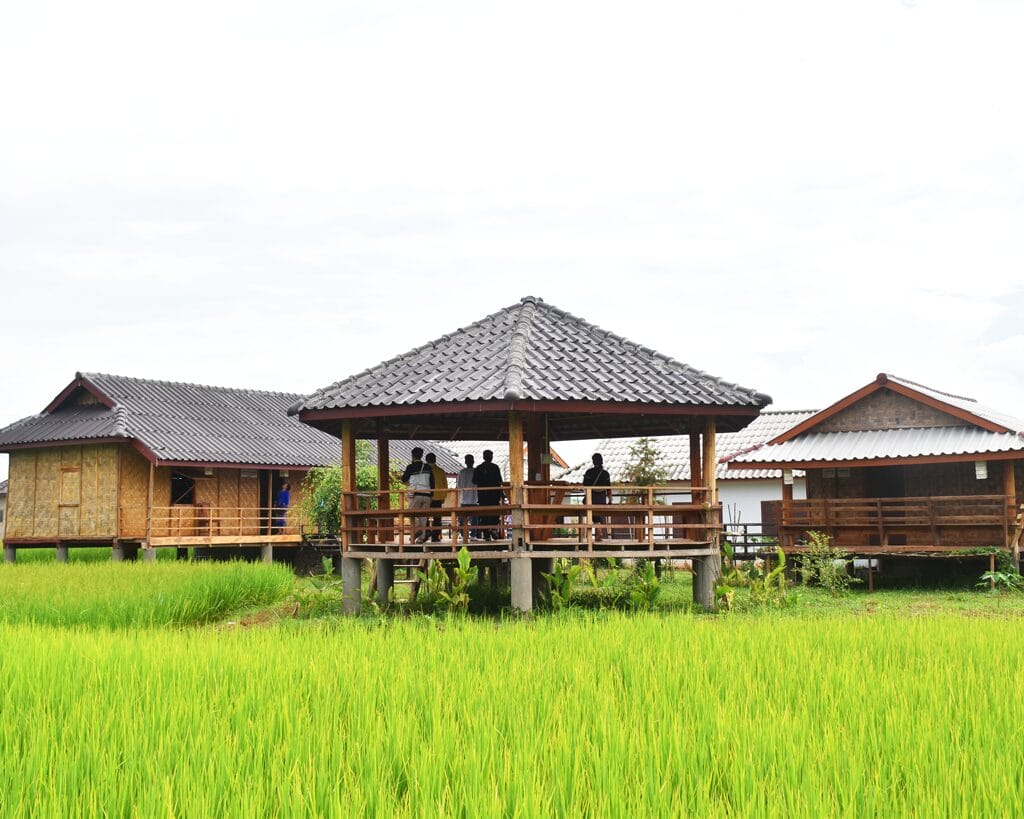
Surrounded by protected forests, mountain villages and ethnic minority communities, Luang Namtha has become one of the country’s leading eco-tourism destinations.
It is also a favourite overnight stop for motorcycle expeditions exploring Northern Laos.
Accommodation Matches the Landscape
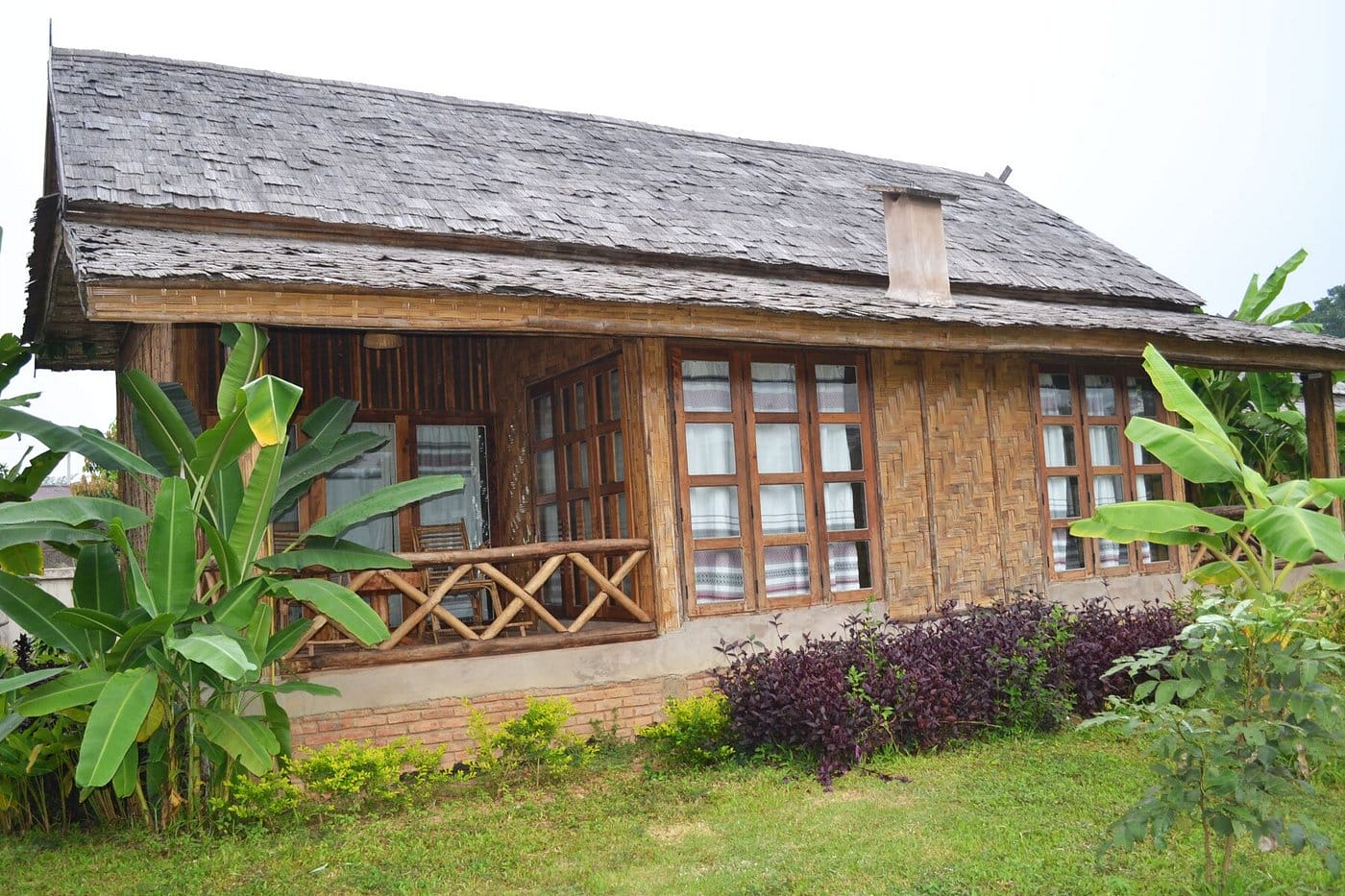
Unlike Luang Prabang’s elegant colonial charm, accommodation here reflects the surrounding wilderness.
You’ll find:
- Eco-lodges
- Jungle lodges
- Family guesthouses
- Small boutique hotels
- Trekking lodges
- Comfortable provincial hotels
Nature remains the star attraction.
Most properties are designed to complement rather than compete with the landscape.
Wooden buildings.
Open-air terraces.
Gardens filled with tropical plants.
Quiet surroundings.
Everything encourages guests to slow down.
Ideal for Riders
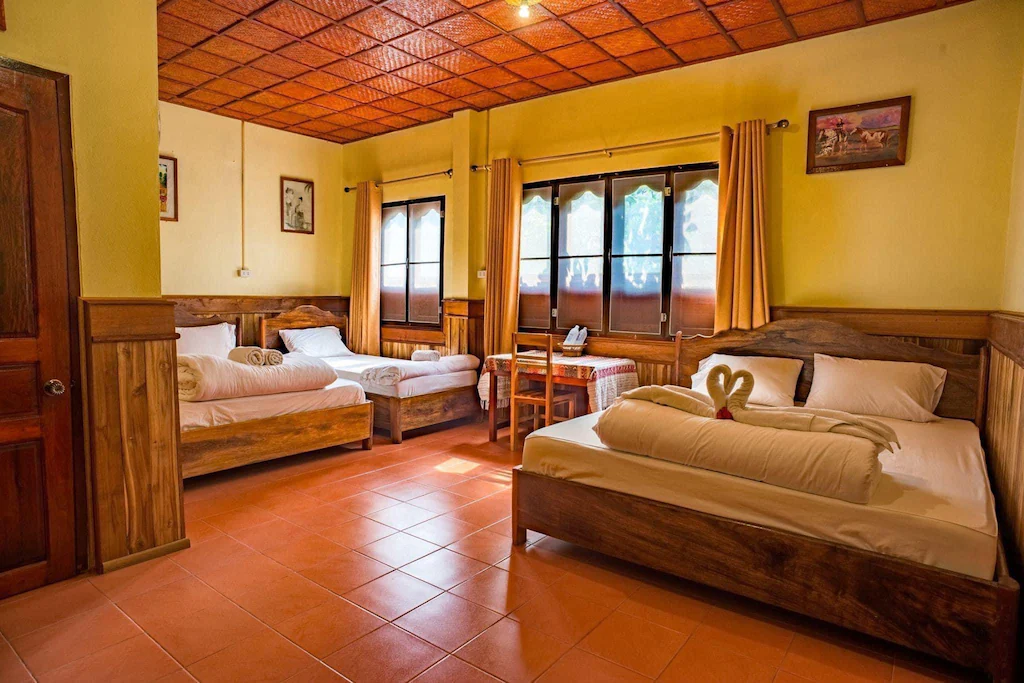
After spending hours navigating mountain roads, Luang Namtha offers exactly what most riders need.
A hot shower.
Comfortable bed.
Cold Beer Lao.
Friendly conversation.
And complete relaxation.
Accommodation is practical rather than luxurious, but consistently comfortable.
Many hotels also understand the needs of motorcycle groups.
Secure parking.
Laundry service.
Early breakfasts.
Helpful local staff.
These small details make a significant difference during longer expeditions.
Eco-Lodges
For travellers interested in trekking or wildlife experiences, eco-lodges around Luang Namtha provide one of the most distinctive accommodation experiences in Laos.
Some properties are located close to protected forest areas.
Electricity may be more limited than in town.
Internet access may be slower.
Instead of viewing this as an inconvenience, many guests discover it becomes one of the highlights of the journey.
Without constant digital distractions, evenings become wonderfully peaceful.
People spend more time talking.
Reading.
Watching the stars.
Listening to nature.
Sometimes disconnecting from technology becomes the greatest luxury of all.
Climate Considerations
Because of its northern location, mornings can feel surprisingly cool during the dry season between November and February.
Many accommodations provide warm blankets, and air-conditioning is rarely needed overnight during these months.
During the warmer season, fans and air-conditioning are generally sufficient for comfortable sleep.
Food and Hospitality
One of Luang Namtha’s greatest strengths is its welcoming local community.
Accommodation owners often have excellent knowledge of:
- Road conditions
- Fuel stations
- Local attractions
- Trekking opportunities
- Village markets
Don’t hesitate to ask for advice.
Some of the best recommendations come not from guidebooks, but from the people welcoming you into their hometown.
Why Riders Love Staying Here
Luang Namtha isn’t famous because of luxurious hotels.
It is loved because every stay feels connected to the surrounding mountains.
When you wake up in the early morning, cool air drifts through the valley.
Mist hangs above the rice fields.
Motorcycles wait quietly outside, ready for another day of exploration.
In that moment, comfort isn’t measured by the number of hotel stars.
It’s measured by the excitement of knowing another unforgettable riding day lies ahead.
Part 2B: Accommodation by Destination
Oudomxay, Nong Khiaw and Practical Advice for Choosing the Right Overnight Stops
As the journey continues deeper into Northern Laos, accommodation becomes quieter, simpler and increasingly connected to the rhythm of the road.
The grand colonial villas of Luang Prabang gradually give way to practical provincial hotels, family-run guesthouses and small riverside bungalows. There may be fewer luxury facilities, but there is often more silence, more personal hospitality and a stronger feeling that you have travelled beyond the usual tourist trail.
For motorbike riders, this change is not a decline in quality.
It is part of the adventure.
A successful Laos motorcycle tour is not built around finding the most luxurious hotel in every town. It is built around choosing the most appropriate accommodation available: somewhere clean, comfortable and welcoming, with a reliable shower, a good night’s sleep and a safe place for the motorcycles.
In destinations such as Oudomxay and Nong Khiaw, the most valuable feature may not be a swimming pool or room service. It may simply be waking up to mountain mist, hearing the river below your balcony or sharing a quiet breakfast before another extraordinary day on the road.
Oudomxay
A Practical and Strategic Stop in the Heart of Northern Laos
Oudomxay Province sits at an important crossroads in Northern Laos.
Its provincial capital, commonly known as Muang Xay, connects several major riding routes leading towards Luang Namtha, Pakbeng, Luang Prabang, Phongsaly and the more remote northern districts.
The official Laos tourism authority describes Oudomxay as a tranquil northern province that is sometimes hidden in cloud, with access to mountainous landscapes and culturally diverse communities. Its central location also makes it one of the most practical transit points for travellers crossing Northern Laos.
For motorbike riders, Oudomxay is often less of a famous sightseeing destination and more of a valuable place to pause, refuel, check the motorcycles and recover after a demanding riding day.
That practical role strongly influences the accommodation available.
What Kind of Accommodation Can Riders Expect?
The majority of accommodation in Muang Xay consists of:
- Provincial hotels
- Small business-style hotels
- Family-operated guesthouses
- Simple boutique properties
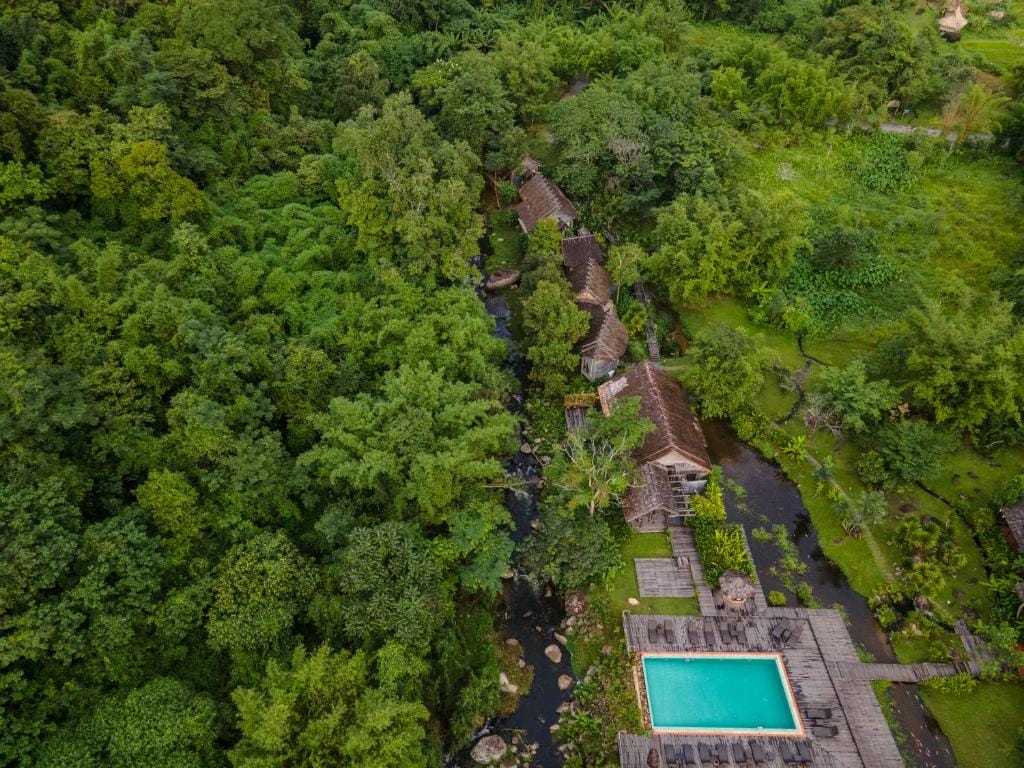
- Eco-resorts outside the town centre
- Community-based homestays in surrounding rural areas
Within the town, most hotels are designed for domestic travellers, business visitors and people travelling between northern provinces.
This means accommodation is usually practical rather than decorative.
Rooms commonly provide:
- Private bathrooms
- Hot showers
- Air-conditioning or fans
- Basic Wi-Fi
- Television
- Simple breakfast options
- On-site or nearby motorcycle parking
The buildings may appear plain from the outside, but many rooms are cleaner and more comfortable than riders initially expect.
Comfort Standards in Muang Xay
Accommodation standards in Oudomxay vary more noticeably than in Luang Prabang.
A hotel may describe itself as three-star, but the experience may differ from a three-star property in Thailand, Vietnam or Europe.
The room itself may be spacious, but the furniture could be basic.
The hot water may work well, but the shower pressure may be moderate.
Wi-Fi may be perfectly usable in the lobby but less reliable in rooms at the end of the corridor.
Breakfast might consist of noodle soup, eggs, toast and Lao coffee rather than a large international buffet.
None of this should be considered unusual.
For most motorcycle travellers, a carefully selected hotel in Muang Xay provides everything needed for a comfortable overnight stay.
The key is to judge accommodation according to its location and purpose rather than comparing it with a major tourism centre.
Why Oudomxay Works Well for Motorbike Tours
After several hours on mountainous roads, riders usually need five things:
- A clean room
- A reliable hot shower
- A comfortable bed
- A filling meal
- Secure parking for the bikes
Muang Xay generally provides all five.
The town also has fuel stations, repair services, local restaurants, markets and small shops where riders can restock water, snacks and basic travel supplies.
For guided motorcycle groups, this makes Oudomxay an excellent operational stop.
It gives the guide an opportunity to inspect tyres, chains and luggage systems while guests rest or explore the local area.
Motorcycle Parking
Parking arrangements differ from one property to another.
Some hotels have enclosed courtyards or covered ground-floor parking. Others allow motorcycles to be parked near reception, behind a gate or under staff supervision.
In smaller family guesthouses, the owner may invite riders to move the bikes inside after the restaurant or reception closes.
This informal style of hospitality is common throughout Laos.
It may not look sophisticated, but it is often remarkably effective.
A knowledgeable tour operator should always confirm parking arrangements before selecting accommodation, especially when travelling with a group of larger motorcycles.
Accommodation Outside the Town Centre
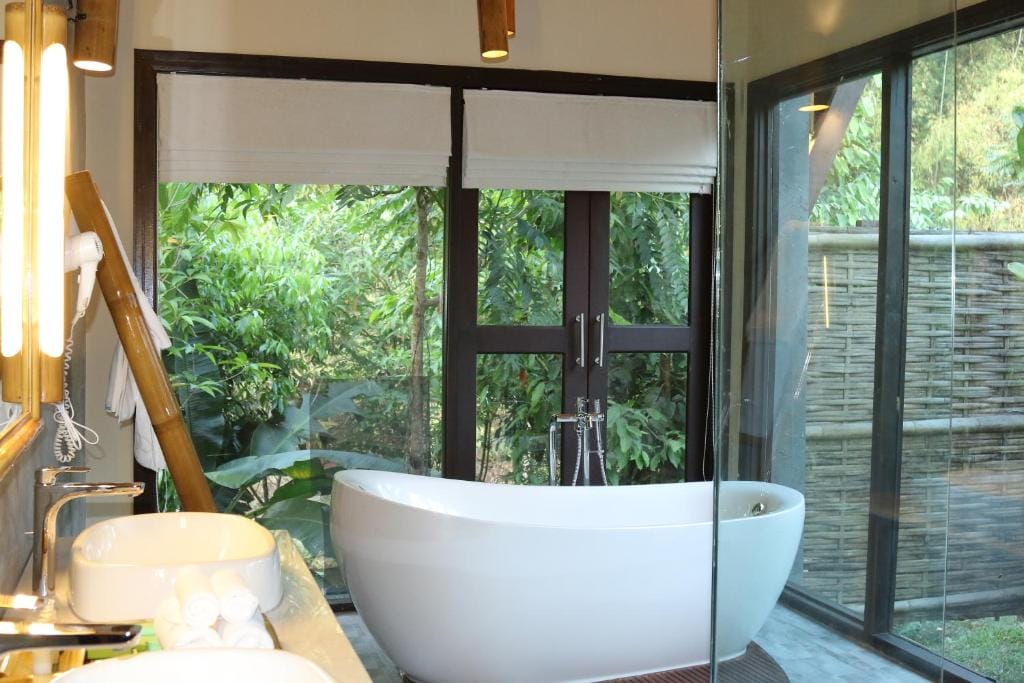
Travellers seeking a more distinctive experience can find eco-oriented properties and nature retreats outside Muang Xay.
These often provide a very different atmosphere from town hotels.
Instead of roadside traffic, guests may hear forest sounds and flowing water.
Instead of a standard hotel building, accommodation may consist of wooden bungalows or rooms integrated into landscaped natural surroundings.
Oudomxay has also promoted community-based tourism and village homestay experiences, including programmes connected with Khmu communities.
These stays can be highly rewarding, but they are not always suitable for every itinerary.
Reaching them may require additional riding time, and facilities can be more basic. They are best included when the cultural experience itself is a planned part of the journey rather than simply being used as a convenient overnight stop.
A Realistic Evening in Oudomxay
A typical evening here may be simple.
You arrive in the late afternoon with dust on your riding jacket and the sound of mountain roads still in your mind.
The motorcycles are parked inside the hotel courtyard.
After a hot shower, you walk to a nearby local restaurant.
Dinner might include grilled meat, vegetables, sticky rice and a cold Beer Lao.
There may be no rooftop bar.
No luxury spa.
No carefully designed tourist entertainment.
Instead, there is the quiet satisfaction of completing another challenging stretch of road and knowing that tomorrow will take you deeper into Laos.
For many riders, that feeling is more rewarding than any five-star facility.
Best For
Oudomxay is especially suitable for:
- Riders connecting Luang Namtha and Luang Prabang
- Northern Laos overland expeditions
- Groups needing a practical rest and maintenance stop
- Travellers interested in ethnic minority communities
- Riders continuing towards Pakbeng or Phongsaly
- Guests who value functionality over luxury
Nong Khiaw
Riverside Bungalows Beneath Towering Limestone Mountains
Few places in Laos create a stronger first impression than Nong Khiaw.
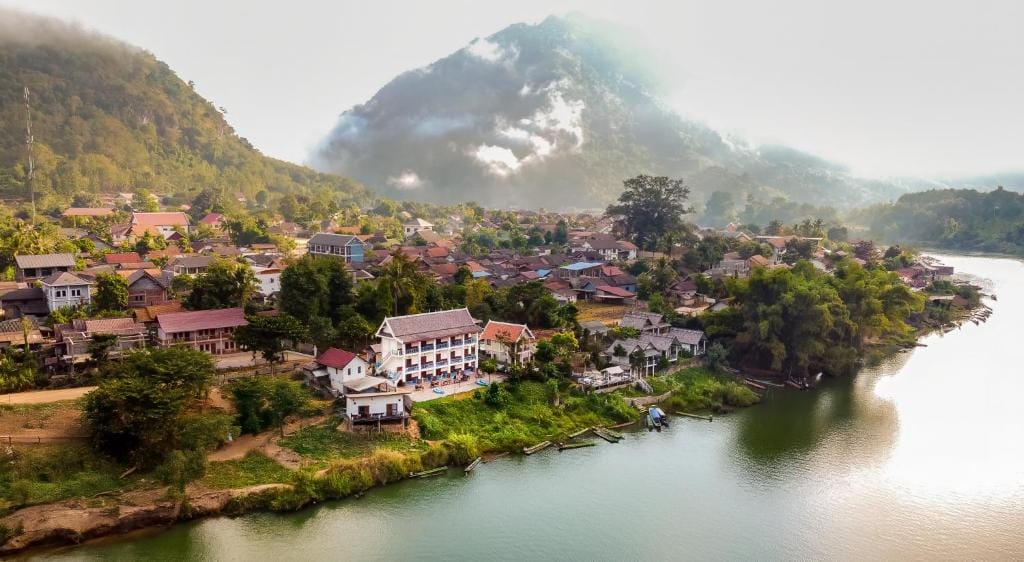
The town lies beside the Nam Ou River, surrounded by steep limestone peaks that appear to rise almost vertically from the valley floor.
The official Luang Prabang tourism website describes Nong Khiaw as one of Laos’ most beautiful destinations, highlighting its mountain scenery, river views and accommodation on the eastern bank around Ban Saphoun.
For motorbike riders arriving after a long journey through Northern Laos, the view from the bridge is often unforgettable.
Below, wooden boats move slowly along the river.
On both sides, guesthouses and bungalows sit beneath enormous green mountains.
As evening approaches, mist begins to form between the cliffs.
It feels peaceful, remote and almost cinematic.
The Character of Accommodation in Nong Khiaw
Accommodation here is built around the scenery.
Unlike Oudomxay, where hotels mainly serve a practical purpose, Nong Khiaw invites travellers to stay longer and enjoy the landscape.
Typical options include:
- Riverside bungalows
- Mountain-view guesthouses
- Small boutique resorts
- Family-run hotels
- Backpacker hostels
- Simple wooden lodges
- Eco-oriented accommodation
The best-known properties are generally positioned along or near the Nam Ou River.
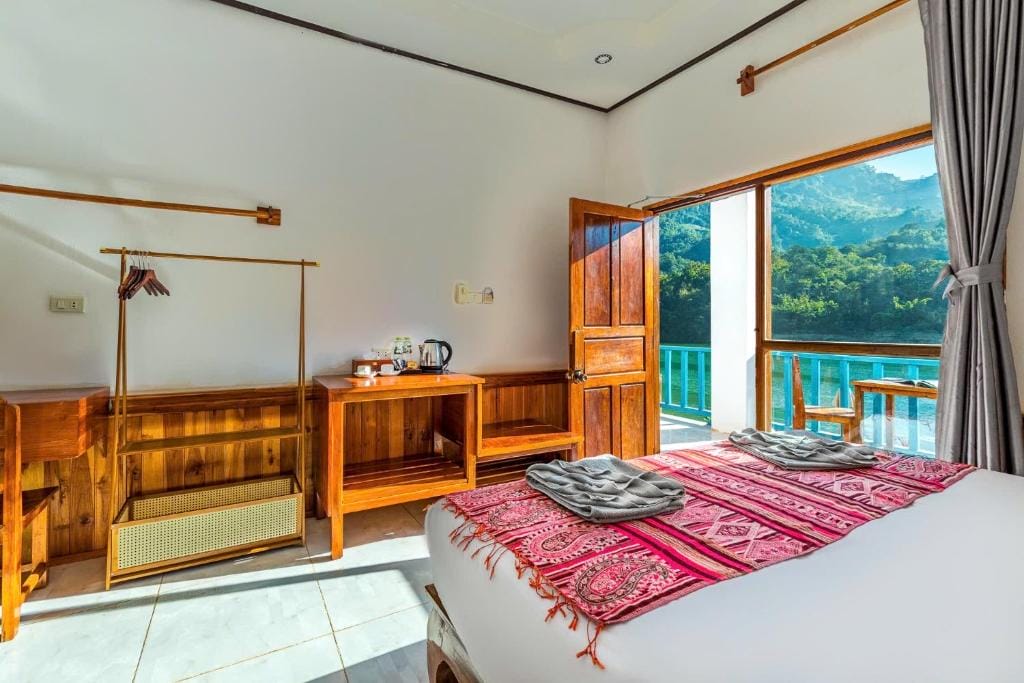
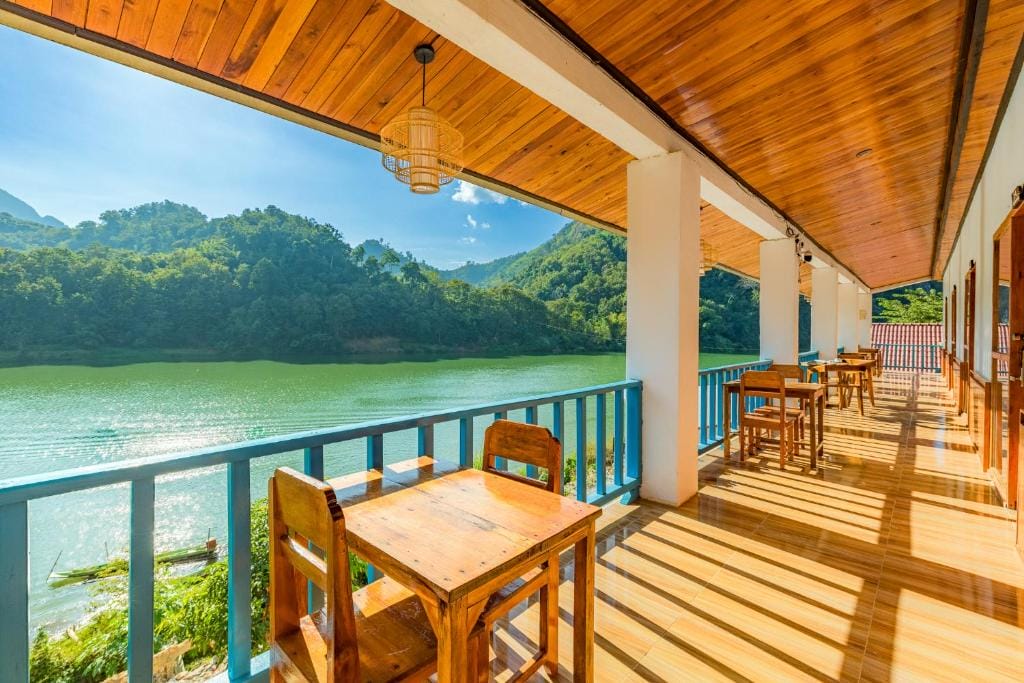
Many rooms have balconies overlooking the water or the surrounding limestone peaks.
Facilities may be simple, but the view often compensates for everything else.
What Does a Riverside Bungalow Really Offer?
The word “bungalow” can create different expectations among travellers.
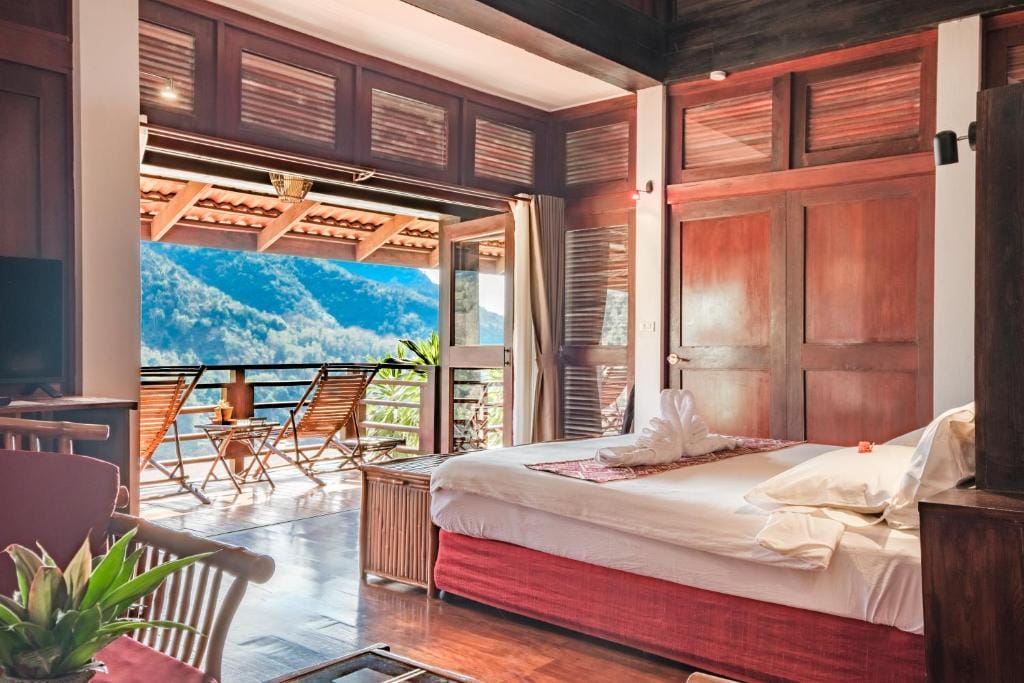
In Nong Khiaw, a bungalow may be a charming wooden room with a private balcony, air-conditioning and a modern bathroom.
It may also be a much simpler structure with a fan, mosquito net and modest furnishings.
The quality varies significantly.
Before booking, riders should check:
- Whether the bathroom is private
- Whether hot water is available
- Whether the room has air-conditioning or only a fan
- Whether access involves steep stairs
- Whether the balcony is private
- Whether motorcycles can be parked securely
- Whether the property is close enough to restaurants
A beautiful view does not automatically guarantee a comfortable room.
The best accommodation choices balance scenery with practical comfort.
Staying on the East or West Bank
Nong Khiaw is divided by a bridge across the Nam Ou River.
The western side contains many local services, shops and tour operators.
The eastern side, including the Ban Saphoun area, is known for excellent views and a concentration of scenic accommodation.
For motorbike groups, both sides can work well.
The right choice depends on the size of the group, parking access and the exact location of the property.
Some scenic riverside guesthouses are reached by narrow entrances or steep pathways that may be inconvenient for larger motorcycles.
A hotel that looks perfect in photographs may not be practical for six heavily loaded bikes.
This is why on-the-ground knowledge matters.
Comfort and Facilities
Mid-range properties in Nong Khiaw commonly offer:
- Private rooms
- En-suite bathrooms
- Hot showers
- Air-conditioning or fans
- River or mountain views
- On-site restaurants
- Wi-Fi
- Laundry service
- Motorcycle parking
However, service standards remain informal.
Reception may not operate 24 hours a day.
Breakfast service can be slow when several groups leave at the same time.
Wi-Fi may weaken during bad weather or when many guests connect simultaneously.
Power cuts are not an everyday occurrence, but temporary interruptions can happen, particularly during storms or periods of infrastructure maintenance.
Travellers should keep cameras, phones and communication devices charged whenever electricity is available.
The Importance of Location
One of the easiest mistakes is choosing accommodation based only on price.
A cheaper guesthouse may be perfectly clean but located away from the river, beside a busy road or near late-night activity.
Another property may cost slightly more but provide a private balcony facing the mountains.
During a motorcycle tour, location can strongly influence the emotional quality of an overnight stay.
After a long day riding, being able to sit quietly beside the Nam Ou River is worth far more than having a larger television or a more elaborate lobby.
Morning Mist and Seasonal Conditions
Nong Khiaw is particularly atmospheric during the cooler months.
Early mornings can bring mist over the river and mountains, creating some of the most beautiful scenery in Northern Laos.
However, rooms can also feel cool before sunrise, especially in December and January.
Heating is uncommon.
Travellers visiting during this period should carry a lightweight warm layer for evenings and mornings.
During the rainy season, humidity increases and wooden bungalows may feel damp.
Good ventilation, functioning air-conditioning or a strong fan becomes more important.
Paths and steps around riverside accommodation can also become slippery, so riders should avoid walking around in wet motorcycle boots.
Restaurants and Breakfast
Many riverside lodges have their own restaurants.
Menus commonly include:
- Lao noodle soup
- Fried rice
- Omelettes
- Toast and fruit
- Local coffee
- Stir-fried vegetables
- Grilled fish
- Western-style dishes
Food quality can be very good, although preparation often takes longer than travellers expect.
Laos operates at a slower rhythm.
Ordering breakfast early is sensible when a motorcycle group has a fixed departure time.
For guided tours, it is often helpful to arrange breakfast the previous evening.
Secure Motorcycle Parking
Not every riverside property has a large parking area.
Some offer roadside parking close to reception.
Others have small courtyards, covered spaces or gated compounds.
Motorcycle security in Nong Khiaw is generally not a major concern, but bikes should still be parked together, locked and positioned away from passing traffic.
Helmets, GPS devices, action cameras and tank bags should always be removed overnight.
The most scenic bungalow is not necessarily the best choice if motorcycles must be left in an exposed location.
Why Riders Often Stay Longer Than Planned
Nong Khiaw has a habit of changing itineraries.
A rider may arrive expecting to stay for one night and soon begin wondering whether the next day could become a rest day.
The attraction is not based on a long list of monuments.
It is the atmosphere.
The river.
The mountains.
The hiking trails.
The quiet cafés.
The feeling that there is no need to rush.
Nong Khiaw is widely recognised as a base for trekking, boat trips and outdoor exploration among the limestone mountains and along the Nam Ou River.
For longer motorcycle itineraries, adding two nights can be an excellent decision.
The first evening allows riders to recover.
The following day can be used for a viewpoint hike, village visit, boat journey or simply a few hours of genuine rest.
Best For
Nong Khiaw is ideal for:
- Riders who enjoy mountain scenery
- Couples seeking peaceful riverside accommodation
- Photography enthusiasts
- Travellers interested in trekking and village life
- Groups needing a scenic rest stop
- Guests who prefer atmosphere over luxury
- Riders continuing towards Muang Ngoi or remote northern routes
Comparing Accommodation Across Northern Laos
Each destination provides a different balance of comfort, atmosphere and practicality.
Luang Prabang
Best overall accommodation quality.
Expect boutique hotels, colonial villas, reliable services and a wide choice of restaurants.
Ideal for comfort before or after an expedition.
Pakbeng
Simple but atmospheric.
Best treated as a peaceful overnight stop rather than a full resort destination.
Luang Namtha
Adventure-focused and practical.
Good guesthouses, eco-lodges and easy access to trekking areas and ethnic communities.
Oudomxay
Functional and strategically located.
An excellent transit and maintenance stop with practical hotels and local services.
Nong Khiaw
The most scenic accommodation experience.
Riverside bungalows and mountain views make it ideal for relaxing after several riding days.
There is no single destination that is “best”.
Each one plays a different role in the journey.
How We Choose Accommodation for a Laos Motorbike Tour
Selecting hotels for a motorcycle itinerary requires a different mindset from choosing accommodation for a conventional holiday.
A property may receive excellent online reviews but still be unsuitable for riders.
It might have no secure parking.
The access road may be too steep or muddy.
Rooms may be spread across a hillside requiring riders to carry heavy luggage up many stairs.
Breakfast may begin too late for the next day’s schedule.
The property may be beautiful but located far from fuel, restaurants or repair services.
When evaluating accommodation, we therefore consider:
-
Cleanliness
The room does not need to be luxurious, but it must be clean and properly maintained.
-
Private Bathroom
Whenever realistically available, riders should have a private bathroom with hot water.
-
Motorcycle Security
Parking should be inside the property, behind a gate or in a location monitored by hotel staff.
-
Road Access
The final approach must be suitable for the motorcycles and the riding ability of the group.
-
Sleep Quality
A quiet location and comfortable mattress are often more important than decorative facilities.
-
Food Availability
After a long riding day, guests should not need to travel far to find dinner.
-
Departure Logistics
Breakfast timing, luggage access and the ability to leave efficiently all matter.
-
Seasonal Suitability
A property that performs well in the dry season may become difficult to access during heavy rain.
Practical Advice for Riders
Keep an Open Mind
Accommodation standards will change from one night to the next.
That variety is part of travelling through Laos.
Carry Earplugs
Village dogs, roosters, temple drums and early-morning traffic are all part of local life.
Pack a Lightweight Sleeping Liner
Most established hotels provide clean bedding, but a sleeping liner can be reassuring during remote homestays.
Bring a Warm Layer
Northern Laos can feel unexpectedly cool between November and February.
Keep Electronics Charged
Do not assume electricity and Wi-Fi will remain stable throughout every evening.
Use a Small Overnight Bag
Carrying a compact bag into the room is much easier than unloading every piece of motorcycle luggage.
Remove Valuables from the Bike
Cameras, passports, money and electronic devices should always be taken inside.
Judge Accommodation by Context
A simple guesthouse in a remote mountain town may represent the best available standard for many kilometres.
It should not be compared directly with a boutique hotel in Luang Prabang.
Final Reflection: The Places That Become Part of the Journey
Years after the journey ends, most riders will not remember the thread count of the bed linen.
They will not remember whether the lobby had marble floors.
They may not even remember the name of every guesthouse.
But they will remember arriving in Oudomxay as the evening clouds settled over the mountains.
They will remember parking the motorcycles after a long day and sharing dinner with people who had become friends somewhere along the road.
They will remember opening the curtains in Nong Khiaw and seeing the Nam Ou River beneath towering limestone cliffs.
They will remember drinking coffee on a wooden balcony while morning mist slowly disappeared from the valley.
That is the real value of accommodation during a Laos motorcycle adventure.
It does more than provide a bed.
It gives every day a beginning and an ending.
It connects riders with landscapes, communities and quiet moments that would otherwise pass unnoticed.
And sometimes, the simplest room in the most remote town becomes the place you remember most clearly of all.
Part 3: Accommodation by Destination
Vang Vieng, Vientiane, Phonsavanh, Thakhek, Pakse and the Bolaven Plateau
“The further south you ride through Laos, the more the journey changes character. Northern mountain guesthouses gradually give way to riverside hotels, restored colonial buildings, practical loop accommodation, coffee-farm lodges and peaceful retreats hidden among waterfalls and plantations.”
Travelling through Central and Southern Laos introduces riders to a much broader range of accommodation.
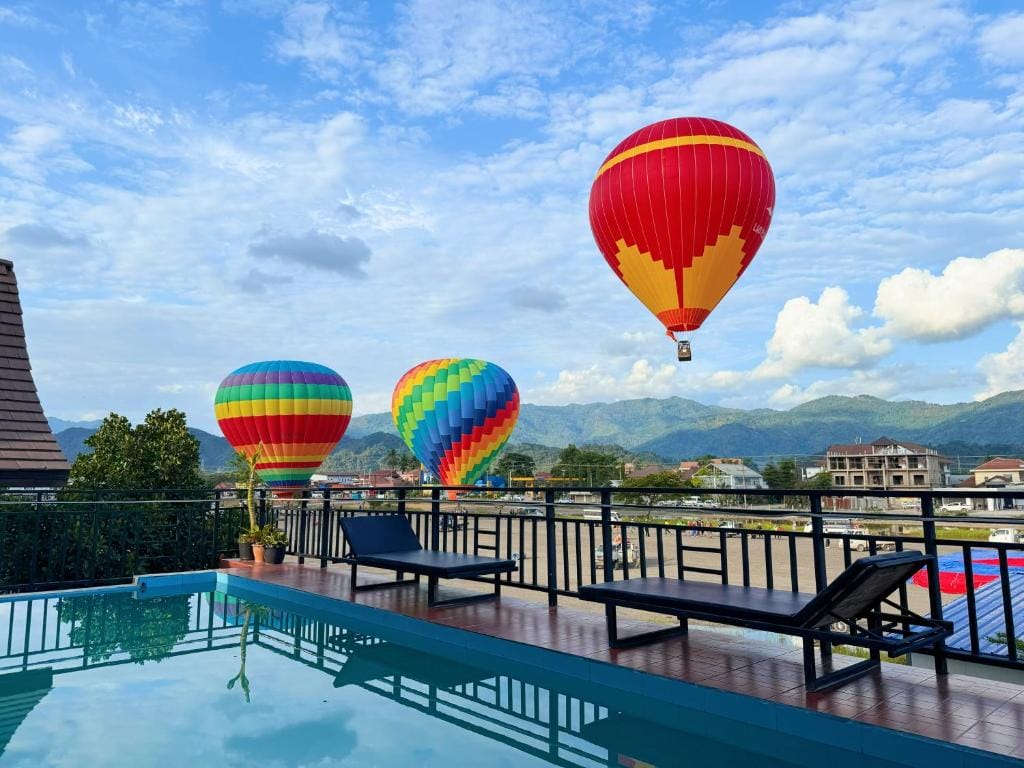
In Vang Vieng, you can wake up beneath limestone mountains and watch hot-air balloons drifting across the valley.
In Vientiane, you can enjoy dependable city comforts, international dining and efficient travel services.
In Phonsavanh, the accommodation is quieter and more functional, reflecting the remote plateau and the serious history of Xieng Khouang.
Thakhek welcomes riders preparing for one of the country’s most famous motorcycle loops.
Further south, Pakse becomes the gateway to the Bolaven Plateau, where coffee farms, waterfalls and cooler upland temperatures create an entirely different overnight experience.
These places should not be judged by one universal standard.
Each destination has its own purpose within a Laos motorcycle itinerary. Some nights are designed for comfort and recovery. Others are chosen for location, cultural value or access to the next day’s route.
The most rewarding journeys are those in which riders understand the difference.
Vang Vieng
From Backpacker Stop to Scenic Adventure Destination
Few destinations in Laos have changed as visibly as Vang Vieng.
Once known primarily for a young backpacker party scene, the town has developed into a broader nature and adventure destination. Its dramatic limestone karsts, Nam Song River, caves, lagoons, hiking trails and outdoor activities now attract couples, families, photographers and organised adventure groups as well as independent travellers. Vang Vieng remains positioned between Luang Prabang and Vientiane and is now accessible by both improved roads and the Laos–China Railway.
For motorcycle riders, Vang Vieng provides a welcome combination of scenery and comfort.
After several days through mountain districts or rural valleys, arriving beneath its tall limestone cliffs can feel like entering a natural amphitheatre.
The town has enough tourism infrastructure to make a rest day easy, yet the surrounding countryside remains only minutes away.
Accommodation Has Become More Diverse
Vang Vieng now offers one of the widest accommodation ranges outside Luang Prabang and Vientiane.
Depending on budget and travel style, riders can usually choose from:
- Riverside resorts
- Boutique hotels
- Mountain-view properties
- Mid-range hotels
- Family-run guesthouses
- Backpacker hostels
- Small bungalow complexes
- Higher-end resorts with swimming pools
This range makes Vang Vieng suitable for very different travellers.
A younger independent rider may prefer an inexpensive guesthouse close to restaurants and evening activity.
A private guided group may be better served by a quieter riverside hotel with secure parking, reliable breakfast service and enough rooms for the whole party.
A couple on a premium motorcycle tour may value a mountain-facing balcony, landscaped gardens or a swimming pool after a hot riding day.
The Importance of Choosing the Right Area
Not every part of Vang Vieng offers the same atmosphere.
Properties near the busiest central streets provide easy access to restaurants, cafés and tour operators, but they may also experience more music, traffic and late-night noise.
Riverside accommodation often provides better scenery and a calmer setting, although access roads can vary.
Properties farther into the countryside may offer beautiful views and a stronger sense of peace, but riders should check whether dinner is available nearby and whether the final approach remains practical during wet weather.
For a motorcycle tour, the best choice is rarely based on scenery alone.
The property should also provide:
- Safe access for motorcycles
- Secure overnight parking
- A reliable early breakfast
- Easy luggage handling
- Reasonable distance from restaurants
- Quiet rooms where riders can recover properly
A spectacular hotel on a narrow or muddy side road may become inconvenient after heavy rain.
What Riders Can Realistically Expect
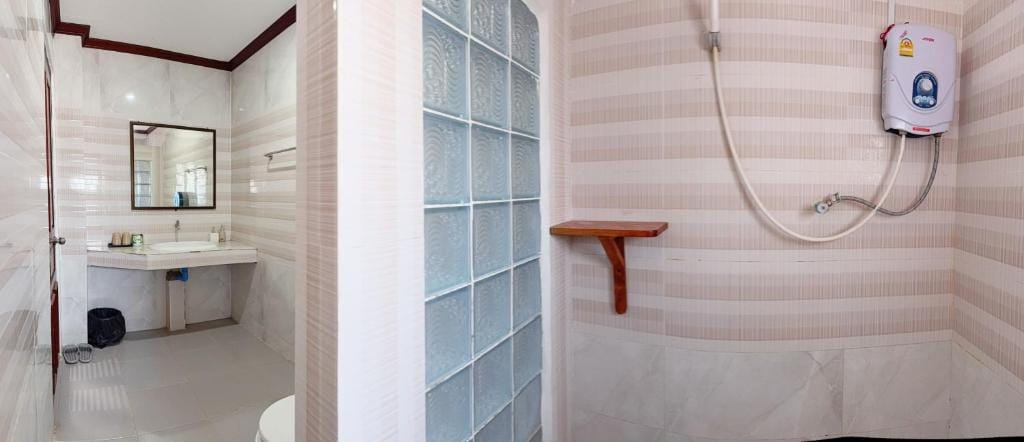
Mid-range and upper-mid-range hotels in Vang Vieng commonly aim to provide private bathrooms, air-conditioning, Wi-Fi and breakfast.
However, standards can still vary between properties.
A hotel may have an impressive swimming pool but inconsistent shower pressure.
A riverside resort may offer extraordinary views but limited sound insulation between rooms.
A newer hotel may have modern interiors but less personal service than a small family guesthouse.
This is why photographs should never be the only basis for selection.
Recent maintenance, room location, parking and management quality matter just as much as the building itself.
Safety and Nightlife Awareness
Although Vang Vieng has worked to broaden its tourism identity, travellers should still make careful choices around nightlife and alcohol.
Following fatal methanol poisoning cases involving tourists in 2024, several governments advised travellers in Laos to avoid unlabelled or home-produced spirits and to buy alcoholic drinks only from reputable, licensed establishments.
For motorcycle riders, alcohol awareness is especially important.
A demanding riding day should never begin with dehydration, poor sleep or the after-effects of excessive drinking.
A quiet hotel, an early dinner and a responsible evening usually contribute far more to the next day’s enjoyment than a late night in the busiest part of town.
Why Vang Vieng Works Well as a Rest Stop
Vang Vieng is one of the easiest places to schedule a rest day during a longer Laos motorcycle tour.
Riders can choose between:
- A slow morning beside the river
- A short countryside ride
- Cave exploration
- A viewpoint hike
- Kayaking or tubing
- A visit to one of the lagoons
- A massage and relaxed afternoon at the hotel
For riders aged 40, 50, 60 or above, the ability to choose between activity and genuine rest is especially valuable.
Not every day of an adventure tour needs to be physically demanding.
Sometimes the most intelligent itinerary includes time to recover.
Best For
Vang Vieng is especially suitable for:
- Scenic rest days
- Couples seeking comfortable accommodation
- Riders interested in outdoor activities
- Groups wanting a choice of restaurants and facilities
- Photography enthusiasts
- Travellers connecting Luang Prabang with Vientiane
Vientiane
Reliable City Comfort at the End—or Beginning—of the Road
Vientiane is the capital of Laos, but it does not feel like a typical Southeast Asian metropolis.
The city remains relatively low-rise and unhurried.
The Mekong riverfront, Buddhist temples, French-influenced architecture, cafés and government districts give it a calm character that contrasts with the intensity of larger capitals in neighbouring countries.
For motorcycle travellers, Vientiane often serves as an arrival point, departure point or important logistical pause.
It is a place to organise documents, replace equipment, service motorcycles, handle onward transport or simply enjoy a more comfortable hotel after many days on rural roads.
The Broadest Range of Practical Facilities
Together with Luang Prabang, Vientiane provides some of the most dependable accommodation choices in Laos.
The city offers:
- International-standard hotels
- Business hotels
- Boutique properties
- Serviced apartments
- Riverside hotels
- Family guesthouses
- Budget hostels
- Luxury accommodation
This variety allows tour operators to match accommodation closely to the traveller’s expectations.
A short transit stay may require only a clean business hotel with efficient check-in.
A tour-ending stay may justify a higher-category property with a swimming pool, spa, quality breakfast and comfortable public areas.
Location Matters More Than Star Rating
Vientiane is spread over a larger area than many visitors initially expect.
A hotel may be attractive but inconveniently located for sightseeing, restaurants or the next day’s transfer.
For motorcycle tours, useful locations often include the central district, the riverfront area or neighbourhoods with straightforward road access.
When evaluating a city hotel, riders should consider:
- Traffic around arrival and departure times
- Gated or guarded parking
- Whether motorcycles can enter the property
- Proximity to restaurants
- Access to pharmacies and shops
- Laundry turnaround time
- Lift access when rooms are on higher floors
- Space for regrouping before departure
A slightly simpler hotel in a practical location can be far more useful than a luxurious hotel on the wrong side of the city.
Secure Motorcycle Parking
Parking deserves particular attention in Vientiane.
Smaller boutique hotels in restored buildings may have charming interiors but very limited courtyard space.
Some properties rely on roadside parking.
Larger hotels may have underground, rear-compound or guarded parking, but access restrictions should be confirmed in advance.
For a group using Honda CRF250cc motorcycles or similar, the guide should know exactly where the bikes will be parked before arrival.
A group of six or eight motorcycles requires significantly more space than one independent scooter.
A Good Place for Maintenance and Recovery
Vientiane is one of the most practical places in Laos to address issues that are difficult to solve in remote regions.
Riders may use their stay to:
- Replace damaged riding gloves
- Repair luggage straps
- Buy medicine or toiletries
- Arrange laundry
- Check motorcycle tyres and chains
- Back up photographs and video files
- Withdraw or exchange money
- Rest before an international flight
This makes the city more than a sightseeing stop.
It is a logistical anchor within a longer overland journey.
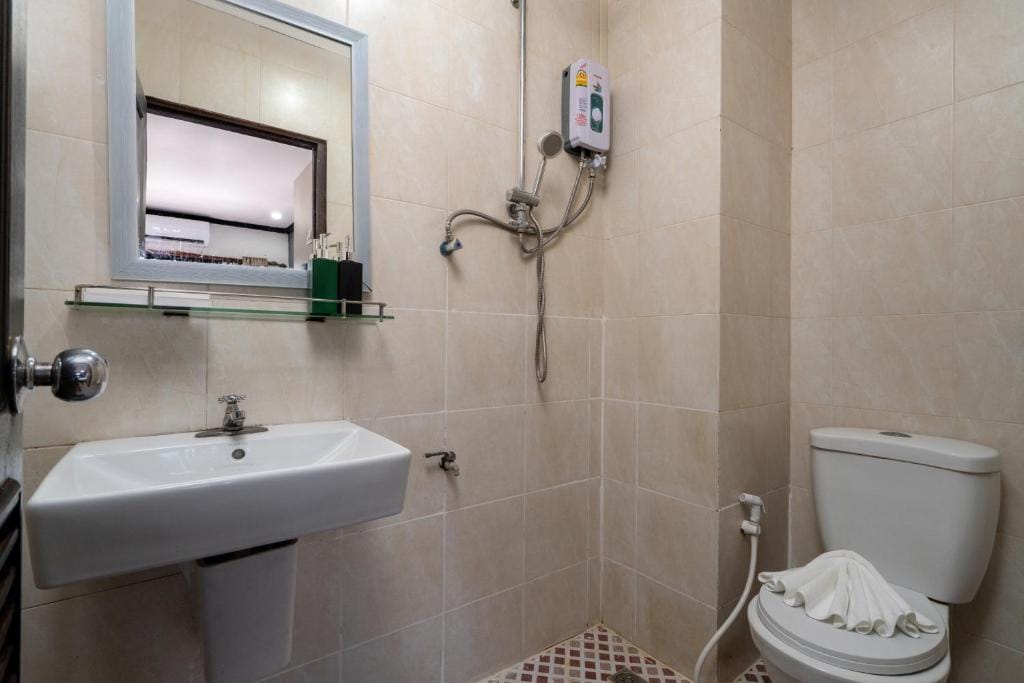
What Comfort Usually Looks Like
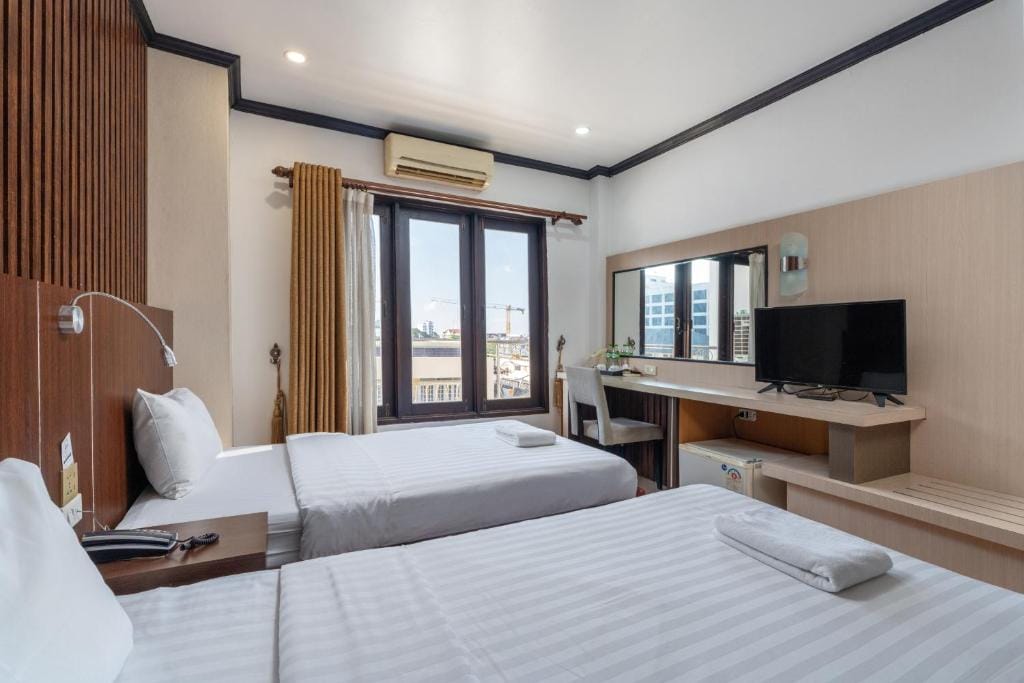
In a carefully selected mid-range or higher-category hotel, travellers can reasonably look for:
- Consistent air-conditioning
- Private bathroom
- Reliable hot water
- Stable electricity
- Better Wi-Fi than in provincial towns
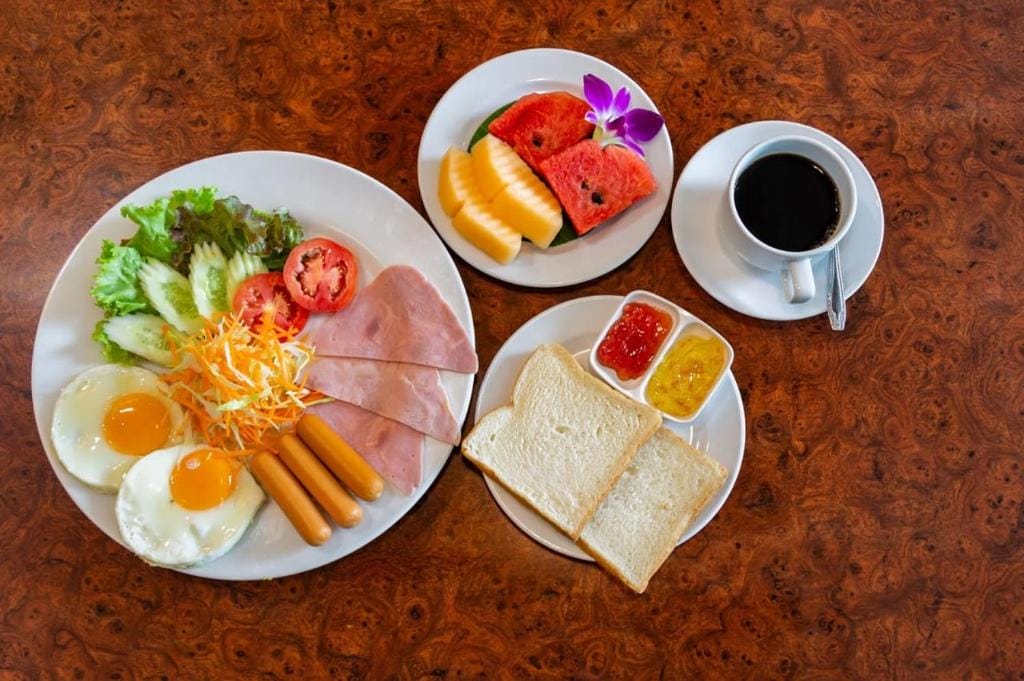
- Breakfast with Lao and international choices
- Professional reception service
- Luggage storage
- Laundry arrangements
Even in the capital, however, service styles vary.
Laos remains relaxed.
Check-in may take longer than expected, breakfast items may be replenished slowly and English-language communication may depend on which staff member is working.
Patience and courtesy usually solve small problems more effectively than confrontation.
Best For
Vientiane is ideal for:
- Tour arrivals and departures
- A comfort night after a long expedition
- Motorcycle maintenance
- Laundry and equipment replacement
- International flight connections
- Riders wanting restaurants and city services
- Travellers who need a slower transition before flying home
Phonsavanh
Simple Comfort on a Historic Highland Plateau
Phonsavanh is not a destination people visit for glamorous hotels.
They come for history, archaeology, landscape and perspective.
The town is the main base for exploring the Plain of Jars, a UNESCO World Heritage property containing more than 2,100 megalithic stone jars associated with Iron Age funerary practices. The inscribed property consists of multiple archaeological components across the Xieng Khouang plateau.
For riders, the roads approaching Phonsavanh reveal broad upland scenery, grasslands, hills and cooler air.
The atmosphere feels different from river-based destinations such as Luang Prabang, Nong Khiaw or Vang Vieng.
It is more open, more austere and often more reflective.
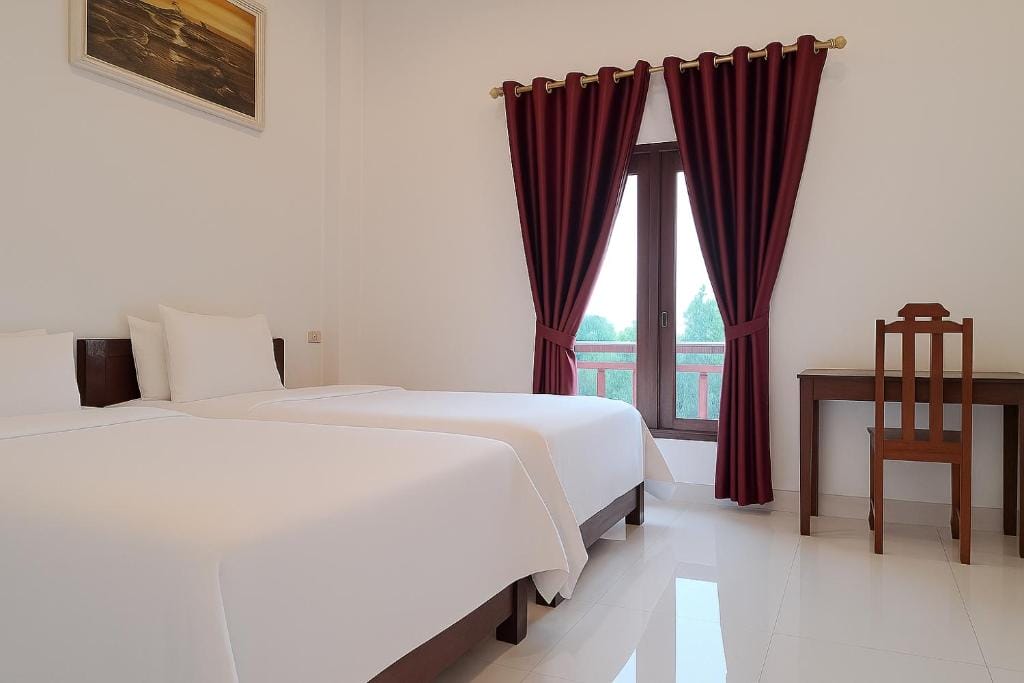
Accommodation Is Primarily Functional
Most accommodation in Phonsavanh consists of:
- Provincial hotels
- Mid-range town hotels
- Family-run guesthouses
- Small boutique properties
- Simple lodges outside the centre
The general standard is practical.
Rooms are usually selected for cleanliness, hot water, sleep quality and access rather than visual luxury.
The best properties can be comfortable and well managed, but travellers should not expect the same range found in Luang Prabang, Vang Vieng or Vientiane.
Cold Mornings Can Surprise Riders
Phonsavanh’s elevation means that mornings and evenings can feel distinctly cool during the dry season, particularly from November through February.
Many riders arrive in Laos expecting tropical heat everywhere.
After sunset on the plateau, that assumption changes quickly.
Heating is uncommon, so accommodation comfort depends on:
- Good blankets
- Hot water
- Rooms protected from wind
- Warm sleepwear
- A fleece or lightweight insulated jacket
Riding gear that feels too warm in Vientiane may suddenly become useful in Phonsavanh.
This climatic contrast is part of what makes a cross-country Laos motorcycle tour so varied.
Wi-Fi, Electricity and Room Facilities
Town hotels normally provide the basic services required by riders, but performance may vary by property and room location.
Wi-Fi may be adequate for messaging and email but slower for backing up large video files.
Hot-water systems may depend on individual electric heaters.
Some rooms may have air-conditioning that also offers a heating mode, but this should never be assumed.
Riders carrying cameras, drones or intercom equipment should charge devices early in the evening rather than waiting until morning.
Historical Sensitivity
A stay in Phonsavanh often carries a more serious emotional tone.
Beyond the ancient jar sites, Xieng Khouang also bears visible evidence of twentieth-century conflict and unexploded ordnance.
Travellers should remain on marked paths at recognised visitor sites and follow local guidance.
Accommodation staff and local guides can provide valuable context, but conversations about war should be approached respectfully.
For many visitors, this becomes one of the most thought-provoking sections of the tour.
Best For
Phonsavanh is best suited to:
- Riders interested in history and archaeology
- Travellers crossing Central or Northeastern Laos
- Guests who appreciate quiet provincial towns
- Photography and landscape enthusiasts
- Riders prepared for cool mornings
- Tours connecting Luang Prabang, Vang Vieng or Vieng Xai
Thakhek
The Natural Base for Central Laos Motorcycle Exploration
Thakhek sits beside the Mekong River in Khammouane Province.
Its old town retains French colonial-era architecture, while the surrounding province is known for limestone karsts, caves, underground rivers and rural landscapes.
For motorbike travellers, however, Thakhek is best known as the starting and finishing point of the Thakhek Loop, one of Laos’ recognised motorcycle routes. Laos’ national tourism authority specifically identifies the loop as a popular motorbiking experience.
This gives the town a distinctive accommodation culture.
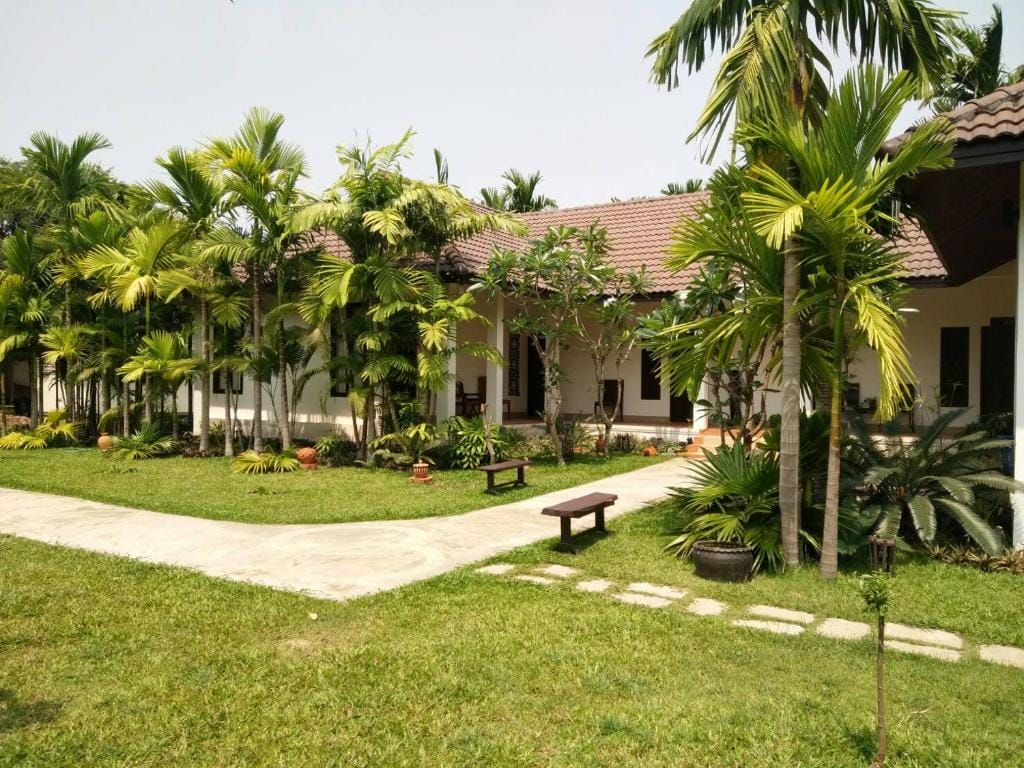
Hotels and guesthouses are accustomed to meeting riders who arrive dusty, tired and carrying luggage strapped to motorcycles.
Accommodation for Loop Riders
Typical options include:
- Mekong-facing hotels
- Old-town guesthouses
- Rider-oriented hostels
- Mid-range provincial hotels
- Simple boutique accommodation
- Guesthouses offering motorcycle information
Some properties cater heavily to independent backpackers renting small motorcycles.
Others are better suited to organised groups using larger trail bikes.
The right property should provide enough parking, early breakfast and room access that does not require carrying heavy luggage through narrow staircases.
Before and After the Loop
A pre-loop hotel stay has different priorities from a post-loop stay.
Before departure, riders need:
- Space to organise luggage
- Safe storage for unnecessary belongings
- An early breakfast
- Easy road access
- Fuel nearby
- A clear meeting area
After the loop, priorities shift towards:
- A strong hot shower
- Laundry service
- Comfortable bedding
- Cold drinks
- A relaxed dinner
- Somewhere to sit and exchange stories
An itinerary should account for these different needs.
Parking and Luggage Storage
Thakhek properties serving riders may be familiar with motorcycle parking, but group requirements should still be confirmed.
Some guesthouses have narrow courtyards that work well for scooters but not for multiple Honda CRF250cc motorcycles with side luggage.
Secure storage is also useful for guests leaving behind suitcases while carrying only smaller bags around the loop.
Nothing should be assumed purely because a property advertises itself as motorcycle-friendly.
Accommodation Along the Thakhek Loop
Outside Thakhek, accommodation becomes much simpler.
Riders may stay in:
- Village guesthouses
- Basic roadside lodges
- Small bungalows
- Family-run accommodation near caves
- Guesthouses in towns such as Thalang or near Kong Lor
Facilities can vary considerably.
Private bathrooms and hot water may be available, but not always at the same standard as in Thakhek.
Wi-Fi may be weak or unavailable.
Electricity can be limited in smaller properties.
Food choices may be restricted to a set local menu.
These nights are not about luxury.
They are about being close to the route.
Waking up near limestone cliffs, rural villages or the entrance to a vast cave system is part of the loop’s appeal.
Seasonal Access and Wet Riding Gear
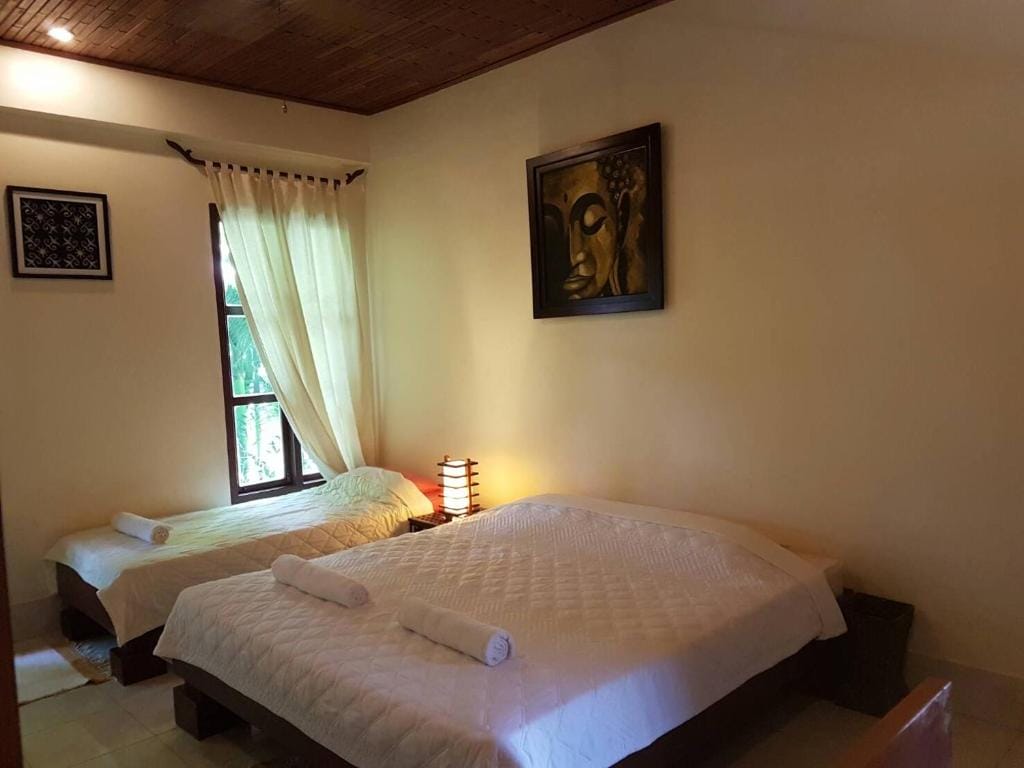
Rainy-season conditions create special accommodation needs.
After riding through heavy rain, guests need somewhere to hang jackets, trousers, gloves and boots.
Not every guesthouse has a dedicated drying room.
Wet equipment may remain damp overnight, especially in humid conditions.
Riders should carry:
- Lightweight clothes hangers
- Quick-drying base layers
- Waterproof inner bags
- Spare socks and gloves
- Plastic bags for separating wet equipment
The hotel room should be kept ventilated where possible.
Best For
Thakhek is ideal for:
- Riders beginning or completing the Thakhek Loop
- Cave and karst exploration
- Central Laos expeditions
- Travellers seeking simple rider-friendly accommodation
- Groups continuing between Vientiane and Southern Laos
Pakse
The Comfortable Gateway to Southern Laos
Pakse is the principal tourism and transport hub of Southern Laos.
It provides access to Champasak, Wat Phou, the Mekong region, Si Phan Don and the Bolaven Plateau. Laos’ tourism authority describes the plateau as easily accessible from Pakse and promotes the city as a base for waterfalls, coffee landscapes and Southern Laos exploration.
For riders arriving from Thakhek or longer northern routes, Pakse often feels like a welcome return to stronger urban services.
The city is practical rather than overwhelmingly beautiful, but its location makes it one of the most useful overnight bases in Laos.
Accommodation Choices
Pakse offers:
- Riverside hotels
- Comfortable city hotels
- Boutique accommodation
- Business-style properties
- Family guesthouses
- Budget hostels
- Higher-end resorts outside the centre
The best property depends on whether Pakse is being used as a transit stop, a rest day or a base for several excursions.
For a one-night stop, efficient parking and breakfast may matter most.
For a two- or three-night stay, riders may prefer a pool, larger rooms, better laundry service and easy access to restaurants.
Heat and Air-Conditioning
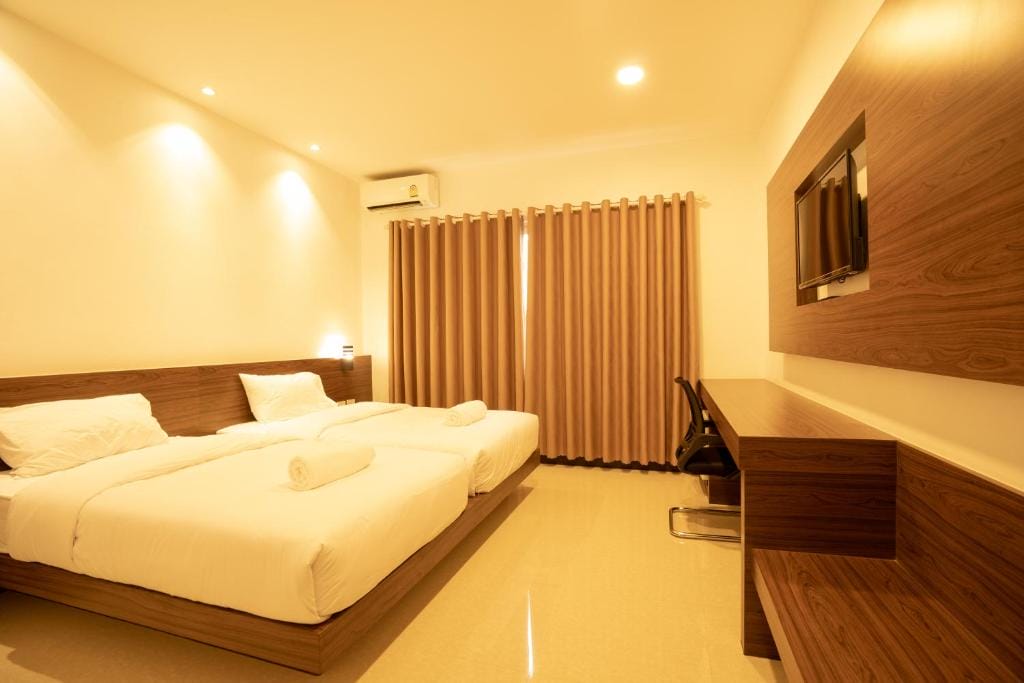
Pakse can feel noticeably warmer than Northern Laos.
Reliable air-conditioning becomes more important, particularly during the hotter months.
A room that looks attractive online may still be uncomfortable if the air-conditioning unit is poorly maintained.
For organised tours, room checks and recent supplier feedback are valuable.
After a long day in Southern Laos heat, a cool room is not a luxury—it is an important part of physical recovery.
Rider Logistics
Pakse is useful for:
- Motorcycle servicing
- Refuelling and supplies
- Laundry
- Cash access
- Restaurants
- Flight connections
- Preparing for the Bolaven Plateau
- Organising onward travel towards Champasak or Si Phan Don
Secure parking remains essential, particularly in centrally located hotels where street space may be limited.
The Bolaven Plateau
Coffee Lodges, Waterfall Retreats and Cooler Highland Nights
The Bolaven Plateau is one of Southern Laos’ signature riding regions.
The official tourism authority describes a longer plateau loop of approximately 374 kilometres and notes that it can be completed over several days by motorcycle or vehicle. The region is known for coffee cultivation, waterfalls and upland scenery.
Riding from the heat of Pakse into the plateau feels like changing countries.
The road climbs.
The air becomes cooler.
Coffee plantations spread across the landscape.
Waterfalls appear through forest and mist.
Accommodation also changes.
Types of Accommodation on the Plateau
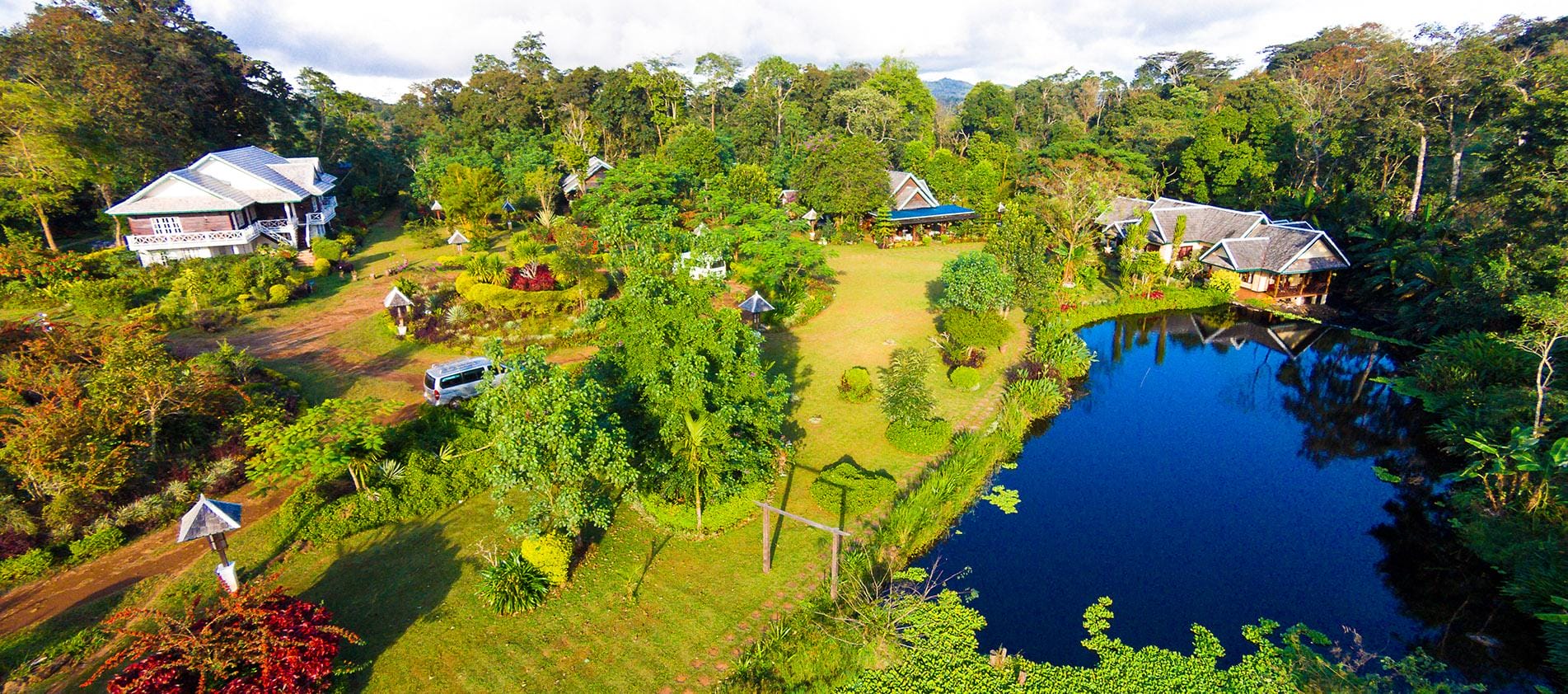
Depending on the chosen route, riders may encounter:
- Coffee-farm homestays
- Eco-lodges
- Waterfall resorts
- Small town guesthouses
- Wooden bungalows
- Provincial hotels around Paksong
- Community-based accommodation
- Simple roadside lodges
This diversity makes the Bolaven Plateau one of the most interesting accommodation regions in Laos.
One night may be spent in a modest town hotel.
The next may be in a bungalow surrounded by coffee trees.
Paksong as a Practical Base
Paksong is widely regarded as a centre of the Lao coffee industry and an important tourism base on the plateau.
Accommodation here is generally practical and suited to travellers exploring plantations and waterfalls.
Do not expect the same urban comfort as Pakse.
The reward is proximity to the landscape and easier access to morning rides.
Coffee-Farm Stays
A coffee-farm stay can become one of the most memorable nights of a Southern Laos motorcycle tour.
The experience may include:
- Walking among coffee plants
- Learning how beans are harvested and processed
- Drinking freshly prepared Lao coffee
- Eating simple local meals
- Meeting farming families
- Waking to cool highland air
Facilities vary.
Some farm stays offer comfortable private bungalows.
Others are closer to homestays, with modest rooms and limited services.
The cultural value should be the reason for staying—not an expectation of resort luxury.
Waterfall Accommodation
Several plateau routes pass near major waterfalls, including Tad Fane and Tad Yeuang.
Official tourism information describes Tad Fane as a dramatic twin waterfall and identifies the area around Tad Yeuang, Paksong and Route 16 as part of the plateau’s visitor network.
Staying near a waterfall can provide a beautiful atmosphere, but riders should consider:
- Humidity
- Insects
- Slippery paths
- Limited evening dining
- Reduced mobile signal
- Damp riding equipment during wet weather
- Distance from fuel and repair services
Nature-based accommodation requires a more flexible mindset.
Cooler Temperatures
The plateau is cooler than Pakse and other lowland areas.
Evenings can feel unexpectedly fresh, especially after rain or during the cooler season.
A light jacket is useful.
Rooms may not require air-conditioning, but good blankets and hot water become more important.
This change in temperature is refreshing for many riders, particularly after several days in the south.
Motorcycle Security and Access
Remote lodges may provide ample open space but not formal guarded parking.
In many cases, motorcycles can be parked beside the bungalow, near reception or inside a family compound.
Access roads to coffee farms and waterfalls may be unpaved.
During the rainy season, short approaches can become muddy or slippery even when the main road remains rideable.
Accommodation selection should therefore match:
- Rider experience
- Motorcycle type
- Weather
- Group size
- Luggage weight
A scenic lodge is only a good choice when the group can reach it safely.
Comparing Accommodation Across Central and Southern Laos
Vang Vieng
The strongest combination of scenery, activities and accommodation variety.
Best for rest days and comfortable mountain views.
Vientiane
The most dependable location for city services, logistics and tour-end comfort.
Best for arrivals, departures and practical recovery.
Phonsavanh
Simple, quiet and historically meaningful.
Best approached with realistic expectations and warm clothing in the cool season.
Thakhek
Rider-oriented and practical.
The natural base for the Thakhek Loop and Central Laos cave routes.
Pakse
The key service hub of Southern Laos.
Best for regrouping, maintenance and preparing for plateau exploration.
Bolaven Plateau
The most atmospheric rural accommodation in Southern Laos.
Coffee lodges, eco-stays and waterfall retreats make the overnight experience part of the landscape.
Final Reflection: From Limestone Valleys to Coffee Highlands
A motorcycle journey across Laos is not remembered as one continuous road.
It is remembered in scenes.
A quiet sunrise beneath the limestone mountains of Vang Vieng.
A comfortable bed and clean riding clothes in Vientiane.
Cold morning air drifting across the Plain of Jars.
Motorcycles lined up in a Thakhek courtyard before the loop begins.
A hot afternoon arrival in Pakse.
The smell of coffee and wet earth on the Bolaven Plateau.
Each place gives the rider something different.
Vientiane restores comfort.
Phonsavanh adds perspective.
Thakhek creates anticipation.
Pakse provides practical support.
The Bolaven Plateau brings the journey back into nature.
The rooms may not always be luxurious.
The Wi-Fi may not always be fast.
Breakfast may occasionally arrive later than planned.
But when accommodation is chosen with experience and realistic expectations, every night supports the greater purpose of the journey:
To wake up rested, step outside, start the motorcycle and discover another side of Laos.